-
Analyses across Kisunla (donanemab-azbt) trials providing further insights into the benefit-risk profile from long-term extension data
-
New data compares the diagnostic performance of P-tau217 blood tests with amyloid positron emission tomography (PET) in cognitively unimpaired Alzheimer's disease
-
Research spanning diagnostics, long-term treatment, disease biology, and patient-centered outcomes reflects Lilly's 35-year commitment to Alzheimer's disease science
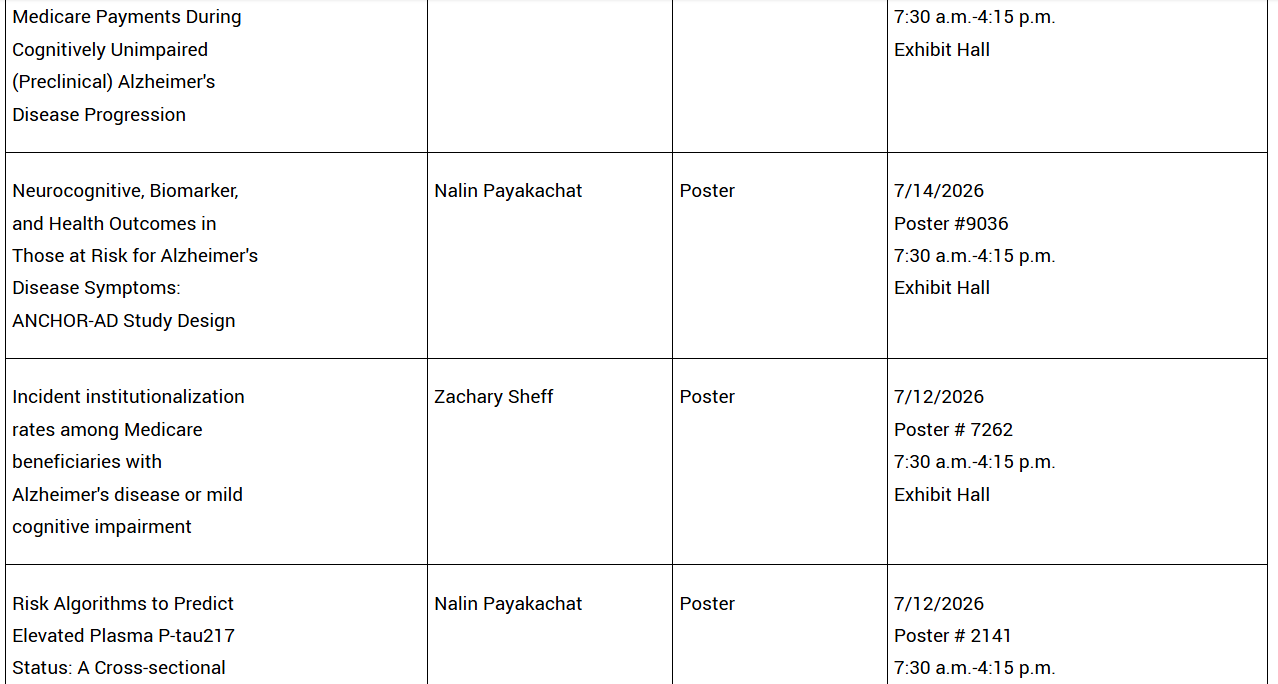
INDIANAPOLIS,July 9, 2026/PRNewswire/ -- Eli Lilly and Company (NYSE: LLY) today announced it will present 16 abstracts at the 2026 Alzheimer'sAssociation International Conference(AAIC),July 12-15inLondon. Three oral presentations anchor the scientific program, with 13 poster presentations spanning imaging science, health economics, real-world prescribing evidence, and patient-centered outcomes, reflecting Lilly's 35-year commitment to answering open questions in Alzheimer's disease.
Key Presentations at AAIC 2026
New Clinical Evidence on Kisunla (donanemab-azbt)
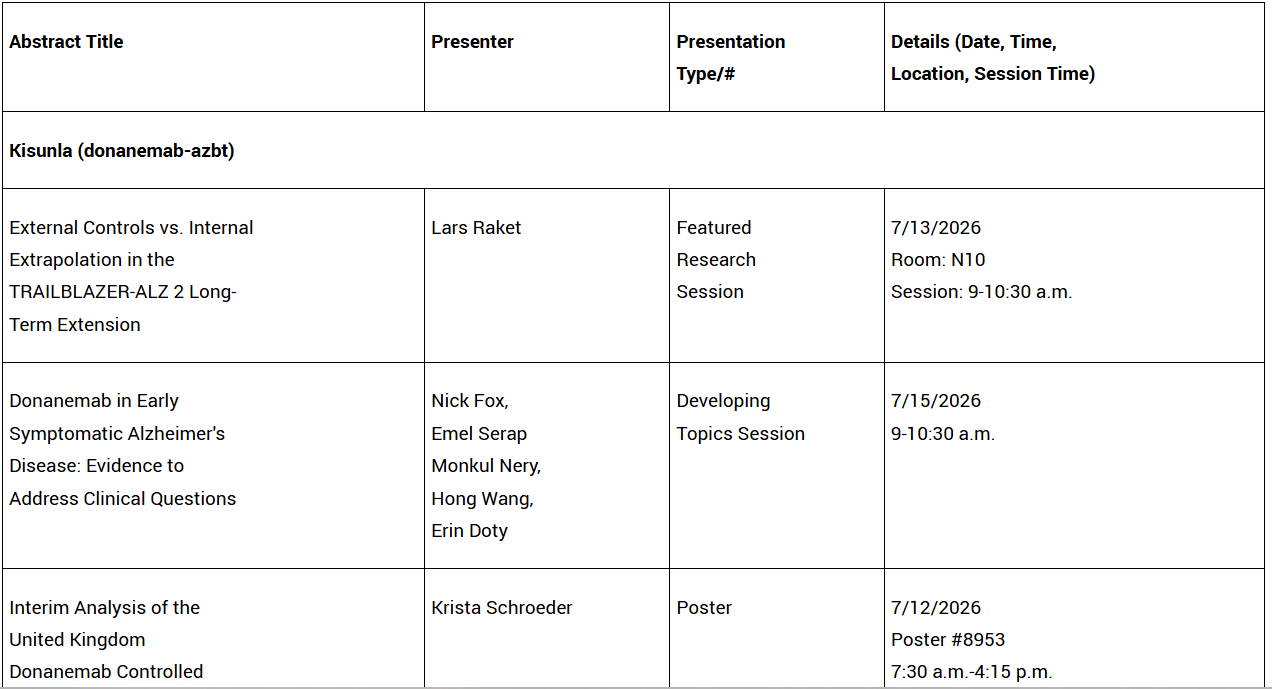
OnJuly 15, a Developing Topics Session, Donanemab in Early Symptomatic Alzheimer's Disease: Evidence to Address Clinical Questions, will present new insights from TRAILBLAZER-ALZ 6 and the TRAILBLAZER-ALZ 2 long-term extension. Findings include new data on safety through modified titration and corticosteroid pretreatment as well as long-term extension evidence on biomarkers and the potential durability of clinical benefit.
Advancing Diagnostics
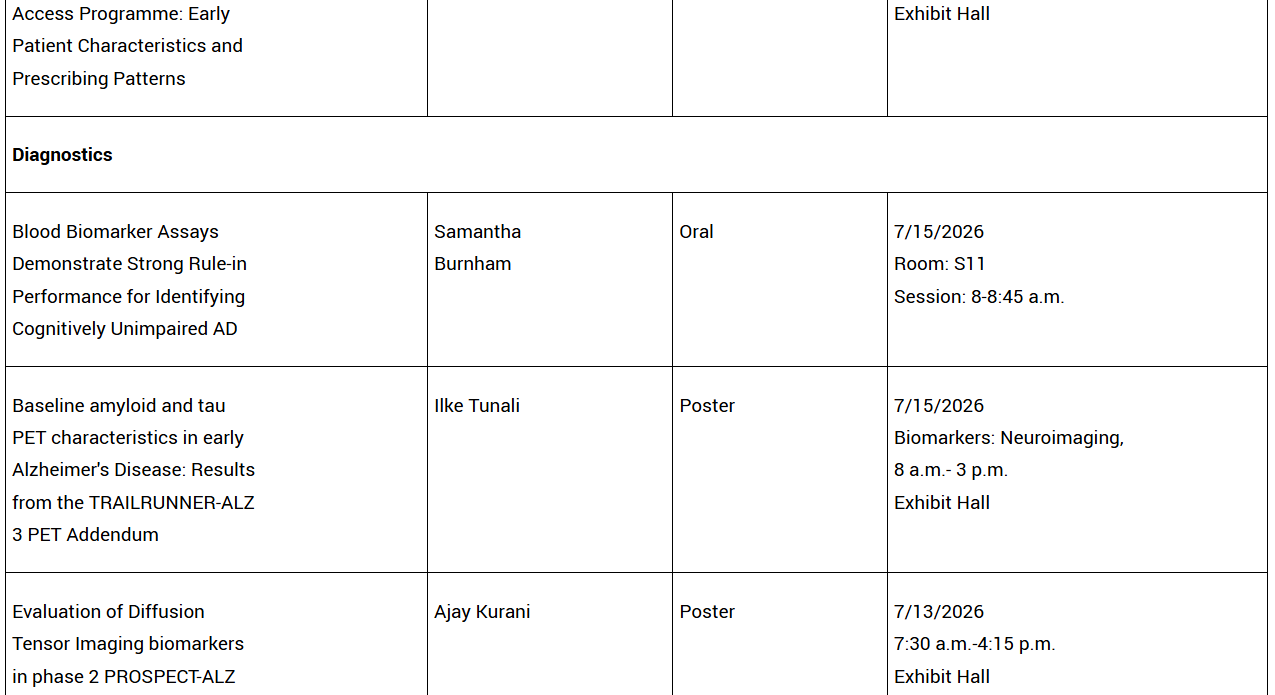
Also onJuly 15,Samantha Burnham, Ph.D., senior research scientist,Eli Lilly and Company, will present data showing P-tau217 blood biomarker assays demonstrated strong rule-in performance comparable to amyloid PET for identifying Alzheimer's disease pathology in cognitively unimpaired individuals. Though blood biomarker tests and amyloid PET agents are not currently indicated for use in cognitively unimpaired individuals, the results generate support for a potentially scalable, accessible alternative to specialized imaging in the future.
Advancing Scientific Methodology
OnJuly 13, as the organizer of the Featured Research Session, Lars Raket, Ph.D.,Eli Lilly and Company, will deliver an oral presentation on external controls versus internal extrapolation in the TRAILBLAZER-ALZ 2 long-term extension (Room N10). The analysis addresses a key methodological question in Alzheimer's disease research: how long-term outcomes are measured and interpreted in clinical trials, reflecting Lilly's commitment to the scientific rigor that underpins credible long-term evidence generation.
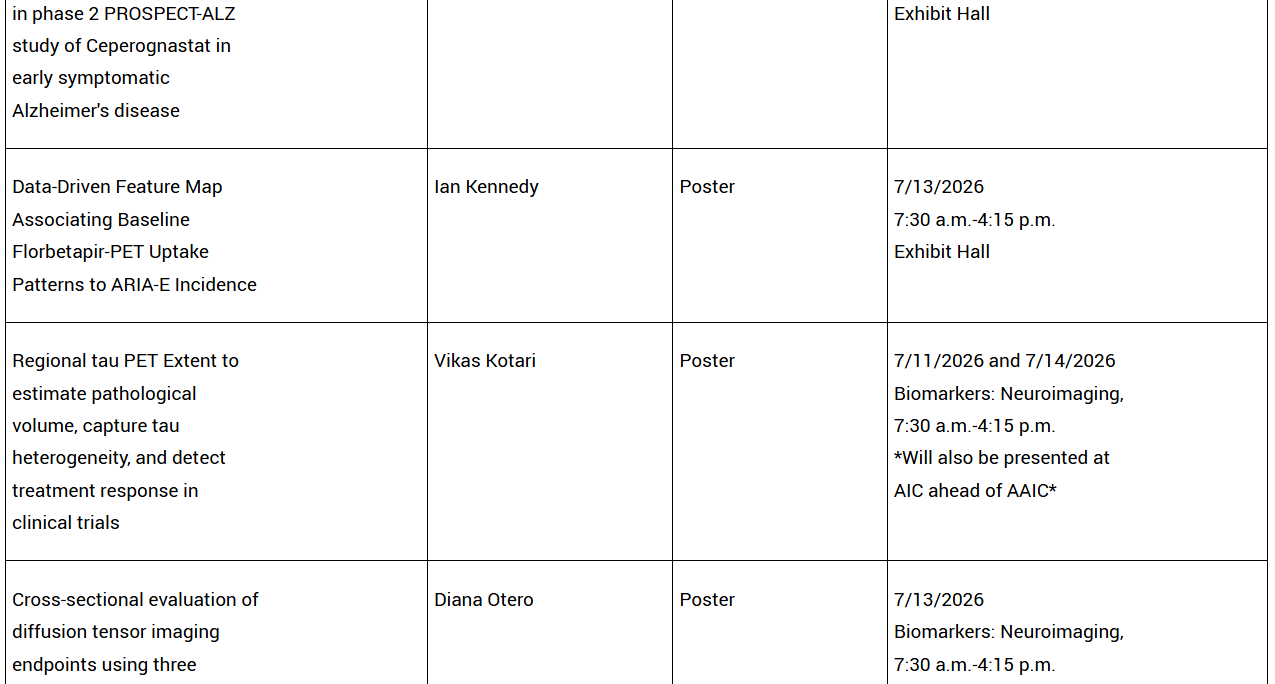
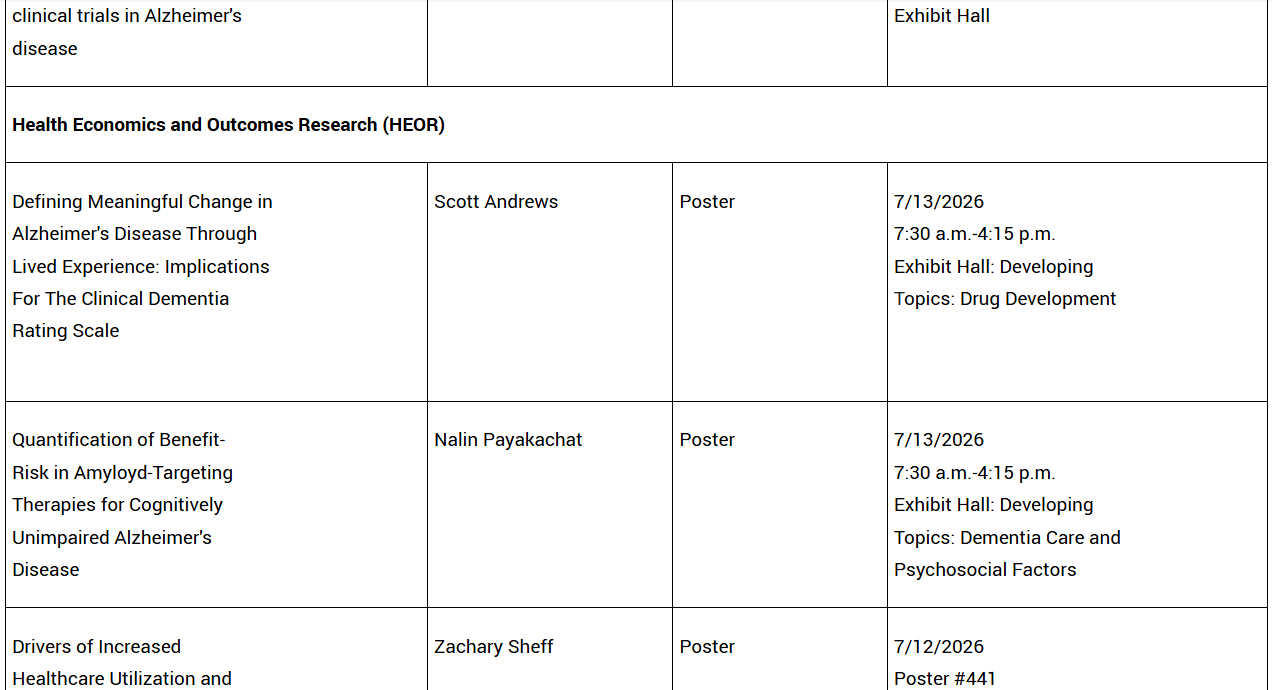
A full list of abstracts appears below. Presentations will be available at www.lilly.com following their scheduled release times.

About Alzheimer's Disease
By 2030, an estimated 78 million people worldwide are projected to have Alzheimer's disease, rising from approximately 55 million today, from those living with the earliest changes associated with the disease, to those experiencing profound memory loss.¹ The disease begins silently, often decades before any change in memory or thinking, with the accumulation of amyloid plaques in the brain,2 progressing through stages of increasing memory loss, behavioral changes, and growing dependence on caregivers.3
Nearly 4 in 5 Americans say they would want to know if they had Alzheimer's disease before experiencing symptoms or before symptoms interfere with their daily activities.4
About Kisunla® (donanemab-azbt)
Kisunla is currently approved as an amyloid-targeting treatment for people with mild cognitive impairment as well as people with mild dementia stage of early symptomatic Alzheimer's disease with confirmed amyloid pathology. Kisunla is a humanized monoclonal antibody that targets and reduces insoluble N-truncated pyroglutamate amyloid beta plaques, a defining feature of Alzheimer's disease, and is administered as an intravenous infusion every four weeks. Kisunla can cause serious side effects, including ARIA and infusion-related reactions. Apolipoprotein E ε4 (ApoE ε4) homozygotes have a higher incidence of ARIA, including symptomatic and serious ARIA, and testing for ApoE ε4 status should be performed prior to initiating treatment. Carriers of one or two copies of the ApoE ε4 gene may be at higher risk of developing Alzheimer's disease and experiencing ARIA. Patients should discuss any safety concerns with their healthcare providers.
INDICATION AND SAFETY SUMMARY WITH WARNINGS
Kisunla® (kih-SUHN-lah) is used to treat adults with early symptomatic Alzheimer's disease (AD), which includes mild cognitive impairment (MCI) or mild dementia stage of disease.
Warnings - Kisunla can cause Amyloid-Related Imaging Abnormalities or "ARIA." This is a common side effect that does not usually cause any symptoms, but serious symptoms can occur. ARIA can be fatal. ARIA is most commonly seen as temporary swelling in an area or areas of the brain that usually goes away over time. Some people may also have spots of bleeding on the surface of or in the brain and infrequently, larger areas of bleeding in the brain can occur. Although most people do not have symptoms, some people have:
-
Headache
-
Dizziness
-
Nausea
-
Difficulty
walking
-
Confusion
-
Vision changes
-
Seizures
Some people have a genetic risk factor (homozygous apolipoprotein E ε4 gene carriers) that may cause an increased risk for ARIA. Talk to your healthcare provider about testing to see if you have this risk factor.
You may be at higher risk of developing bleeding in the brain if you take medicines to reduce blood clots from forming (antithrombotic medicines) while receiving Kisunla. Talk to your healthcare provider to see if you are on any medicines that increase this risk.
Your healthcare provider will do magnetic resonance imaging (MRI) brain scans before and during your treatment with Kisunla to check you for ARIA. You should carry information that you are receiving Kisunla, which can cause ARIA, and that ARIA symptoms can look like stroke symptoms. Call your healthcare provider or go to the nearest hospital emergency room right away if you have any of the symptoms listed above.
There are registries that collect information on treatments for Alzheimer's disease. Your healthcare provider can help you become enrolled in these registries.
Warnings - Kisunla can cause serious allergic and infusion-related reactions. Do not receive Kisunla if you have serious allergic reactions to donanemab-azbt or any of the ingredients in Kisunla. Symptoms may include swelling of the face, lips, mouth, or eyelids, problems breathing, hives, chills, irritation of skin, nausea, vomiting, sweating, headache, or chest pain. You will be monitored for at least 30 minutes after you receive Kisunla for any reaction. Tell your healthcare provider right away if you have these symptoms or any reaction during or after a Kisunla infusion.
Other common side effects
-
Headache
Tell your healthcare provider right away if you have any side effects. These are not all of the possible side effects of Kisunla. You can report side effects at 1-800-FDA-1088 or www.fda.gov/medwatch.
Before you receive Kisunla, tell your healthcare provider:
-
About all medicines you take, including prescription and over-the-counter medicines, as well as vitamins and herbal supplements. Especially tell your healthcare provider if you have medicines to reduce blood clots from forming (antithrombotic medicines, including aspirin).
-
About all of your medical conditions including if you are pregnant, breastfeeding, or plan to become pregnant or breastfeed. Kisunla has not been studied in people who were pregnant or breastfeeding. It is not known if Kisunla could harm your unborn or breastfeeding baby.
How to receive Kisunla
Kisunla is a prescription medicine given through an intravenous (IV) infusion using a needle inserted into a vein in your arm. Kisunla is given once every 4 weeks. Each infusion will last about 30 minutes.
Learn more
For more information about Kisunla, call 1-800-LillyRx (1-800-545-5979) or go to kisunla.lilly.com.
This summary provides basic information about Kisunla. It does not include all information known about this medicine. Read the information given to you about Kisunla. This information does not take the place of talking with your healthcare provider. Be sure to talk to your healthcare provider about Kisunla. Your healthcare provider is the best person to help you decide if Kisunla is right for you.
DN CON BS APP
Kisunla® is a registered trademark owned or licensed byEli Lilly and Company, its subsidiaries, or affiliates.
Frequently Asked Questions
-
How accurate are blood tests for diagnosing Alzheimer's disease?
-
What is P-tau217 and how is it used in Alzheimer's disease diagnosis?
-
How effective is Kisunla in slowing Alzheimer's disease progression?
-
What was presented at the Alzheimer's
-
Association International Conference
-
(AAIC) 2026?
About Lilly
Lilly is a medicine company turning science into healing to make life better for people around the world. We've been pioneering life-changing discoveries for 150 years, and today our medicines help tens of millions of people across the globe. Harnessing the power of biotechnology, chemistry and genetic medicine, our scientists are urgently advancing new discoveries to solve some of the world's most significant health challenges: redefining diabetes care; treating obesity and curtailing its most devastating long-term effects; advancing the fight against Alzheimer's disease; providing solutions to some of the most debilitating immune system disorders; and transforming the most difficult-to-treat cancers into manageable diseases. With each step toward a healthier world, we're motivated by one thing: making life better for millions more people. That includes delivering innovative clinical trials that reflect the diversity of our world and working to ensure our medicines are accessible and affordable.
References
-
Alzheimer's Disease International. 2026 Dementia statistics. https://www.alzint.org/about/dementia-facts-figures/dementia-statistics/. Accessed 24 June 2026.
-
Sperling RA, Donohue MC, Rissman RA, et al. Amyloid and Tau Prediction of Cognitive and Functional Decline in Unimpaired Older Individuals: Longitudinal Data from the A4 and LEARN Studies. J Prev Alzheimers Dis. 2024;11(4):802–813.
-
Alzheimer's Association. Stages of Alzheimer's. www.alz.org/alzheimers-dementia/stages. Accessed 24 June 2026.
-
Alzheimer's Association. 2025 Alzheimer's disease facts and figures. Alzheimers Dement. 2025;21(5):3708–3821.