-
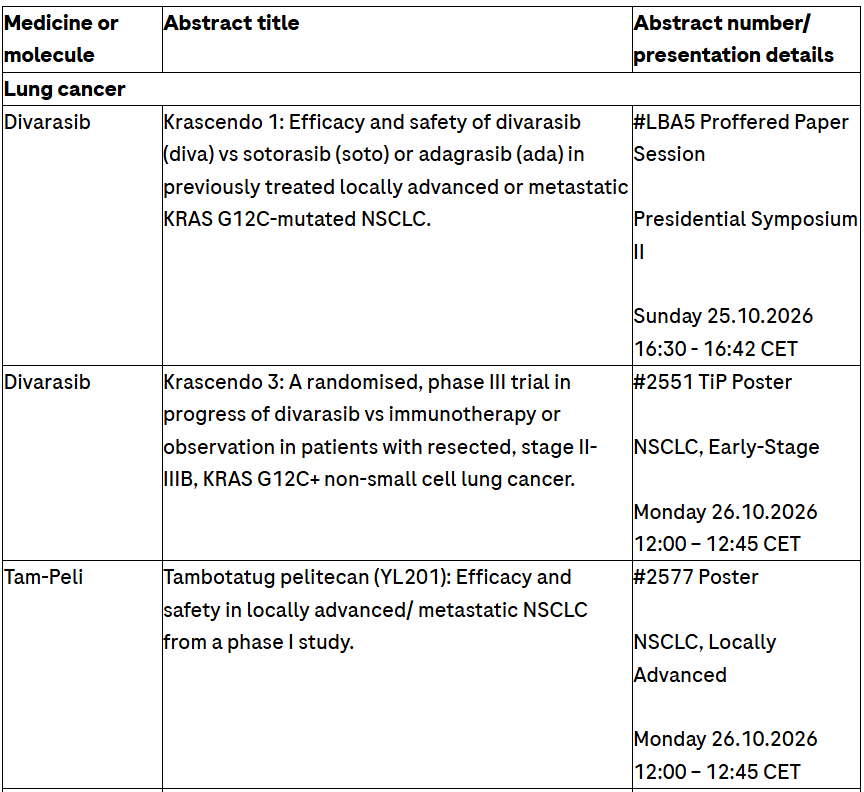
Phase III Krascendo 1 results demonstrated divarasib’s superiority over current standard of care, first-generation KRAS G12C inhibitors in previously treated advanced G12C-mutated non-small cell lung cancer
-
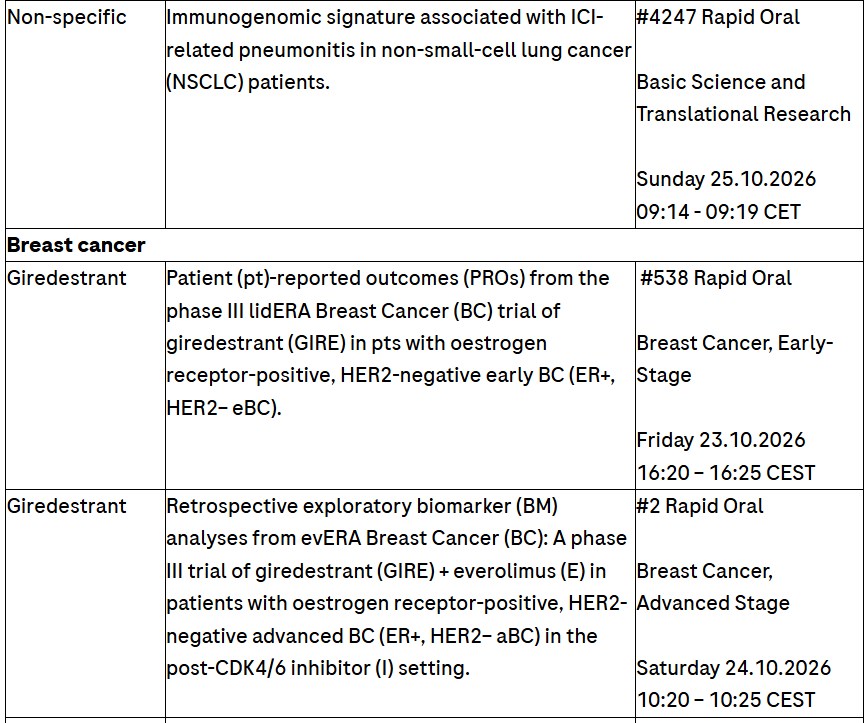
Patient-reported outcomes from phase III lidERA study showed improved efficacy of giredestrant over standard endocrine therapy is achieved without compromising tolerability and health-related quality of life in early-stage breast cancer
-
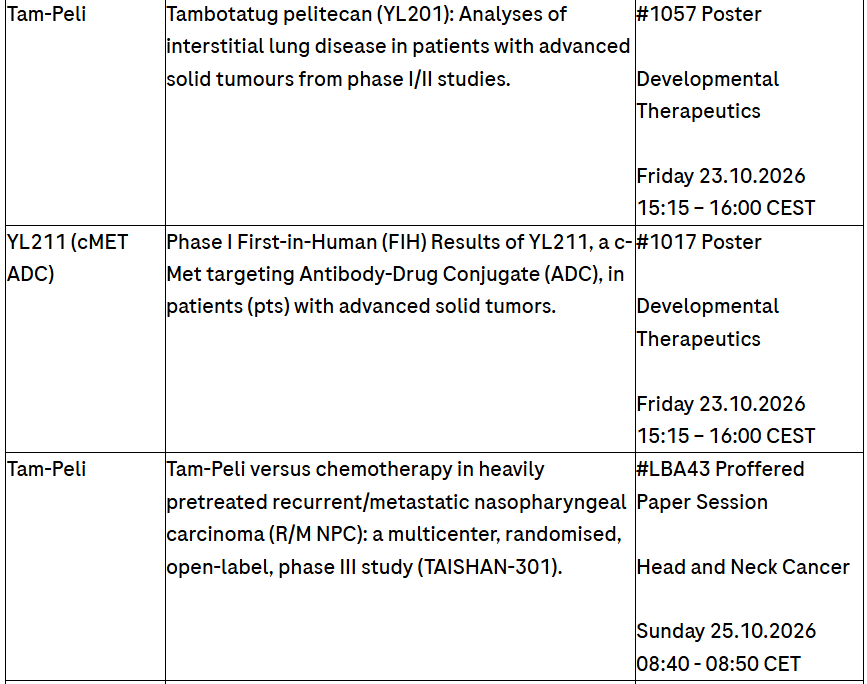
Phase III results in Chinese patients with metastatic nasopharyngeal carcinoma demonstrate the potential of Tam-Peli, a next-generation B7-H3-targeted ADC, to deliver robust efficacy with a favourable safety profile in high-unmet-need solid tumours
Basel, 19 October 2026 - Roche (SIX: RO, ROP; OTCQX: RHHBY) will present new data, including two late-breaking abstracts, across lung, breast and other cancers at the 2026 European Society for Medical Oncology (ESMO) Annual Meeting, held from 23 to 27 October in Madrid.
“Our presentations at ESMO 2026 highlight the depth and impact of Roche’s oncology pipeline, driven by emerging science capable of bringing new treatment benefits across diverse and high-unmet-need cancers,” said Levi Garraway, MD, PhD, Roche’s Chief Medical Officer and Head of Global Product Development. “From establishing head-to-head superiority with divarasib in KRAS G12C-mutated lung cancer to advancing patient-centered oral SERD therapies like giredestrant and next-generation ADCs such as Tam-Peli, we are committed to delivering medicines that not only extend life, but also seek to improve treatment experience, tolerability and quality of life for people living with cancer.
Divarasib demonstrated superior efficacy and best-in-class potential in KRAS G12C NSCLC
Roche will share phase III Krascendo 1 results, which demonstrated divarasib’s best-in-class efficacy, advancing the standard of care in previously treated KRAS G12C-mutated lung cancer.
-
Krascendo 1 is the only global head-to-head trial to evaluate a next-generation KRAS G12C inhibitor versus approved first-generation inhibitors.1
-
Results for this potential best-in-class, next-generation KRAS G12C-targeted therapy will be presented as a late-breaking abstract during a Presidential Symposium.
Giredestrant data support its potential to become the new standard of care in early-stage and advanced breast cancer
Roche will present new data highlighting the potential role of giredestrant, an investigational, oral, potent next-generation selective oestrogen receptor degrader (SERD) and full antagonist,2 in oestrogen receptor (ER)-positive, human epidermal growth factor receptor 2 (HER2)-negative breast cancer, a subtype in which more than 90% of cases are diagnosed at an early-stage (I-III).3-6 Key presentations from early-stage to advanced disease include:
-
Patient-reported outcomes from the phase III lidERA Breast Cancer trial suggesting that the improved efficacy of giredestrant compared to endocrine therapy is achieved without compromising tolerability or Health-Related Quality of Life.
-
Exploratory biomarker findings from the evERA Breast Cancer trial of giredestrant in combination with everolimus in ER-positive, HER2-negative advanced breast cancer in the post-cyclin-dependent kinase 4/6 inhibitor setting.
-
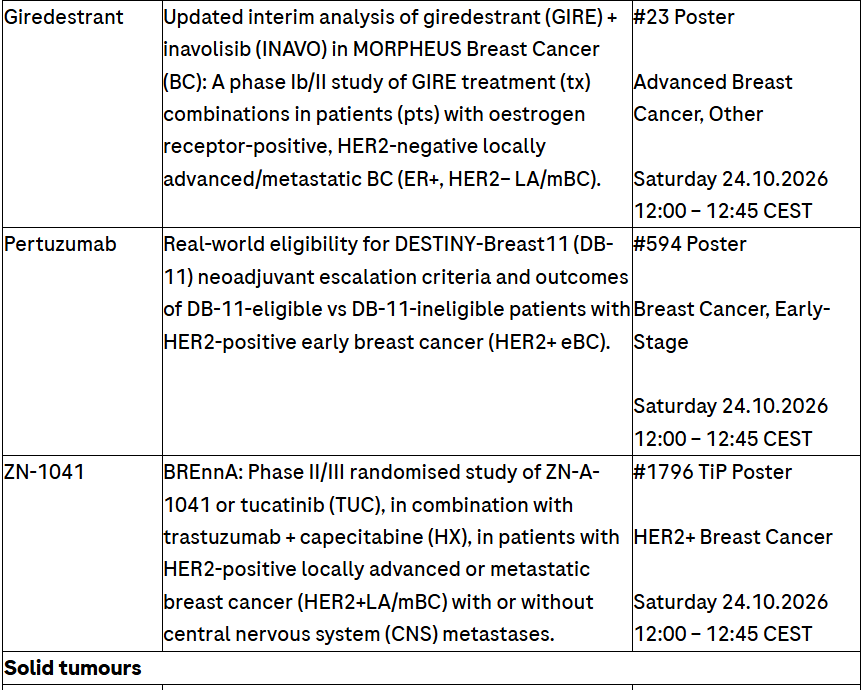
Updated interim results for giredestrant plus inavolisib from the MORPHEUS Breast Cancer trial evaluating giredestrant treatment combinations in ER-positive, HER2-negative locally advanced or metastatic breast cancer.
Data demonstrate the potential of a next generation B7-H3 targeted antibody-drug conjugate (ADC) Tam-Peli (tambotatug pelitecan)
New data will also be presented for Tam-Peli, an investigational next generation B7-H3-targeted ADC designed to deliver high-potency anti-tumour activity while limiting off-target toxicity.7 Tam-Peli is currently being investigated across multiple solid tumour indications:
-
ESMO data include late-breaking interim phase III results in heavily pretreated recurrent/metastatic nasopharyngeal carcinoma, analyses of interstitial lung disease in patients with advanced solid tumours from phase I/II studies, and phase I efficacy and safety data for Tam-Peli in patients with locally advanced or metastatic NSCLC.
-
These findings build on the TAISHAN-302 phase III data in second-line small cell lung cancer presented at the World Conference on Lung Cancer in September, where the study met all three specified endpoints of overall survival, progression free survival and objective response rate at its first interim analysis.
-
Roche is developing and commercialising Tam-Peli outside mainland China, Hong Kong, and Macau, and plans to rapidly initiate global trials across multiple tumour types.
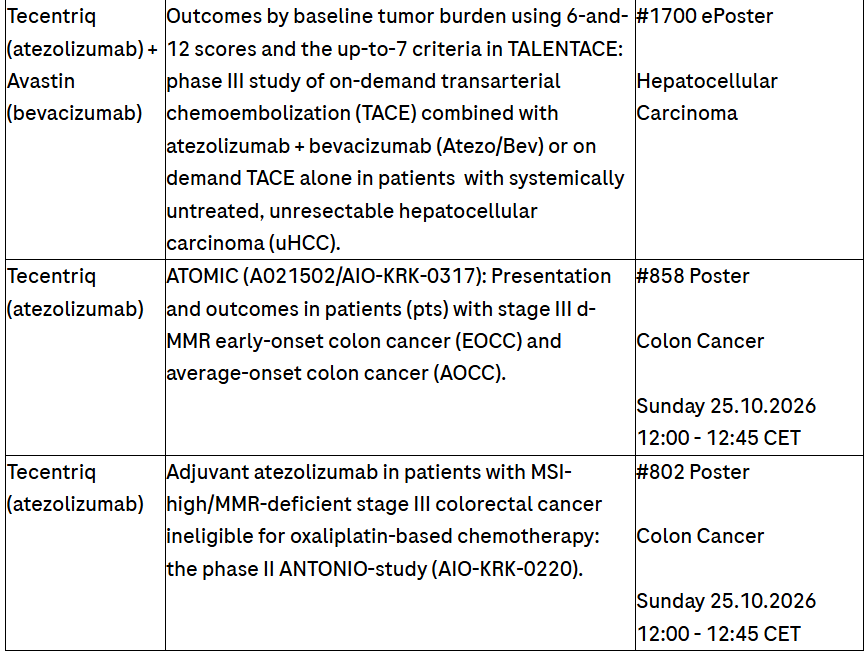
Overview of key presentations featuring Roche medicines and molecules:
About Roche in Oncology
For over 60 years, Roche has delivered transformative medicines and diagnostics, redefining the treatment of some of the most challenging cancers. Driven by a vision of a future where cancer can be cured, we focus our efforts on cancers with the highest societal impact and where we bring deep expertise, including breast, lung, and blood cancers, while pursuing breakthrough innovation in other areas of unmet need. Our pipeline features a diverse array of modalities, from small molecules and antibodies to next-generation ADCs and allogeneic CAR T-cell therapies. By advancing best-in-class precision medicine, pioneering novel combinations, and leveraging key technologies and partnerships, Roche tackles oncology's toughest challenges with the goal of delivering life-changing outcomes for people with cancer.
About Roche
Roche (SIX: RO, ROP; OTCQX: RHHBY) is a healthcare company uniquely placed to prevent, stop and cure diseases by uniting leading science and technology across diagnostics, medicines and digital solutions.
Roche was founded in Basel, Switzerland in 1896 and today is a leading provider of transformative medicines and diagnostics for millions of people in over 150 countries around the world. It is dedicated to tackling healthcare challenges that place the greatest strain on patients, families, communities and healthcare systems. Across its Diagnostics and Pharmaceutical divisions, Roche focuses on areas including oncology, neurology, cardiovascular and metabolic diseases, ophthalmology, infectious diseases and immunology with the aim of providing real and positive change for patients, the people they love and the professionals who care for them.
Genentech in the United States is a fully owned subsidiary in the Roche Group. Roche is the majority shareholder in Chugai Pharmaceutical, a major innovator in the Japanese therapeutic antibody market.
References
[1] Gadgeel S, et al. P3.12D.07 Divarasib Versus Adagrasib or Sotorasib in Pretreated KRAS G12C+ Advanced or Metastatic Non-Small Cell Lung Cancer (NSCLC). J of Thorac Oncol. 2024; 19 (10, Supplement): S349.
[2] Martin M, et al. Giredestrant (GDC-9545) vs physician choice of endocrine monotherapy (PCET) in patients (pts) with ER+, HER2– locally advanced/metastatic breast cancer (LA/mBC): Primary analysis of the phase 2, randomised, open-label acelERA BC study. Presented at: ESMO Annual Meeting; 2022 September 9-13; Paris, France. Abstract #211MO.
[3] F. Hoffmann‑La Roche Ltd. (2026) SEER Explorer All BCa by Stage. Data on file.
[4] F. Hoffmann‑La Roche Ltd. (2026) Stage Distribution. Data on file.
[5] F. Hoffmann‑La Roche Ltd. (2026) KREBS and TRM. Data on file.
[6] F. Hoffmann‑La Roche Ltd. (2026). UK_CRUK_EDHub_IncidenceByStageRCRD_DataTable2026-01-08. Data on file.
[7] Xu J, et al. Cancer Res. 2023;83:6304.