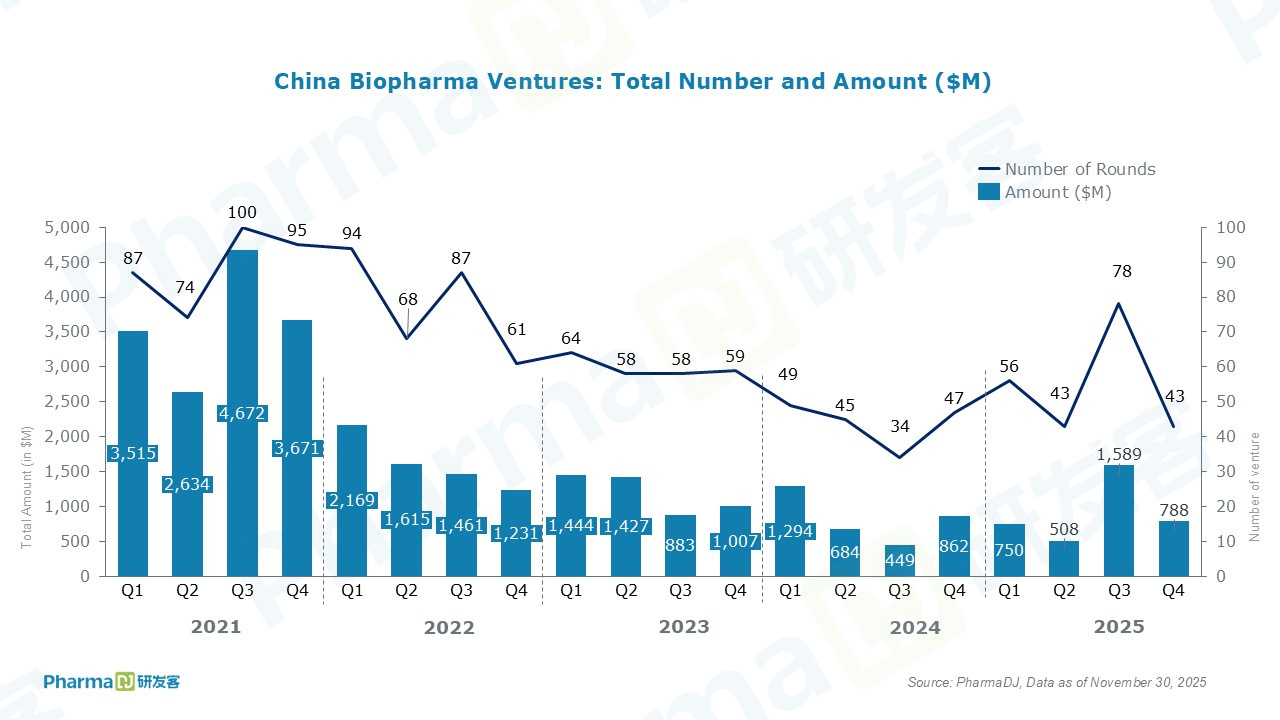
The standout funding event was the RMB 500 million Series A+ round secured by Hangzhou Reprogenix Bioscience, led by CRHC Fund and Yuanbio Venture Capital. The proceeds will be used to advance its diabetes-focused cell therapy pipeline—including the IND-approved RGB-5088 islet injection—its proprietary chemical reprogramming stem cell platform, and AI-driven cell production systems, alongside plans for global expansion.
The in vivo CAR-T sector maintained a booming momentum throughout November. Specifically, IVACTA Biotechnology closed an over RMB 100 million angel round. The company, a spin-off from GRIT Biotechnology’s in vivo CAR-T platform, focuses on developing in vivo CAR-T therapies based on targeted LNP delivery systems. Meanwhile, DeliNova Therapeutics raised approximately RMB 60 million in combined seed and angel round financing, with its core technical approach centered on engineering lentiviral vectors to generate in vivo CAR-T cells.
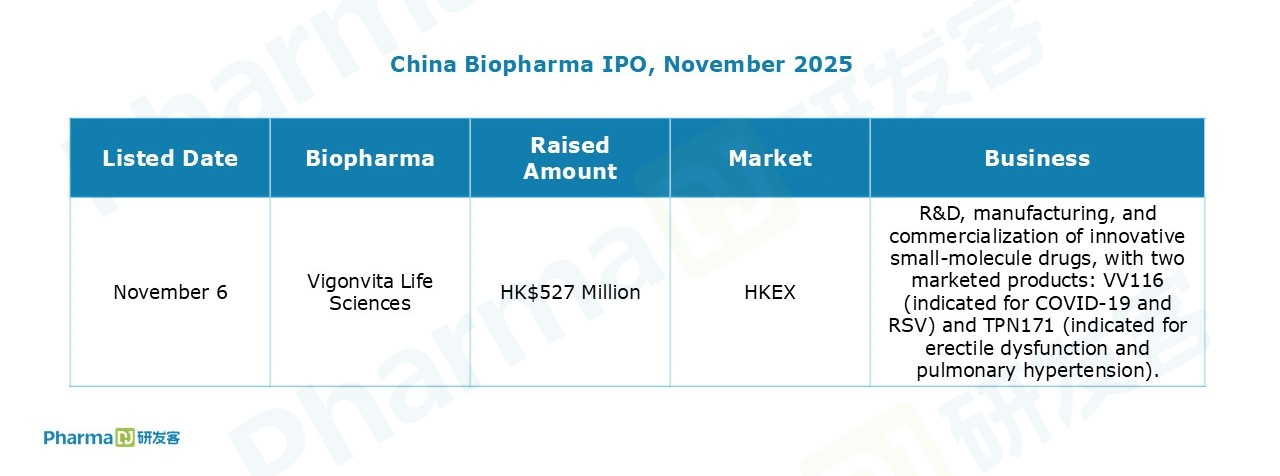
In November, Suzhou Vigonvita Life Sciences successfully listed on the Hong Kong Stock Exchange (HKEX), with its share price surging 177% on its trading debut and market capitalization reaching HK$15.5 billion. As a commercial-stage biopharmaceutical company, it specializes in the R&D, manufacturing, and commercialization of innovative small-molecule drugs, with two marketed products: VV116 (indicated for COVID-19 and RSV) and TPN171 (indicated for erectile dysfunction and pulmonary hypertension).
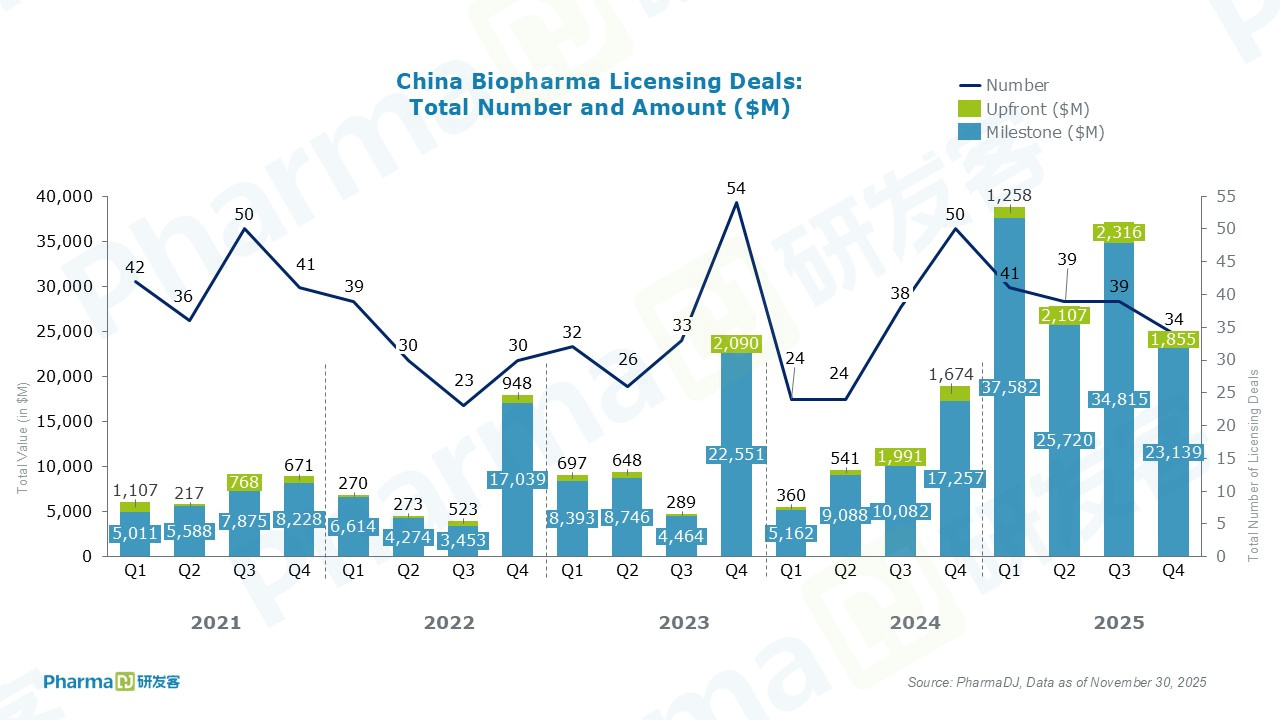
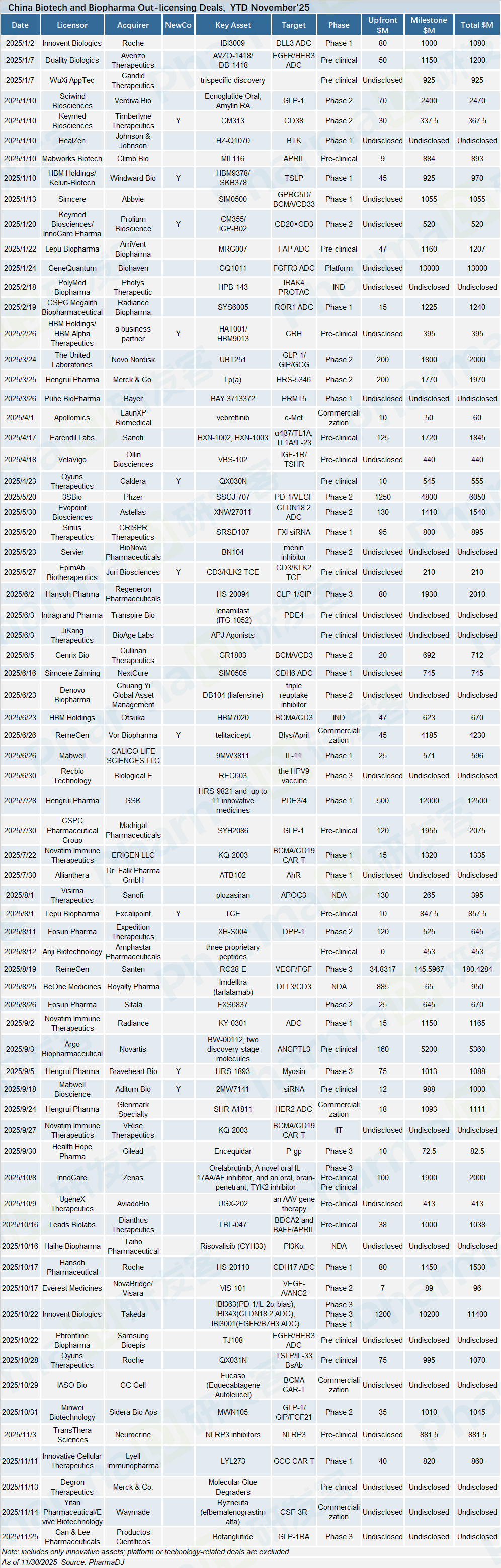
In November, the deal with the highest upfront payment was the collaboration between Laekna and Qilu Pharmaceutical, featuring an upfront payment of RMB 530 million for the AKT inhibitor LAE002 (afuresertib). The total potential value, encompassing the upfront payment and subsequent milestone payments, amounts to RMB 2.045 billion.
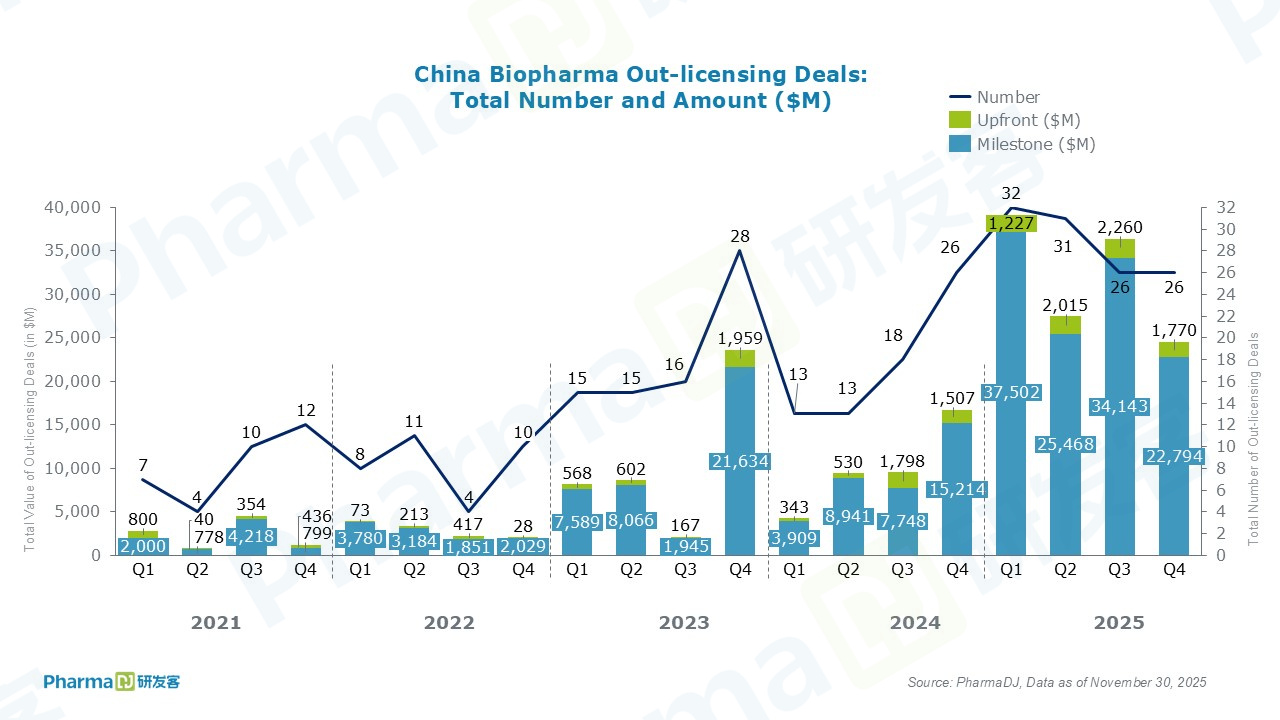
In addition, LTZ Therapeutics secured a US$50 million upfront payment in its collaboration with GSK, centered on its Myeloid Cell Engager platform. Notably, within just four months, LTZ has forged strategic partnerships with two leading multinational pharmaceutical companies (MNCs), Eli Lilly and GSK, focused on autoimmune diseases and oncology, respectively.
Eli Lilly emerged as the most active MNC collaborating with Chinese biotechs in November, inking three partnerships with XtalPi, Insilico Medicine, and Sanegene Bio, spanning core technology platforms such as AI and small interfering RNA (siRNA).