At approximately 7:30 PM on Friday, February 27, 2026,typically a bustling time as the workday draws to a close,the Hong Kong Department of Health issued an announcement: three new drugs had been approved under the "1+" new drug approval policy. The list was led by Huamedicine's dorzagliatin, a diabetes therapy, followed by two products from the United States. One was a chronic obstructive pulmonary disease treatment and another one was oncology drug.
In its official press release, the Hong Kong Department of Health prominently featured dorzagliatin, noting that this diabetes therapy had received prior approval from China's National Medical Products Administration (NMPA). The other two drugs had been authorized by the U.S. Food and Drug Administration before being submitted for registration under the "1+" framework. Following a comprehensive evaluation of the applicants' clinical data and supplementary materials, and after consulting with local experts, the Registration Committee of the Pharmacy and Poisons Board of Hong Kong confirmed that all three drugs met the required standards for safety, efficacy, and quality, thereby granting them marketing authorization in Hong Kong.
"The reviewers at the Hong Kong Department of Health were even more elated than we were!" recalled Dr. Li Chen, Founder and CEO of Huamedicine, reflecting on the milestone. The approval arrived precisely seven months after Huamedicine had formally submitted its marketing authorization application to the Hong Kong Department of Health.
For both CMPR and Huamedicine, however, the origins of this achievement extended far deeper into the past.
Policy Breakthrough: The Evolution from "Two-Tier Approval" to "1+"
"Had the process not been streamlined from a two-ICH Country approval to a One ICH+Recommendation system, It will be hard for us to consider entering Hong Kong. It was precisely the introduction of the '1+' policy that motivated us to pursue approval there," Dr. Chen explained.
The narrative traces back to 2023. In the aftermath of the COVID -19 pandemic, Hong Kong's economy remained in a protracted slump. As Ms. Beili Cao, Vice President of Operations and Greater Bay Area Development at Huamedicine, observed, "Evening strolls through Hong Kong's streets revealed a city largely deserted. The IPO market was equally moribund."
Despite this somber backdrop, Mr. Ruilin Song, President of the China Pharmaceutical Innovation and Research Development Association (PhIRDA), led a delegation of mainland pharmaceutical executives on an exploratory visit to Hong Kong. They convened with Mr. Lot Chan, then Assistant Director of the nascent CMPR office within the Hong Kong Department of Health, and his team. Their singular, unified objective was to advocate for the implementation of the "1+" new drug review policy.
At that juncture, Hong Kong still adhered to a cumbersome two-ICH Country approval system. "The original approval process requires 2 ICH country approval which limited first in class new drug enter Hong Kong Market. ," Dr. Chen admitted. During numerous exchanges, Mr. Song Ruilin articulated a clear position: Rather than maintaining dual hurdles, Hong Kong should cultivate its own independent scientific evaluation capacity, thereby achieving international recognition without being wholly dependent on the determinations of other national regulatory authorities. Prof. LO Yuk Lam, President of the Hong Kong Biomedical Innovation Association, also lent his persistent voice in support of this groundbreaking "1+" policy. Prof. LO Yuk Lam believes that Hong Kong established the CMPR to build a high-standard, independent drug evaluation system under "one country, two systems," enabling innovative drugs from Mainland China to ultimately reach the world through the CMPR's authoritative approval.
Through concerted multi-stakeholder efforts, effective November 1, 2024, the Hong Kong SAR Government formally instituted the "1+" new drug approval policy. Under these regulations, any product containing a novel pharmaceutical or biological ingredient, new drug indications, vaccines, or advanced therapies may apply for marketing authorization in Hong Kong by submitting an approval certificate from a single reference regulatory authority (such as the NMPA) (the "1"), complemented by compliant local Hong Kong clinical data and endorsed by local Hong Kong physician (the "+").
This landmark policy effectively opened a door for innovative drugs developed in Mainland China to enter the Hong Kong market. Huamedicine astutely recognized this transformative opportunity. Dorzagliatin had already secured NMPA approval in September 2022, thereby satisfying the "1" component of the "1+" framework. However, the requisite "+"—local clinical trial data from Hong Kong—remained to be sourced. The answer to this question had been germinating for half a decade.
A Collaboration Forged Through Academic Introduction
Five years earlier, in 2019, dorzagliatin had not yet obtained approval in Mainland China, although its clinical trials had achieved significant progress. At that time, through an introduction by Professor Dalong Zhu, a preeminent figure in the domestic diabetes field and the principal investigator for dorzagliatin's Phase III clinical studies, Huamedicine's clinical team established a connection with Professor Juliana Chan at the Prince of Wales Hospital, affiliated with The Chinese University of Hong Kong.
Professor Chan had dedicated years of clinical research to diabetes epidemiology and precision management. The Hong Kong Diabetes Register established had accumulated longitudinal data on nearly 30,000 patients over three decades, enabling precise phenotypic classification of diabetes. In recognition of this work, she was awarded the 2025 Kelly West Award for Outstanding Achievement in Epidemiology,an honor named in memory of Dr. Kelly M. West, widely regarded as the "father of diabetes epidemiology."
Professor Dalong Zhu advised Dr. Li Chen, "If you aspire to enter the Hong Kong and Southeast Asian markets, Professor Juliana Chan is among the most influential experts in the diabetes area. She and I are long-standing colleagues; allow me to facilitate an introduction." Thus, Dr. Li Chen established contact with Professor Chan through Professor Zhu's referral.
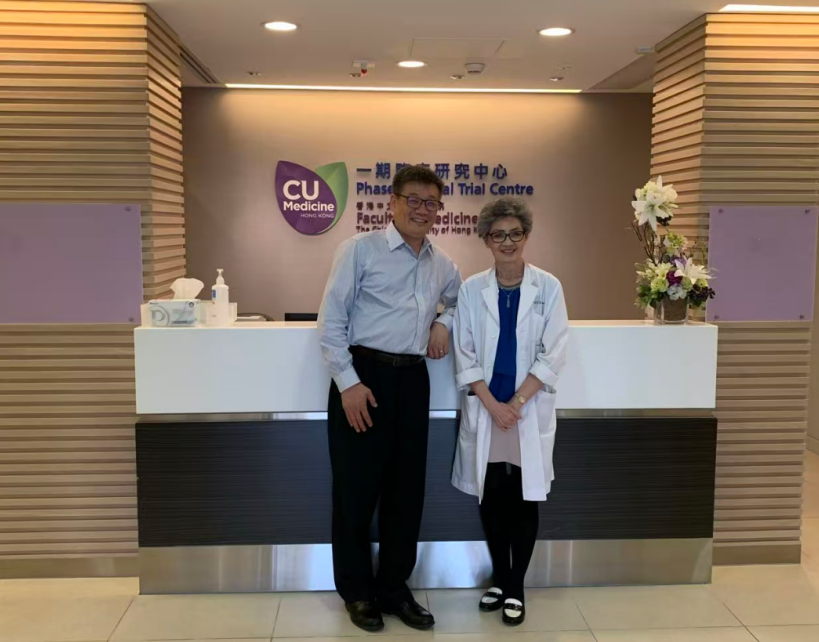
Dr. Chen Li from Huamedicine and Professor Juliana Chan from the Prince of Wales Hospital, affiliated with The Chinese University of Hong Kong
At that juncture, Huamedicine harbored a specific scientific inquiry: dorzagliatin's mechanism of action involves restoring glucokinase sensor function and reestablishing glucose homeostasis. However, its efficacy in the early stage of "impaired glucose regulation" remained to be scientifically validated. Patients in this category typically receive only dietary counseling and exercise recommendations, with no pharmacotherapeutic interventions available. Furthermore, "impaired glucose regulation" is not formally recognized as a disease entity in Mainland China, precluding the conduct of related clinical studies there.
"We hoped to leverage Hong Kong's robust research infrastructure to validate dorzagliatin's interventional effect on impaired glucose regulation. Such patients could be successfully recruited in Hong Kong," Ms. Cao explained.
Driven by this scientific exploration, Huamedicine funded an investigator-initiated trial (IIT) in Hong Kong. "When we initiated this research in 2019, we had no contemplation of seeking marketing approval in Hong Kong. Our motivation was purely scientific—Professor Chan and I shared a mutual interest in glucokinase's role in glucose regulation, and her database provided an unparalleled resource to support this investigation," Dr. Chen recalled.
On February 13, 2023, the Huamedicine team reconvened with Professor Chan in Zhuhai. Professor Chan presented her team's capabilities and database architecture, while Huamedicine articulated its desire to utilize the research platform at the Prince of Wales Hospital to further elucidate dorzagliatin's therapeutic potential. This post-pandemic reunion fostered deeper engagement between the parties.
At that time, neither side could have foreseen that this collaboration, grounded in shared scientific inquiry, would years later serve as the cornerstone for dorzagliatin's entry into the Hong Kong market.
The SENSITIZE Studies: Establishing the Foundation in Hong Kong
Following the initiation of collaboration, both parties rapidly reached consensus to jointly conduct the SENSITIZE series of studies. This research, conducted in an Asian population, employed the globally recognized "gold standard" hyperglycemic clamp technique to systematically evaluate, for the first time, the effects of a glucokinase activator on beta-cell glucose sensitivity across a spectrum of individuals with varying degrees of impaired glucose regulation.
The hyperglycemic clamp technique, while operationally complex and demanding, enables precise assessment of islet function dynamics. Huamedicine and Professor Chan's team successfully completed both SENSITIZE 1 and SENSITIZE 2 studies, with findings presented at the 2022 American Diabetes Association Annual Meeting and the 2024 China Pharmaceutical Innovation and Investment Conference, garnering significant academic attention.
For Huamedicine, the significance of this research transcended mere academic publication. The clinical data generated locally in Hong Kong and validated through the "gold standard" methodology provided the scientific foundation for the subsequent regulatory submission.
During the research process, Professor Chan's team noted the striking similarity in diabetes phenotypic characteristics between Hong Kong and Mainland Chinese populations. Since the study's inception in 2019, Professor Chan had published relevant findings in Diabetes, a top-tier journal of the American Diabetes Association. She advocated that introducing the drug to Hong Kong would confer substantial benefit to local diabetes patients. Furthermore, observing that disease characteristics in Southeast Asian populations closely mirrored those in Hong Kong and Mainland China, she envisioned conducting research in Hong Kong, collaborating with clinical investigators across the Asia-Pacific region, and collectively advancing this Chinese innovative drug toward broader international markets.
"This drug has undergone systematic investigation in Asian populations; I have full confidence in its efficacy and safety profile," she affirmed.
"Professor Juliana Chan, alongside leading domestic experts, exemplifies the highest standards in diabetes research,encompassing study design, clinical trial operational rigor, and data integrity which collectively formed the bedrock of our collaboration," Ms. Cao commented. "From a clinical and research infrastructure perspective, the Prince of Wales Hospital, where Professor Chan is based, operates under a Commonwealth model of integrated medical practice. Patients with diabetes can complete registration and all requisite testing on a single visit within the same clinical facility, substantially enhancing both the efficiency and quality of clinical research data."
Concurrently, in May 2022, Nature Medicine simultaneously published results from two Phase III studies of dorzagliatin: in treatment-naïve patients, 24 weeks of monotherapy reduced HbA1c by 1.07%, achieving a target rate of 42.5%; combination therapy also demonstrated significant efficacy, with hypoglycemia incidence below 1% over 52 weeks and no serious adverse events reported. Based on these robust clinical data, the drug received NMPA approval in September 2022, establishing itself as China's first-in-class global innovative drug.
Professor Juliana Chan's Decisive Endorsement: The Comprehensive Recommendation
On the afternoon of December 20, 2024, CMPR was poised to commence its Christmas holiday. In the half-day preceding the holiday closure, Professor Juliana Chan personally led Huamedicine's team, including Ms. Beili Cao, in a face-to-face meeting with Mr. Sze-To Sze, Director of CMPR, to discuss the impending submission. Professor Chan devoted an hour and a half, in both English and Cantonese, to elaborating on dorzagliatin's mechanism of action, mainland clinical data, and the Hong Kong Investigator-Initiated Trial (IIT) results.
"Conventionally, the company would introduce the drug, with the professor serving as an expert advisor. However, throughout the entire meeting, Professor Chan took the lead in the presentation. Her command of the dorzagliatin's scientific profile far exceeded my own,this was genuinely extraordinary and deeply moving," Ms. Cao recalled. "One cannot underestimate the challenges posed by language barriers and local cultural nuances. Our academic English proficiency currently lags behind Hong Kong's standards, and we lack Cantonese fluency. Beyond Professor Chan's invaluable recommendation, we must also acknowledge our local partner, Hailin Technology, whose substantial assistance with registration procedures and communication proved indispensable."
The pivotal element ultimately rested with Professor Chan. Following the meeting, she submitted a clinical physician's recommendation document exceeding dozens of pages. This material transcended a simple letter of recommendation; it constituted a systematic, comprehensive report encompassing: diabetes treatment standards in Mainland China, Hong Kong, and internationally; dorzagliatin's pharmacological properties, mechanism of action, and comparative advantages over existing therapies; its clinical characteristics, adverse reaction profile, and precautions for use; data from the local Hong Kong SENSITIZE studies demonstrating its efficacy and safety for Hong Kong and Asian populations; and prospects for future personalized medicine research in Hong Kong.
This report rigorously substantiated the scientific basis for dorzagliatin's clinical application in Hong Kong across multiple dimensions. The ability to secure such a detailed recommendation from a Hong Kong expert derived directly from five years of substantive research collaboration and deeply cultivated trust. Dr. Li Chen observed, "The trust accumulated over five years of collaboration explains why the Hong Kong principal investigator could develop such intimate familiarity with our drug and recommend it with such conviction."
In fact, Huamedicine had initially contemplated pursuing the Named Patients Program pathway and had even coordinated with Professor Chan to initiate several cases. Named Patients represents an established practice in Western jurisdictions and Hong Kong: for efficacious drugs not yet locally approved, if a clinician determines they are appropriate for specific patients, they may apply to the Pharmacy Board for designated use with appropriate safety monitoring protocols.
What Dr. Chen had not anticipated was that Hong Kong had introduced a new policy in November 2024 eliminating the Named Patients requirement. In this context, the clinical physician's comprehensive recommendation submitted by Professor Chan at the December 20 meeting emerged as the decisive factor for approval. CMPR explicitly informed Huamedicine that the Named Patients Program was unnecessary. "With a recommendation from an industry expert of Professor Chan's stature, that suffices," Mr. Sze-To Sze confirmed.
Professionalism and Efficiency Demonstrated Through Six Rounds of Review
On July 30, 2025, Huamedicine formally submitted its marketing authorization application to CMPR. Three days later, they received a request for supplementary information. By August 8, the supplementary materials were confirmed complete, and the entire process proceeded with remarkable fluidity. "Based on the 150-calendar-day review timeline, approval was anticipated around February 27. However, the application was approved at a committee meeting in January, and we received the formal approval letter on February 27. This genuinely exemplifies 'Hong Kong Speed'," Dr. Chen remarked.
Throughout the registration process, Huamedicine engaged in six rigorous rounds of question-and-answer exchanges with CMPR. Ms. Beili Cao recalled, "Their focus was intensely concentrated on pharmacological and pharmaceutical aspects. The questions demonstrated exceptional professionalism and spanned multiple technical departments."
From the preliminary submission on July 30, 2024, to formal acceptance on September 27, three rounds of communication had already transpired. Following formal acceptance, CMPR informed them that the review cycle would encompass 150 calendar days, with approval forthcoming as scheduled barring any unresolved issues.
"After acceptance, we received feedback approximately weekly. Roughly ten days following formal acceptance, we received the first list of questions. Subsequently, we engaged in iterative communication every two weeks addressing new content. The coordination among different reviewers was remarkably swift," Ms. Cao noted. "This genuinely reflects Hong Kong's administrative efficiency."
In Ms. Cao's assessment, the registration application experience in Hong Kong left an enduringly positive impression.
CMPR reviewers, predominantly possessing pharmacy backgrounds, demonstrated profound understanding of drug mechanisms of action, pharmacology, and toxicology. They devoted particular attention to manufacturing processes and progressively developed familiarity with the mainland GMP framework. Director Sze-To personally attended several communication meetings to elucidate the review progress.
Moreover, the approval process and associated fees were transparent and publicly disclosed. "The initial pre-registration fee was merely over 1000 HKD. The entire process was completed within five working days," Ms. Cao reported. "We submitted payment on Friday, received confirmation on Monday, and obtained the formal approval letter on Tuesday—truly remarkable efficiency." According to Mr. Junyi Ma, Director of service provider Hailin Technology, numerous mainland companies lack familiarity with CMPR's internal processes and operational procedures. For instance, CMPR's electronic registration platform, PRS 2.0, facilitates online submission of documents and queries, with clear guidance and transparent workflows—features critically important for mainland enterprises.
The application dossiers submitted in Hong Kong were prepared entirely in English. "Following submission in Hong Kong, we can leverage this experience to pursue registration in other markets," Ms. Cao observed. "Hong Kong serves as an exceptional international training ground for navigating global regulatory frameworks."
Embarking Anew from Hong Kong
The approval of dorzagliatin in Hong Kong not only introduces a novel therapeutic option for diabetes patients in the territory but also establishes a replicable reference pathway for innovative drugs originating in Mainland China to access the Hong Kong market. While certain oncology drugs had previously secured registration in Hong Kong, the applicants were predominantly local Hong Kong entities. Huamedicine, as a mainland enterprise directly driving the drug's approval in Hong Kong, has demonstrated the complete value chain—from research and development, through manufacturing and clinical development, to commercialization—validating the feasibility of "R&D in China, Manufacturing in China" innovative drugs reaching broader international markets.
According to Dr. Li Chen, Huamedicine regards Hong Kong as a strategically significant location. In February 2025, Hong Kong issued a new policy clarifying that new chemical entities already approved in Hong Kong may undergo research for new indications or new formulations, with such research eligible for single-tier approval. "This provides institutional facilitation for us to conduct research on specialized diabetes treatments in Hong Kong. Through genomic analysis integrated with Professor Chan's team's big data research, we hope to identify diagnostic and therapeutic targets demonstrating favorable response profiles in specific subpopulations with diabetes and develop new indications accordingly. Under this mechanism, Hong Kong possesses the potential to become the first jurisdiction globally to approve these new indications."
Hong Kong's drug pricing policy aligns relatively closely with Western markets, permits advertising for prescription pharmaceuticals, and allows certain primary care medications to be dispensed through designated pharmacies with prescriptions. Huamedicine is currently engaged in discussions with relevant partners regarding pricing strategies and commercialization pathways for the Hong Kong market. Regarding product manufacturing, the application dossier was predicated on comprehensive research data for Huamingning (dorzagliatin) from the mainland. Subsequent production management and regulatory compliance will strictly adhere to Hong Kong Department of Health requirements.
President Ruilin Song commented, "This constitutes a landmark breakthrough. It demonstrates that with the establishment of a scientifically rigorous and transparent review and approval mechanism, Hong Kong is fully capable of serving as a crucial refueling station and launchpad for innovative drugs originating in Mainland China to reach global markets."
Prof. LO Yuk Lam summarized, "The introduction of the '1+' policy represents a vital step for Hong Kong to actively integrate into the national development framework while maintaining its international connectivity. The successful approval of dorzagliatin not only validates the quality and standards of innovative drugs developed in Mainland China but also demonstrates Hong Kong's unique value as an international window for pharmaceutical innovation. Hong Kong is a strategic place for Chinese biotech going global.