Stepping into the Life Star 2 automated laboratory at Insilico Medicine, located in Jinqiao, Pudong, one immediately senses an atmosphere of precision, innovation, and efficiency. Spanning nearly 1,300 square meters, the fully automated wet lab for real-world validation was built and brought to initial operational scale in just over a month,a striking example of the much-admired "Pudong speed."
Inside, the laboratory is organized into six functional modules, including cell culture, gene sequencing, and high-throughput screening, forming a highly integrated and structured workflow. Automated guided vehicles (AGVs), equipped with robotic arms, move seamlessly between these modules, transporting materials and linking each experimental step. Experiments are conducted through the coordinated operation of robotics and advanced scientific instruments, running continuously around the clock. The lab's throughput is comparable to that of a traditional biology research team of around 50 scientists.
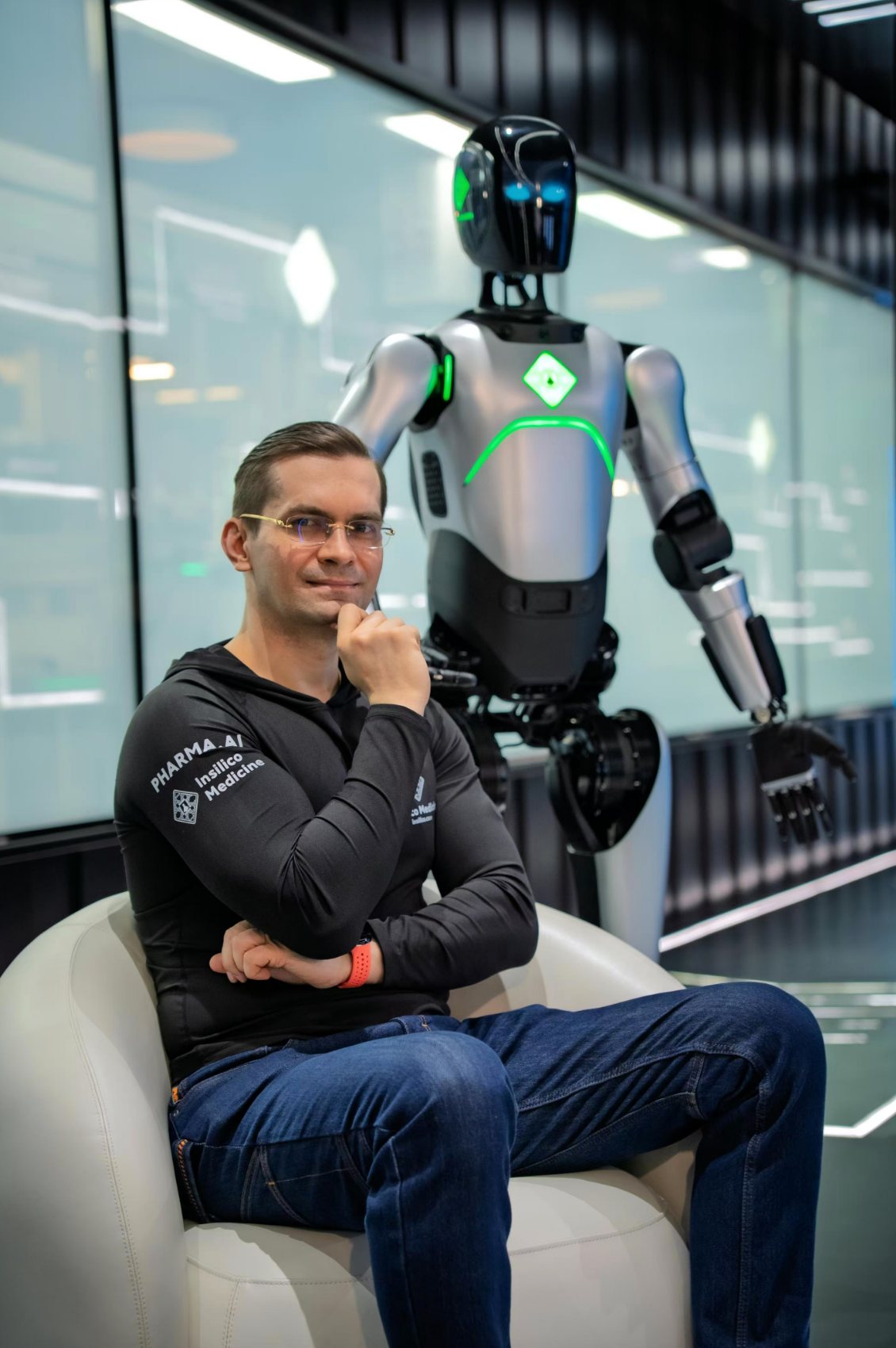
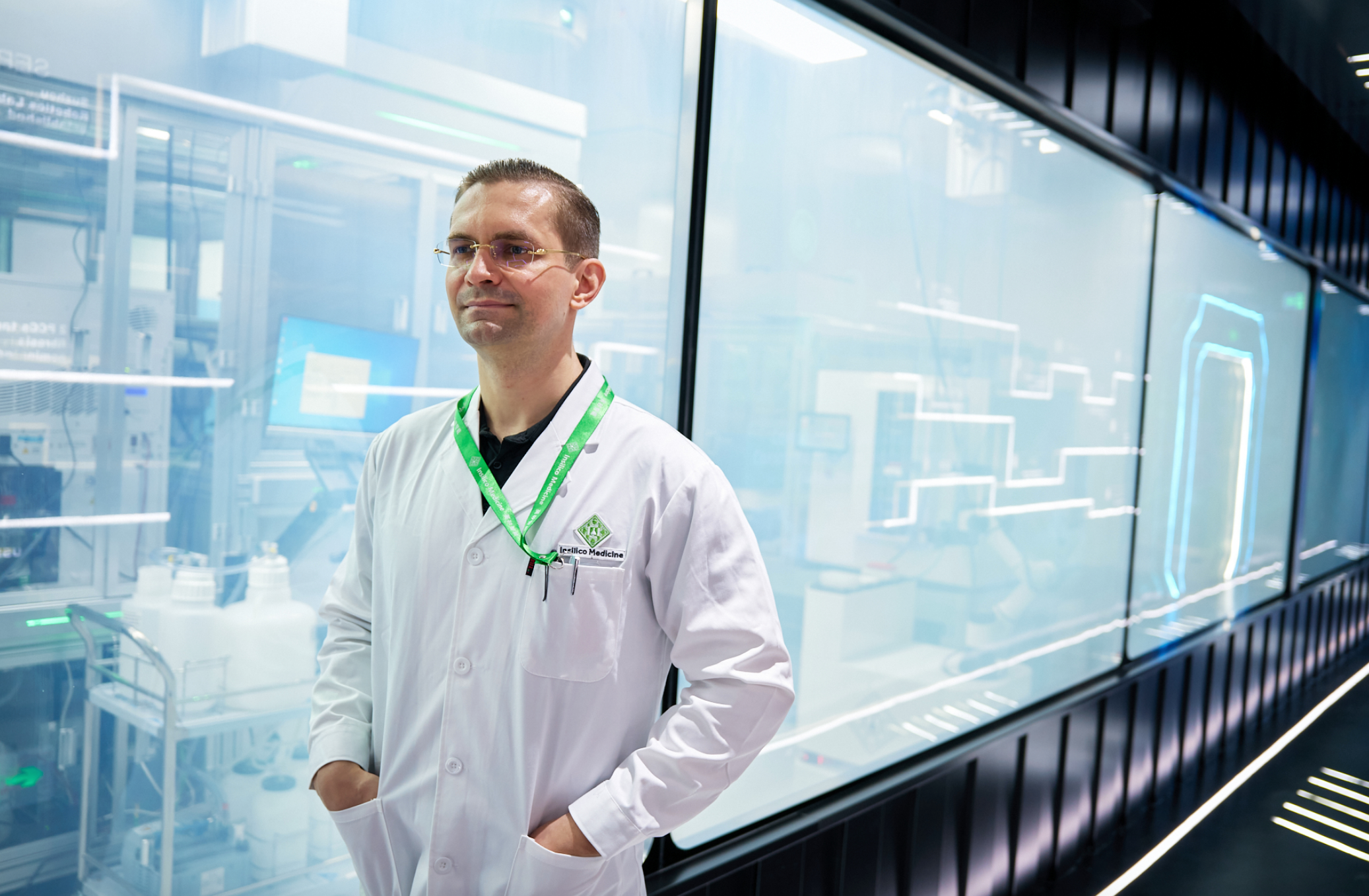
Alex Zhavoronkov,Founder and CEO of Insilico Medicine was in the lab in Pudong, Shanghai
Walking along the corridor, visitors can observe experimental processes through glass panels. In the cell culture module, robotic arms precisely handle culture dishes, while in the high-throughput screening area, instruments analyze samples with real-time data displayed on monitoring systems. In one corner of the lab, researchers interact with a humanoid robot, offering a glimpse into the future of intelligent human-machine collaboration in scientific research.
At the beginning of 2026, the laboratory underwent a major upgrade with the deployment of the OpenClaw AI agent on its central control platform. This advancement transformed the facility from a fully automated system into a highly intelligent one capable of autonomous decision-making. Following the upgrade, throughput increased by 40 to 50 percent, while the experimental error rate dropped dramatically from 5–8 percent to nearly zero. With these enhanced capabilities, the lab is now pushing the boundaries of biomedical research and expanding the possibilities of AI-driven drug discovery.
I later spoke with Alex Zhavoronkov at the office area near Life Star 2, where he shared the story behind Insilico Medicine and his vision for the future of pharmaceutical innovation. In recent years, Insilico Medicine has continued to make significant strides. In December 2025, the company was listed on the Main Board of the Hong Kong Stock Exchange (stock code: 03696.HK), as the biggest Biotech HK IPO that year.
Since 2026, Insilico Medicine has launched advanced AI tools such as the MMAI Gym for Science and PandaClaw, proposing the “AI training AI” concept, and integrating the latest agentic AI trend. On the drug R&D side, Insilico’s in-house PCC (preclinical candidate compound) nomination reached 29 in number, with 12 receiving IND clearance and three programs in Phase II trials. All the advancements were recognized in a major deal with Eli Lilly, as the whole size of $2.75 billion set off debates all over.
But that doesn’t seem good enough for Dr. Zhavoronkov, as he looks forward to becoming the SpaceX of drug discovery, which means innovation enabled, accelerated, and open-sourced.
The Genesis of Insilico Medicine
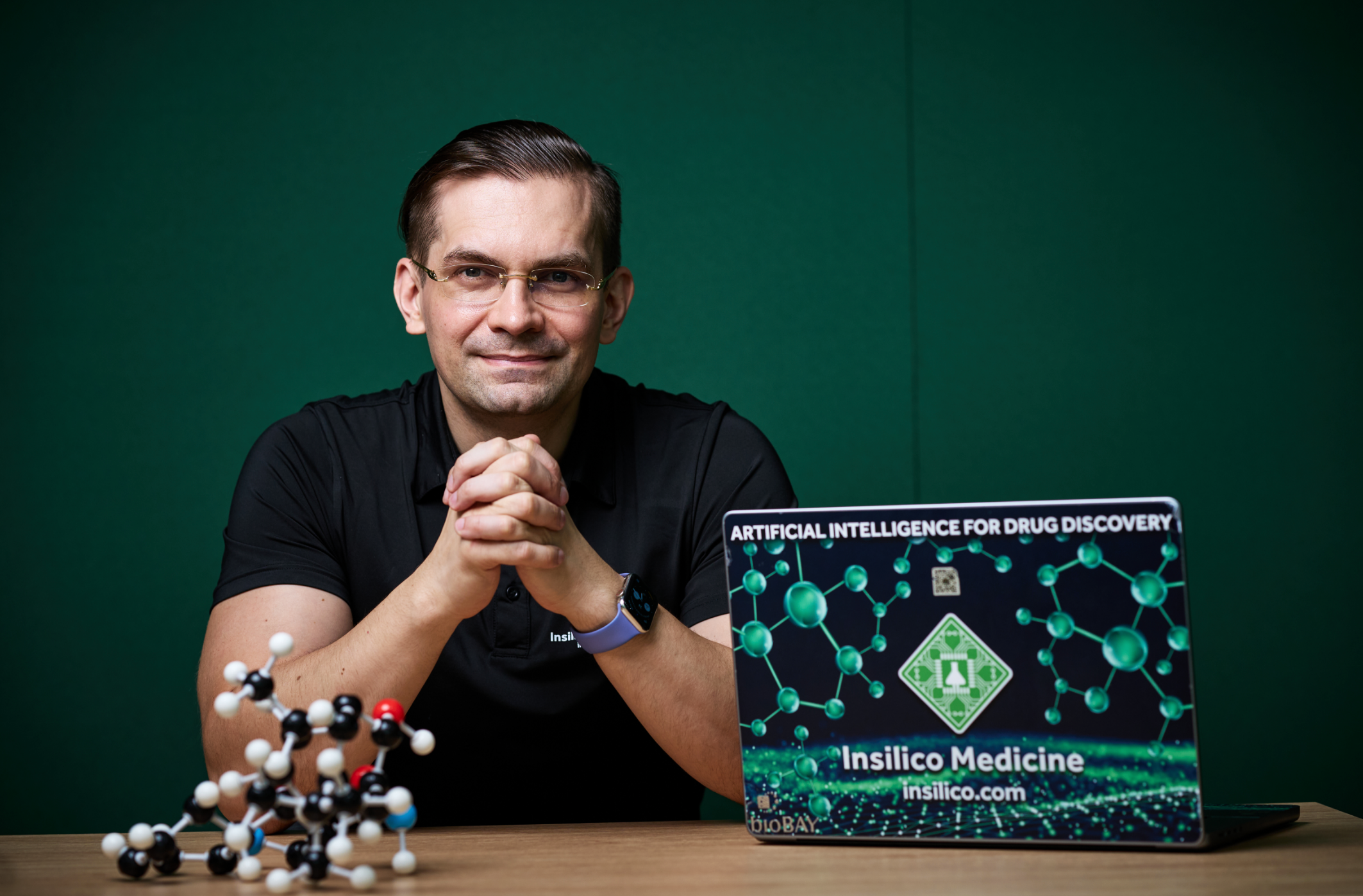
Alex Zhavoronkov
PharmaDJ:In March 2026, Insilico entered into a global R&D collaboration with Eli Lilly, granting the pharma giant an exclusive worldwide license for a potentially best-in-class drug candidate, while enabling future collaboration on multiple novel programs. In exchange, Lilly offered a total deal size of $2.75 billion, with an upfront payment of $115 million. I believe this is the largest transaction deal Insilico has ever made with a big pharma company, and also the most generous offer Lilly ever made to an AI-driven drug discovery company. Why do you think Lilly preferred to partner with Insilico?
Alex:It’s a great question. So first of all, you need to understand that Lilly’s AI team is one of the best in the world—if not the best. That means they recognize a game-changing AI tool when they see one, and they can really unleash the potential of what our generative biology and chemistry platforms provide.
More importantly, we not only establish end-to-end drug R&D abilities empowered by AI, we deliver, validate, and always improve from real-world experiences. We have shown that generative AI can reduce the traditional drug discovery phase from target to candidate molecule from years to 12-18 months on average, with only 60-200 molecules synthesized and tested, and that speed is reproducible.
However, after PCC nomination, moving into later-stage clinical trials means a heavilt regulated space crowded with more challenges, so we are very happy to collaborate with a pharma giant like Lilly, who are experienced and in the fields AI cannot really accelerate, for now, so that novel treatment options can move quicker to reach the patients.
PharmaDJ: Could you tell me the whole story of Insilico Medicine? How did you get this cutting-edge idea over a decade ago? What are the key success factors?
Alex: Insilico Medicine started a while ago. Originally, we began in the United States, in Baltimore, at the Emerging Technology Centers of Johns Hopkins University. We also started from the NVIDIA GTC conference. I saw several talks, one of which was by Andrew Y. Ng, and witnessed what deep learning could do in image recognition, text recognition, and voice recognition. My background was in GPU computing. I worked at ATI, a competitor to NVIDIA, 25 years ago. Even back then, GPUs were already being used for many non-gaming tasks what we called GPGPU, or general-purpose graphics processing units.
I realized there was a massive convergence happening between computational science, semiconductors, deep learning, and neuroscience. Since I had that background, I thought it was a good time to return to my roots in GPU computing. That's why, if you look at our logo, it's shaped like a semiconductor, a microchip with a conical flask inside, as used in chemical experiments. We call it Insilico Medicine because "in silico" means "in silicon" in Latin, it's medicine in the chip.
PharmaDJ: Why did you choose medicine as the area to apply semiconductor and AI tools? Why life science?
Alex: I had always been focused on aging. You might not have any diseases, but you still age. Everyone grows old, no matter how healthy they are, and aging will eventually kill us. Most people focus on fighting diseases like cancer or diabetes, and the industry has invested billions into those areas. But the main enemy everyone has is aging, and yet big drug companies don't try to fight it. That always surprised me.
By 2014, I had made a lot of money in semiconductors and GPUs, so I decided to spend the rest of my life studying aging, not just anti-aging, but finding the drivers in your body that cause aging and disease simultaneously. I believed deep learning could do it more efficiently because it allows you to understand not just one biological process, but all of them at once.
When we first started, many people didn't understand that it wasn't just about better accuracy. Everyone was trying to build more accurate models, but I was preaching that deep learning might actually be less accurate than specialized models, yet it can do more, and it can generalize. If you want to solve a complex biological process like obesity or aging, which involves many proteins and molecular components interacting, deep learning allows you to tackle the whole system.
For the first couple of years, raising funds was difficult. I didn't know how to tell the story well. My story was always: "Let's fight aging." People thought it was too complex. They would say, "So what are you trying to do?"
PharmaDJ: Yeah, it seems like aging is not as urgent as cancer or other diseases.
Alex: Actually, it's more urgent. By the time we finish this conversation, 6,000 people will have died of aging,more than 100 people every minute. Cancer causes far fewer deaths per minute. People see aging as something natural, but it's actually very urgent.
PharmaDJ: And the market is huge.
Alex: It's not just about the market. If you develop technology that can significantly extend life, you need resources to get there. When we first explained this, people didn't get it at all. I had to raise funds from all kinds of unconventional sources, including myself.
From Biology to Chemistry: The Strategic Pivot
PharmaDJ: How did the company evolve from its initial focus?
Alex: Around 2016, we realized something. We were originally a biology company,trying to understand fundamental biology using deep learning and identify therapeutic targets. But two years in, we saw there was very little money in target discovery or general biological hypotheses. Pharma companies weren't willing to pay much for it,they might run a small pilot, but that's it. And we didn't have a big name yet, so selling to them wasn't easy.
So we decided to move into chemistry. We started using deep learning to build predictive models that could predict various molecular properties of a drug, or even better, generate new molecules with desired properties. Then we used the predictive models to test how well the generator performed. In 2016, we moved into chemistry. By 2017, we realized we needed to synthesize and test those molecules. That's when we came to China.
The China Decision
PharmaDJ: So why did you establish the company in China?
Alex: In 2017, if you wanted to synthesize and test molecules at scale, you had to be in China. Back then, there were only few places in the world where you could do it at scale, and China was one of those. I knew China well from my early days in semiconductors, whatever you want to build, China is the place.
I originally had my first site in Taiwan, a region with excellent AI talent, but the infrastructure for drug discovery wasn't ideal. We moved to Hong Kong, which was great for biology, but for chemistry we needed to go to the mainland. By 2018, we realized the mainland was the way to go. I needed to commit resources here.
We started developing the business through JLABS, Johnson & Johnson Innovation, a good platform for foreign companies expanding into China. Today, there are even better options like Roche Innovation Labs and Eli Lilly Gateway Labs. But we learned that you cannot survive in China as just a foreigner. You need to be deeply integrated. If you're not deeply rooted in China, you need to commit 100 percent. That's the way to win here.
Meeting Dr. Ren Feng: The Perfect Partner
PharmaDJ: How did you meet Dr. Ren Feng?
Alex: We met through many connections. He is number one in China. There is no number two—maybe there is, but I don't know them. Everybody knew Dr. Ren. He was co-leading at a contract research organization called Shanghai Medicilon Inc., which aimed to compete with WuXi. When we first met, I fell in love in a good way. I thought: this guy is so smart, so productive. He is absolutely the perfect leader for anything.
We worked with our investors and partners to convince him to join. This was 2020, the time of the first biotech boom in China, just after COVID. Stock prices skyrocketed, and it was very difficult to hire high-level executives because they were all committed to their own companies. So we had to make a compelling case.
PharmaDJ: How did you convince Dr. Ren Feng to join?
Alex: China has a very strong service culture. It started as a service country for the rest of the world, producing cheap goods and services with high quality. That infrastructure helped it become a global leader in innovation. But contract research organizations—where Dr. Ren was working—are service-oriented. The level of innovation there is low. To break out of the service mindset, you need to take massive risks. People here didn't like taking risks until real estate collapsed. Now it's a beautiful time—they're looking for another model.
We explained that Insilico is not a CRO. We don't make stuff on service. We are a genuine invention house. We train our AI on the entire world, invent something absolutely new, and do true innovation—here in China. Dr. Ren understood that. When you're a truly good scientist, you want to invent, not be a slave for others. CROs are essentially scientific work for hire—you don't make your own decisions. At Insilico, we told him: you're going to get this global platform, this frontier AI, and you're going to run the ship and make decisions.
Dr. Ren later told me he worked for GSK for 11 years. In 11 years, they couldn't take one drug into Phase I. Eleven years, zero Phase I. He was head of medicinal chemistry for neuroscience, the most innovative division at the time yet produced zero clinical drugs. That's why he wanted to help others scale. And he realized that at Insilico, he could actually invent at scale.
The AI Advantage: Scale, Not Just Speed
PharmaDJ: How do you see AI's role in drug discovery?
Alex: Many people in AI-powered drug discovery have a confused mindset. They think an AI-powered drug discovery company should go all the way to Phase III. That's not a good idea. The best application of AI is scale. It allows you to scale invention—create many developmental candidates or Phase I candidates, sell them, and let others who are better at clinical trials take over. That way you can create many drugs from scratch.
PharmaDJ: So you focus on the early phase, moving faster from zero to IND.
Alex: Because later stage is regulatory. I cannot make the FDA or China NMPA move faster. We also do some development ourselves to prove that the early work succeeded, confronting the risk with quicker delivery. With AI, we showed you can scale. Dr. Ren managed to nominate 27 developmental candidates, 12 of which received IND clearance, in less than five years, at much lower cost and with very low capital. That's fundamental proof that we can work at scale.
Now people ask: where is the Phase III success? There will be, because there are so many drugs made. But Phase III takes time. Even for a rare disease, it might take three or four years and cost $150 million just for China, or $700 million globally. We hope to have some Phase III soon.
The SpaceX Analogy
PharmaDJ: You've mentioned SpaceX several times. Can you explain that analogy?
Alex: I like to say Insilico is the SpaceX of drugs. What makes SpaceX unique? SpaceX launches ten times more rockets than the entire China—90 percent of all global rockets. Why? Because the system works. Every element is state of the art and works, it's not about the engine, the fuel, or the rocket design. It's about everything working together seamlessly.
For us, it's similar. Insilico works because of our AI, because of Dr. Ren, and because we have a highly effective team of Chinese scientists working hard-core. It's not just about the platform, if you give this platform to someone who doesn't know how to produce drugs, they won't succeed. A high school student wouldn't produce a really good drug, though we've had cases where high school students published in top academic journals as first authors using our platform, discovering novel targets. One such student is now running two companies. That shows the system is integrated and built for real drug discovery, not just fancy research papers.
There are many companies and academic institutions building frontier models, but there is still a gap between theoretical innovation and real-world application. AlphaFold won a Nobel Prize, but where are the novel drugs actually powered by AlphaFold? I’m afraid we haven’t seen any. If you're doing a real drug discovery program, you wouldn't use a predicted structure—as it costs $50,000 to get a real crystal structure in two or three weeks. When you're betting $3 million on a preclinical candidate, you pay for the real crystal, instead of trading that minor cost reduction for risks unknown.
Animal Testing and the Data Advantage
PharmaDJ: Since the FDA has been encouraging the use of AI to potentially replace animal testing, what is your perspective?
Alex: Right now, we actually do more animal testing than traditional biotech companies—not less. Why? Because we need to create great datasets. In competitive spaces like GLP-1, you have to prove you deserve to be “best-in-class” with solid data. That means using every possible animal model to demonstrate superior performance, and your data room needs to be so overwhelming that no one can find a single flaw.
By using only selected models, you might be missing critical insights. Some animals are extremely sensitive to drugs that humans tolerate well a drug safe in humans might kill a dog. So we keep running vital in vivo studies, creating cross-species comparison datasets that nobody else has. Those datasets allow our AI to reason across entire programs in unprecedented ways. Ironically, by doing more animal testing now, we're building the foundation to do less later.
The FDA's move to allow alternatives makes sense for biologics like monoclonal antibodies, which are derived from animals so testing often doesn't predict human responses well. But small molecules are different. They need to survive the GI tract, enter the bloodstream, avoid liver and kidney toxicity, and not break down into harmful metabolites. The toxicity testing required for small molecules is vastly more complex. So while AI will eventually transform this space, we're still in the data-gathering phase. The best way to build better AI is to generate more high-quality animal data.
Therapeutic Focus: Aging as the Ultimate Indication
PharmaDJ: Insilico focuses on CNS, rare diseases, and oncology. How do you choose what areas to focus on?
Alex: More than 50 percent of the drugs we're developing have dual purpose. They also target aging. If they get approved for an indication, maybe later we'll see anti-aging effects, and then everyone will use them. That's the dream, just like GLP-1. GLP-1 is the most popular drug in the world right now. I use it myself. It might give me an additional two years of life, which is very valuable.
Imagine some of our drugs will have similar or even stronger potential—an anti-fibrotic or oncology drug that's senolytic, a cardiovascular drug that improves muscle, helps you lose weight without losing muscle, or improves mental function. Many of our drugs are related to aging.
There's a new trend in pharma called "pipeline in a product", taking one drug, approving it for one indication, then approving it for many others. Takeda bought a dermatology drug for $4 billion cash and now has 16 clinical trials across many areas. GLP-1 is also a pipeline in a product: type 2 diabetes, obesity, and now they're testing it for other conditions. So we thought: if the ultimate indication is aging, a drug that works in aging should work in thousands of diseases. That's the ultimate pipeline in a product.
Some targets we select because they're commercially tractable, we know pharma will want them in two years. We have our AI platform to predict market trends and which companies might buy our products. Finding hot targets two years in advance is difficult, but we can do it.
PharmaDJ: Can AI also predict whether clinical trials will fail?
Alex: Yes, especially Phase II to Phase III. We published a paper showing we can do this. In 2017, we started putting our predictions on a preprint service. We like to predict the pipelines of companies like Novartis, they invest billions but are among the least productive. We published in Clinical Pharmacology and Therapeutics, demonstrating that not only can we predict trial outcomes, but if you use our algorithm for automated trading, you can make more money than investing in some famous ETFs.
The MMAI Gym: Building Pharmaceutical Superintelligence
PharmaDJ: Could you share your technical advantages? What's the main secret of your AI performance?
Alex: The real advantage is that it works—period. It works consistently well. The ultimate benchmark is how many developmental candidates (DC/PCC) you can produce with how much time and money. Since 2021, we produced 30 developmental candidates from a very small amount of capital. That's why I say Insilico is the SpaceX of drugs.
PharmaDJ: You mentioned MMAI Gym. Can you explain that?
Alex: In 2025,we discovered something crazy. Foundation models, multimodal foundation models, if properly trained, can perform superhumanly on many tasks previously unavailable to large language models. For example, if you ask DeepSeek to fold a protein, it won't. But imagine a system that can do that, generate molecules with desired properties, and even call your mom to say you're okay, all in one model.
We decided to bet heavily on multimodality and reinforcement learning. We started from chemistry, where we were first to develop generative chemistry with reinforcement learning. Now, we're doing the same thing but with a foundation model as the student and our entire registry pipeline of over 800 experimentally validated models as the teachers. We call it the MMAI Gym, Multimodal AI Gym for Science.
We take an open-source frontier model, exercise it in the gym for two days to two weeks on our high-performance computing cluster, and teach it using all our small models. After two weeks, it becomes super intelligent, solving 95 percent of drug discovery tasks we can test, achieving state-of-the-art or better performance. That's our direction: creating a few super intelligent models that can do everything.
PharmaDJ: And this is what you call pharmaceutical superintelligence?
Alex: Yes. But it's expensive, two weeks in the MMAI Gym could cost several million dollars. So we're offering this as a service. Other companies can bring their models to our gym, and they come out super intelligent maybe even better than specialized models in the drug discovery field. That's democratization of AI-powered drug discovery. We're learning from SpaceX: Elon made SpaceX's technology open because he was so confident in their execution that they would always stay ahead. We're doing the same.
From Hong Kong Listing to Global Partnerships
PharmaDJ: Congratulations on the Hong Kong listing in December 2025. How does this milestone shape your strategy?
Alex: Thank you. The listing validates what we've been building for over a decade—an AI-powered drug discovery engine that works at scale. Being a public company gives us greater visibility and access to capital, but more importantly, it provides transparency into our operations and pipeline. Investors and partners can see the 30 developmental candidates we've nominated, the 12 programs with IND clearance, and the growing number of partnerships we've established. (Note: As of April 2026)
We've always believed that AI's true value in drug discovery is enabling scale. The listing allows us to double down on that vision while maintaining our commitment to democratizing AI for pharmaceutical research.
PharmaDJ: You recently announced a strategic partnership with Liquid AI in early 2026. Can you tell us about that collaboration?
Alex: Liquid AI developed a fundamentally different architecture based on dynamical systems rather than traditional transformers. We combined their Liquid Foundation Model architecture with our MMAI Gym training platform to create LFM2-2.6B-MMAI. Remarkably, this model has just 2.6 billion parameters yet outperforms models ten times its size across multiple drug discovery tasks. On property prediction, it beats TxGemma-27B on 13 out of 22 tasks covering pharmacokinetics and toxicology. On molecular optimization, it achieves success rates up to 98.8 percent on industry-standard benchmarks. On our internal affinity prediction benchmark with 2.5 million experimental measurements, it produces better correlation scores than frontier models including GPT-5.1, Claude Opus 4.5, and Grok-4.1.
What really matters: this model runs entirely on private infrastructure. Pharmaceutical companies can deploy it on-premise without sending proprietary data to external cloud services. That's a game-changer for an industry where data confidentiality is paramount.
PharmaDJ: So this is part of your broader MMAI Gym initiative?
Alex: Yes. We launched MMAI Gym in January 2026 as a domain-specific training environment designed to transform any frontier large language model into a pharmaceutical-grade scientific engine. It trains models using our proprietary datasets, which include over 4 million medicinal chemistry optimization chains, 100 million organic synthesis descriptions, and hundreds of thousands of molecular dynamics trajectories. We've structured MMAI Gym with two main tracks: Chemical Superintelligence for medicinal chemistry, and Biology/Clinical Superintelligence for target discovery and clinical development prediction.
We offer MMAI Gym as a flexible, membership-style program, ranging from intensive two-week sprints to longer engagements. Partners provide their base model—whether GPT, Claude, Gemini, Grok, Llama, Mistral, or any other frontier model—and we train it using our proprietary datasets and reinforcement learning techniques. They get back a CSI- or BSI-enhanced version that typically achieves up to tenfold performance improvement on key drug discovery benchmarks. We also provide detailed benchmark reports and optional wet-lab validation through our automated assay platforms.
This is what we learned from SpaceX. Elon Musk made SpaceX's technology open not because he wanted to give away competitive advantage, but because he was so confident in their execution that they would always stay ahead. By democratizing access to pharmaceutical-grade AI, we're accelerating the entire industry while maintaining our leadership position.
New Partnerships: Qilu and ASKA Pharmaceutical
PharmaDJ: You've announced several major partnerships in early 2026. Let's start with Qilu Pharmaceutical.
Alex:Our collaboration with Qilu represents a deepening of our relationship that began with software licensing in 2021. Now we're in full-scale R&D collaboration focused on cardiometabolic diseases, with a total contract value approaching $120 million including milestones and single-digit royalties. Cardiometabolic diseases represent one of the largest global health challenges. I've always believed that strategies targeting these conditions have the potential to generate the first drugs that achieve large-scale health span extension. This partnership also reflects an important trend: China's pharmaceutical industry is moving from being a service provider to becoming a genuine innovator.
PharmaDJ: You also expanded your collaboration with Tenacia.
Alex: Yes, we announced an expanded AI-driven R&D collaboration with TenaciaBio with a total transaction value up to $94.75 million. This partnership focuses on developing innovative candidate molecules for challenging neurological diseases, advancing them to the preclinical candidate stage. By combining our AI capabilities with Tenacia Bio's expertise, we can reduce late-stage R&D risks and enhance potential clinical benefits for patients with devastating neurological diseases.
PharmaDJ: And there's also a partnership with ASKA Pharmaceutical?
Alex: Yes, a strategic research collaboration with ASKA Pharmaceutical, which focuses on internal medicine, obstetrics, and gynecology. This partnership addresses women's health conditions that have long been underfunded and under-researched—endometriosis, uterine fibroids, and adenomyosis. According to WHO estimates, endometriosis affects approximately 190 million women globally. Through this collaboration, we're applying PandaOmics, our AI-driven target identification engine, to identify novel therapeutic targets for these challenging conditions. Dr. Frank Pun, Head of our Hong Kong site, leads the Target Discovery team and recently unveiled Target Identification Pro, which outperforms existing models in predicting which targets are most likely to advance to clinical stages.
PharmaDJ: You've also licensed out several assets recently, including the PHD inhibitor program to TaiGen Biotechnology.
Alex: Yes, we licensed out ISM4808, a novel drug candidate under our PHD program, to TaiGen Biotechnology for the treatment of anemia associated with chronic kidney disease. The out-licensing deal is valued in the double-digit millions. This is exactly the business model I've been advocating: AI enables us to scale invention. We create many high-quality developmental candidates, and partners who are better at clinical development and commercialization take them over.
PharmaDJ: What about your own pipeline? What's the latest on your clinical-stage programs?
Alex: We continue to advance our internal pipeline. One program I want to highlight is Garutadustat (formerly ISM5411), our novel, gut-restricted PHD inhibitor for inflammatory bowel disease. It recently completed first patient first dose in BETHESDA, a Phase IIa clinical trial. The program was nominated as a preclinical candidate in January 2022, within just 12 months of starting synthesis. We screened approximately 115 compounds through our AI-powered workflows, using Chemistry42 to generate and optimize the molecule. Now it's in Phase IIa, and the preclinical development was published in Nature Biotechnology in December 2024. What makes Garutadustat special is its dual mechanism of action, combining anti-inflammatory activity with enhanced repair of the intestinal barrier. This is exactly the kind of innovation that AI enables: not just better versions of existing drugs, but entirely new therapeutic approaches.
Beyond Garutadustat, Insilico's clinical-stage pipeline includes candidates across oncology, immunology, and rare diseases, with three programs currently in Phase II and the remainder advancing through Phase I trials.
Looking Ahead: Pharmaceutical Superintelligence
PharmaDJ: You mentioned embodied lab intelligence. What does that look like?
Alex: Imagine a bunch of robots—the entire lab is a brain, and the robots are its fingers. They can do both dry lab and wet lab work. I call it embodied AI for science laboratory. It's early days, but in the future, you'll come to a building and say, "I want to discover a drug for obesity." You tell the lab your budget, and it will design, synthesize, and validate the drug—all automatically. No more humans involved. That's the big idea.
PharmaDJ: You've mentioned "Pharmaceutical Superintelligence" as your long-term vision. Where do you see this heading in the next few years?
Alex: PSI is the culmination of everything we've been building. It's not just about having AI that can predict properties or generate molecules. It's about having AI systems that can reason across the entire drug discovery and development lifecycle from target identification through clinical trial design. With MMAI Gym, we're creating the training infrastructure for PSI. With our partnerships with companies like Liquid AI, we're developing model architectures that can run efficiently on private infrastructure. And with our internal pipeline and growing list of partnerships, we're generating the data and validation needed to prove that this approach works.
In the future, I envision a pharmaceutical company where AI doesn't just assist scientists but collaborates with them as an equal partner. Where a researcher can ask, "What's the best molecule for this target?" and the AI can not only generate candidates but also explain its reasoning, predict potential safety issues, suggest clinical trial designs, and even help with regulatory strategy. We're not there yet. But with each partnership, each milestone payment, each clinical trial advancement, we're getting closer. And the pace is accelerating.
PharmaDJ: Looking at all these recent developments, what's your message to the industry?
Alex: My message is simple: AI for drug discovery works. It works not just in theory or in academic papers, but in real-world applications with real pharmaceutical companies making real investments. In just the first quarter of 2026, we've announced partnerships totaling up to $1.3 billion. We've launched MMAI Gym as a platform to democratize AI capabilities from the foundation. We've advanced our internal pipelines with 3 Phase II trials, among which 1 Phase IIa has announced positive results.
This is what scale looks like. This is what happens when AI enables you to invent faster and better. And this is just the beginning. As I've said before, patients cannot wait. Every minute, more than 100 people die of aging-related causes. Every day we spend developing new drugs is a day that patients are waiting for better treatments. AI allows us to compress timelines, reduce costs, and increase the probability of success. That's not just good business, it's a moral imperative.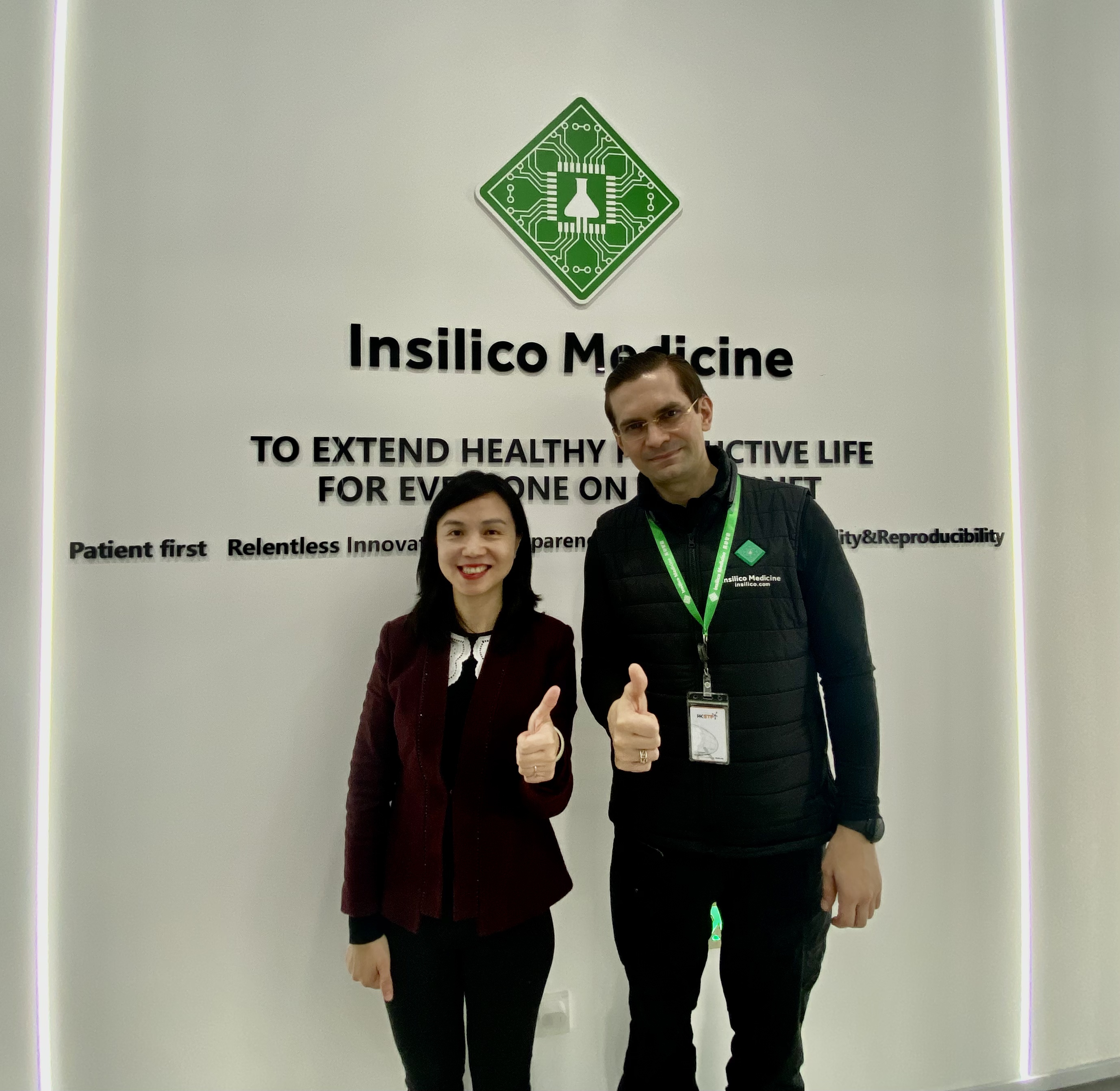
Alex Zhavoronkov with the editor-in-chief of PharmaDJ Donglei,Mao