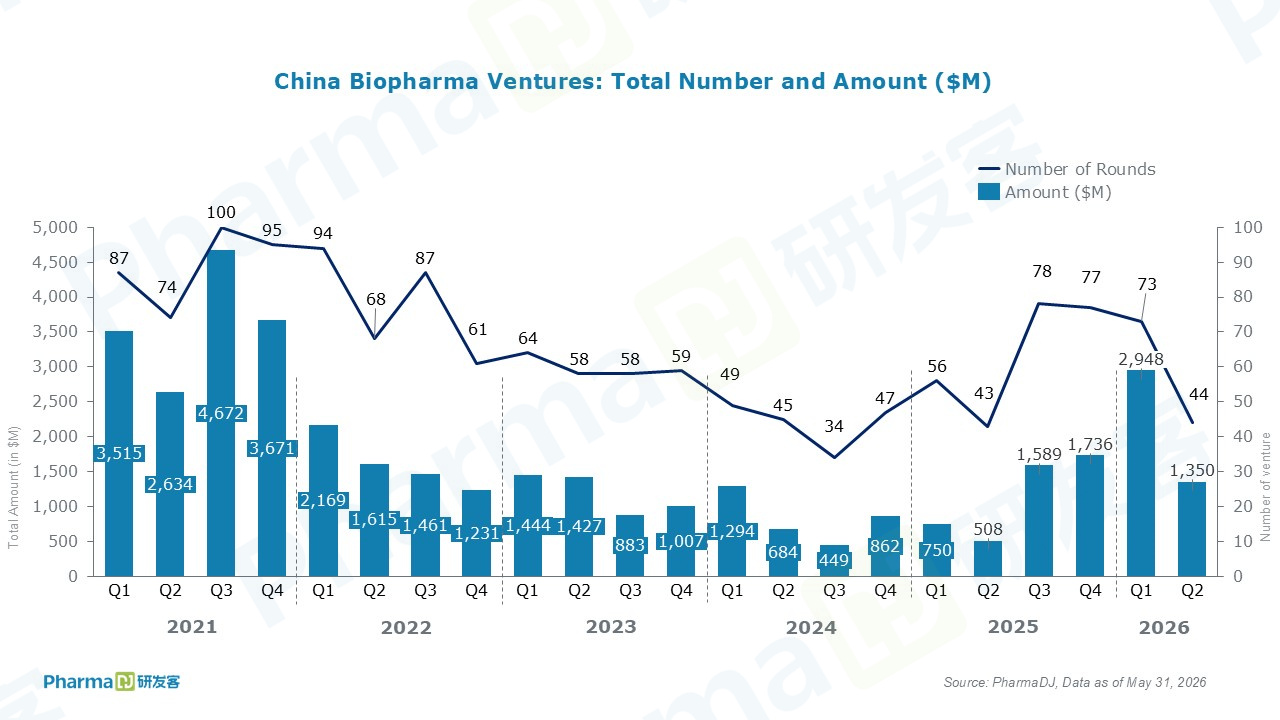
25 China drugmakers raised a combined $779 million in May – a month‑over‑month surge of 36% – fueled by a burst of investor enthusiasm for cell and gene therapies (CGT) and radiopharmaceuticals.
At least eight CGT companies closed new funding rounds or strategic investments in May, covering a stunning range of platforms: in vivo gene editing, in vivo CAR‑T, CAR‑macrophage (CAR‑M), Treg cell therapy, iPSC, in situ transdifferentiation, and ophthalmic AAV gene therapy.
In vivo CAR‑T stayed in the spotlight. Starna Therapeutics pocketed a $40 million Series B+ extension, while CR Therapeutics raised nearly RMB 100 million in an Angel+ round. Both are racing to turn the body's own cells into cancer fighters without the need for ex vivo manufacturing.
Despite the CGT frenzy, the largest single financing of May went to Full-Life Technologies. The radiopharmaceutical developer closed a $109 million Series D equity round and $41 million in debt financing. Vivo Capital led the equity portion. Meanwhile, Bivision Pharmaceuticals – focused on targeted radionuclide therapy – raised nearly RMB 400 million in a Series B co‑led by Pudong VC Funds, Zhangjiang S&T Investment, and IDG Capital.
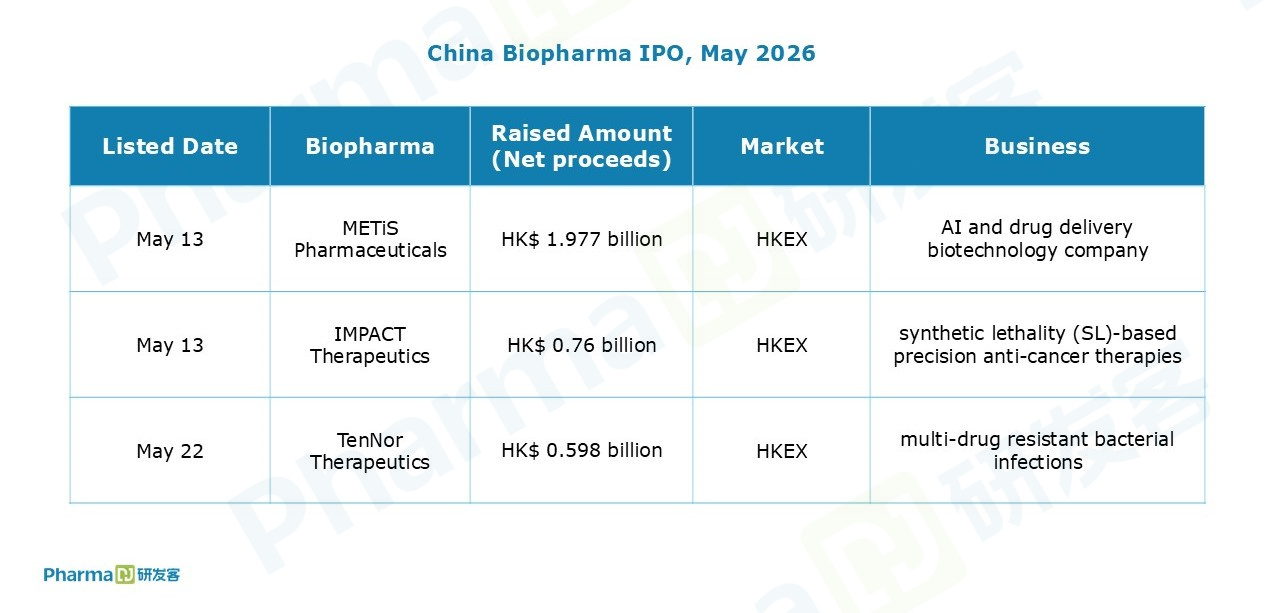
Notably, three Chinese biotechs listed on the Hong Kong Stock Exchange in May – METiS Pharmaceuticals, IMPACT Therapeutics, and TenNor Therapeutics. Among them, AI‑driven drug discovery company METiS Pharmaceuticals raised HK$2.1 billion, making it the largest biopharma IPO in Hong Kong so far in 2026.
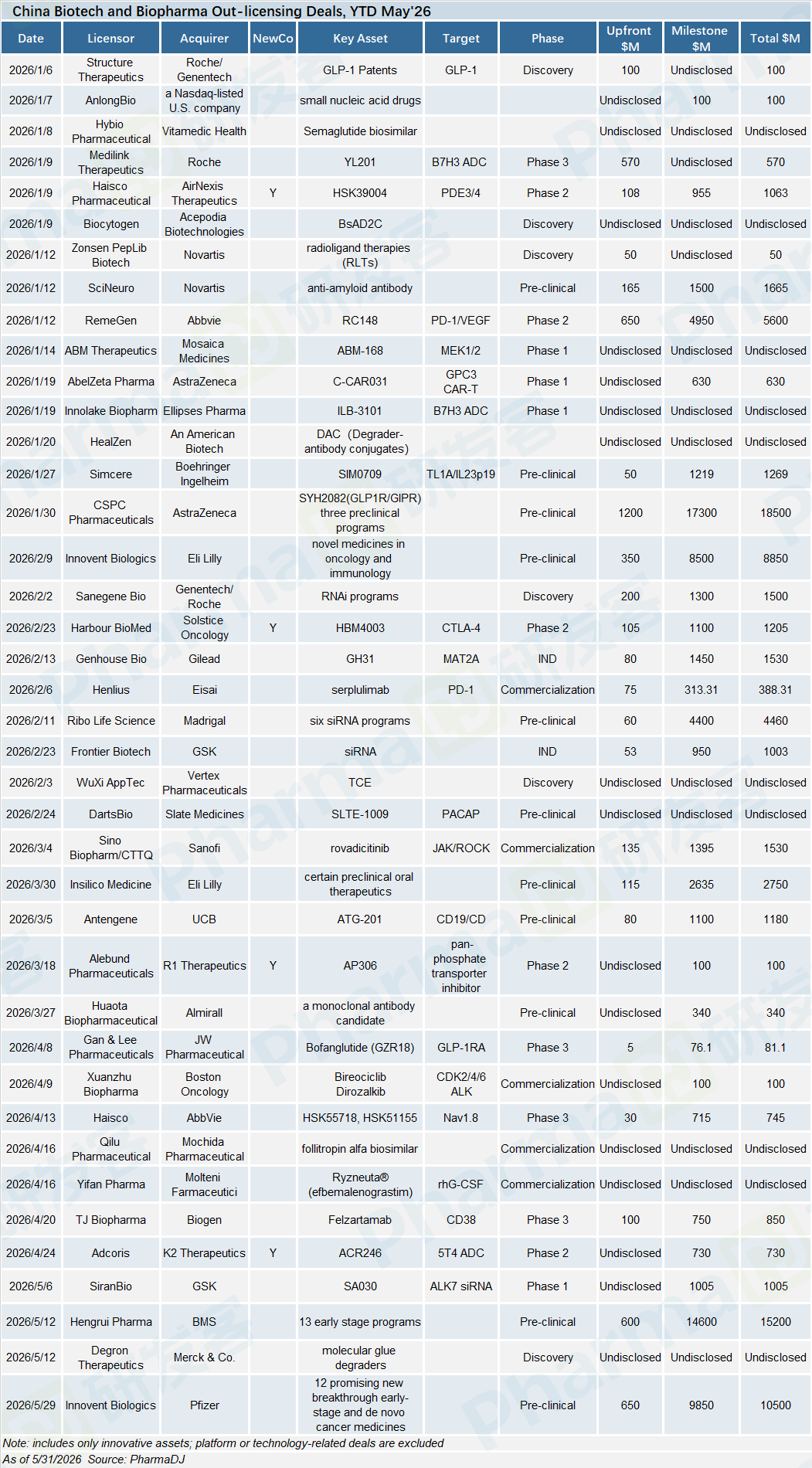
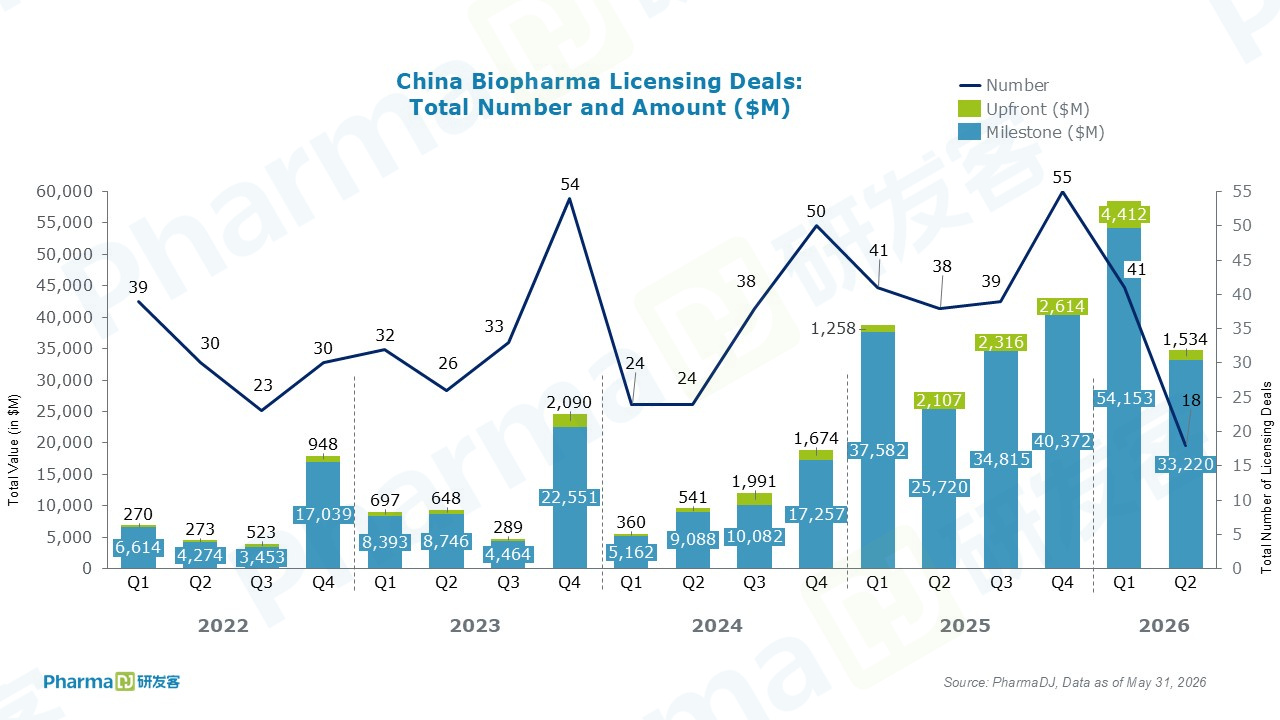
Only four outbound licensing deals were signed by Chinese drugmakers in May, but every single one involved a major multinational.
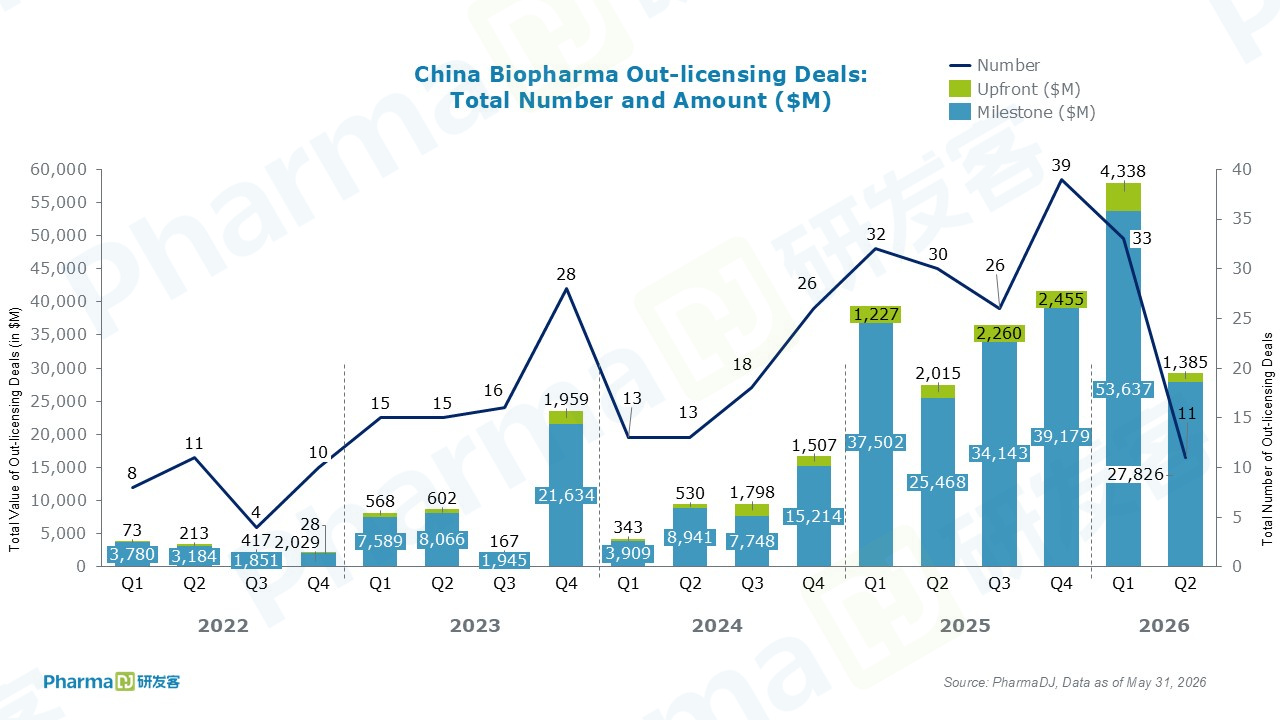
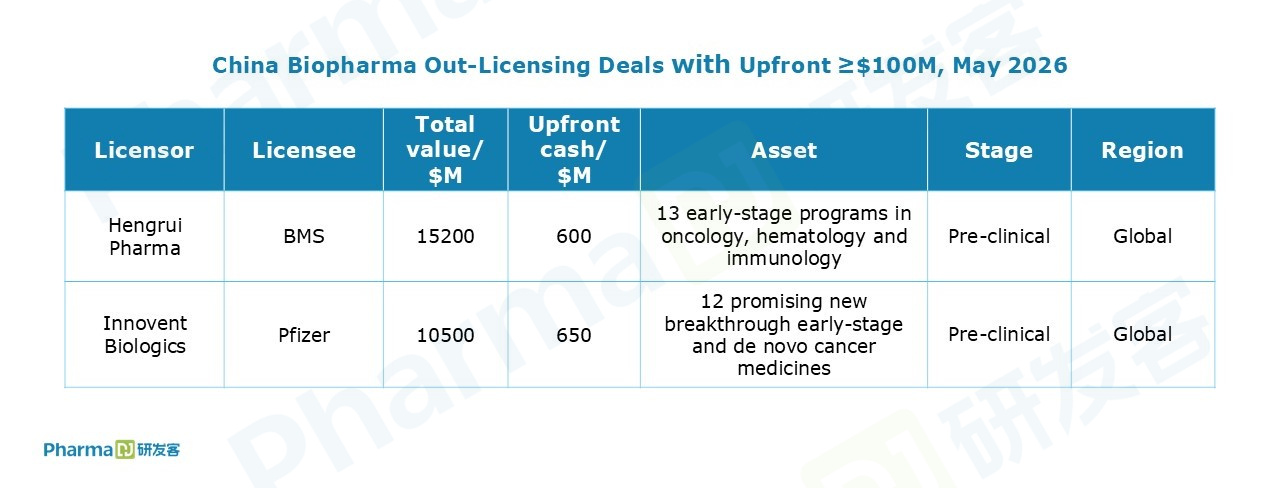
Hengrui Pharma teamed up with Bristol Myers Squibb on 13 early‑stage programs across oncology, hematology and immunology. BMS paid $600 million upfront, with the total deal potentially reaching $15.2 billion in development and commercial milestones.
Innovent Biologics struck a pact with Pfizer covering 12 promising new breakthrough early‑stage and de novo cancer medicines. Pfizer forked over $650 million upfront, and Innovent could pocket up to $9.85 billion in development, regulatory and commercial milestone payments.
SiranBio licensed its small interfering RNA (siRNA) candidate SA030 to GSK in a deal worth $1.005 billion in total. Degron Therapeutics joined forces with Merck & Co. on molecular glue degraders. Financial terms were not disclosed, but the collaboration adds yet another MNC stamp of approval on China-originated innovation.