By Daniel Friedman(BroadOak Capital Partners)
Earlier this year I found myself needing to visit family in Southern China, so I added two weeks to the trip to learn more about the local biopharma industry. I met with investors, bankers, researchers, and executives from across the ecosystem (†). What follows are some of the things that I found interesting and some of my thoughts after returning home.
The Big Picture: A State of Flux
· The transition to the "era of the Chinese biologist" is well underway. Long the world's leading API supplier, China's ecosystem has now evolved to also be a leading originator of novel biologics.
· This newfound expertise has triggered a biopharma goldrush. An explosion of Chinese asset out-licensing - dozens of deals, billions of dollars, including in some of the hottest modalities.
· But the capital plumbing is broken. Foreign venture came and (largely) went; gov-backed funds dominate but their capital comes with strings attached; the primary exit path is a creaky Hong Kong IPO market.
· Government action is the quiet primary driver. Beijing has placed biopharma at the heart of national industrial strategy; regulatory, financing, provider, and market-access levers are all in flux.
For Context: Chinese Biopharma Market Metrics
R&D VOLUME
639 new FIC candidates (2022-Q1 2025)
+360% vs '18-21 (Fierce Biotech). R&D spend now exceeds the EU (DDW).
INNOVATION
30% of global innovative drugs (2026YTD)
up from 8% in '18 (SynBioBeta); including genuine innovations (Bio Brawl).
NOVEL DRUG APPROVALS
43 novel first approvals by NMPA (China's FDA) in 2024
vs 50 new molecular entities (NMEs) by FDA (FDA; Nature).
OUT-LICENSING
110 deals, $136B in total value, ~$8B upfront in 2025
48% of global BD value; ~2.6x vs '24 ($51.9B→$135.7B, SynBioBeta); Q1 '26 alone $60B (STAT).
HONG KONG STOCK MARKET
15 biotech 2025 IPOs w/ $1.9B raised
vs 8 in the US w/ $1.6B raised (Biospace).
CLINICAL TRIALS
No. 1 by new clinical-trial starts, 2024 (oncology and overall)
China surpassed the US on annual trial starts and accounts for most recent global oncology-trial growth (Clinical Trials Arena, ESMO Open).
AN ASIDE - THE WIDER R&D PICTUREMany metrics now put China as the global leader in R&D across all industries [3]. Life sciences were an area of weakness, but that has changed due to a large increase in scientific talent, with scientist FTEs up ~51% over the last 5 years (vs ~18% for the US) [2]. China has invested heavily in local education and benefitted from the US-to-China "brain drain" driven by ever-increasing China-US tensions. Since the 2018 China Initiative, the Chinese scientific FTE growth rate has doubled (~9% CAGR '19-'24 vs ~3% for the US). China still lags in basic research and is sometimes criticized for benefiting from fundamental research performed elsewhere (primarily in the US).
1. Pipeline scaling fast. 639 FIC-classified candidates from Chinese biotechs in '22-Q1'25; +360% vs 137 in '18-21 [1]. Caveat: count is sponsor-claimed, skews early-stage, and doesn't include quality metrics.
2. Concentrated in modalities where Western pharma is under-built. The post-'22 FIC pipeline skews toward modern biologics: ~25% bi-/tri-specifics, ~21% cell therapy, ~10% ADCs and ~10% radioligand-drug conjugates. Plus 15 Triple-G (GLP-1/GIP/GCCR) candidates and 7 Orexin antagonists [1].
3. The bispecific race to succeed Keytruda runs through China. Keytruda (the world's best-selling drug, >$150B in cumulative sales since '14) is approaching key patent cliffs. The five MNC lead PD-1/PD-L1xVEGF candidates targeting this opportunity are all Chinese-originated:
o BMS: BNT327; $1.5B upfront, up to $7.6B (press release); from BioNTech, originally Biotheus (bought for ~$950M).
o Merck: LM-299; $588M upfront, up to $2.7B. From LaNova. (press release)
o Pfizer: SSGJ-707; $1.25B upfront, up to $4.8B + $100M equity. From 3SBio. (press release)
o Summit: ivonescimab; $500M upfront, up to $5B. From Akeso. (press release)
o AbbVie: RC148; $650M upfront, up to $4.95B. From RemeGen. (press release)
4. Faster and cheaper trial execution. Enrollment runs 2-5x faster in China than global benchmarks: 0.9 vs 0.4 patients/site/month in PD-1 trials (McKinsey via Jefferies).
5. Looser IIT regulations provide an opportunity for early FIH data. Researchers are taking advantage of China's simpler system for investigator-initiated trials (IIT) to generate first-in-human (FIH) data. Median time to first-in-human has fallen from ~501 days (pre-2015) to ~87 days (SynBioBeta).
6. Expect more acceptance of China-generated clinical data, especially by VCs. Reg path is mixed: FDA acceptance of China-only data is unclear and the FY27 IND-data amendment and active US-debate on the issue introduce real risk ([see Government, below]). On the capital side, US NewCos (Alveus, CORXEL, Jeyou, etc.) raised capital specifically to develop in-licensed Chinese assets, signaling VCs already accept Chinese clinical data.
7. An explosion of activity. 110 out-license deals in '25, ~$136B in value (PharmCube). Q1 '26 ~$60B (44% of full-year '25, STAT). 48% of global BD in '25 vs single-digit % 5 yrs prior [1]. Licensing activity approaching M&A level: BMS spent $10B upfront on 13 M&A deals vs $9B on 32 BD deals in same window.
8. Two May '26 mega-deals frame the current pace. BMS-Hengrui (5/12): up to $15.2B / ~$950M near-term, 13 cancer/hematology/immunology programs in a 2-way exchange. Pfizer-Innovent (5/28): up to $10.5B / $650M upfront, 12 cancer programs.
9. China discount remains, but narrowing. 60-70% lower upfronts, 40-50% lower totals. But the gap is closing - 90% discounts like Hansoh B7-H3 in '23 haven't repeated, and buyers are paying closer to risk-adjusted implied values [App. A].
10. Out-licensing is a financing event, not an exit. Pre-profit distribution limits restrict dividends. Deals function as both a financing and a validation of tech - but investors don't see the cash.
11. NewCos built to buy. Companies are being formed to in-license assets and develop them ex-China. Kailera raised ~$1B around Hengrui's GLP-1 portfolio (IPO Mar '26); Verdiva launched on a record ~$411M Series A around Sciwind's incretins; Aiolos (Hengrui anti-TSLP) sold to GSK for ~$1B upfront; Candid built on in-licensed T-cell engagers.
12. Little foreign VC presence. Most global GPs that set up '15-23 have wound down or restructured. Sequoia separated as HSG; remaining firms (Qiming, Lilly VC, Hillhouse) operate w/ specific China-focused structures.
13. Private markets dominated by gov-backed funds w/ low risk appetite. Gov capital comes with strings: local domicile lock-ins, return-of-capital obligations, execs have personal liability for unreturned capital. Signal of change: early indications that gov-investor rules may be loosening ([see Government, below]).
14. Hong Kong IPO is the most viable exit path - and it's creaky. 84 IPOs since '18, ~300 in waitlist, new scrutiny on Cayman structures. Other paths may be emerging but early (two-way BD deals, selective M&A).
15. WuXi family is a global powerhouse and a case study for Chinese biopharma capability. Three independently-listed entities (AppTec, Biologics, XDC) together doing $10B annual rev and a combined valuation equal to Lonza or Samsung Bio. Detail in Appendix B.
16. Multinationals moving into China alongside US reshoring, not decoupling. "Made in China" is non-optional for competing in-region and even with it, there are systemic motivations to buy local.
17. Go-to-market runs on relationships and local distribution. Winning share is less about data superiority than about local distributor relationships. More than other regions, distributors drive purchasing. Payment terms stretch far longer than US / EU norms - but distributors shoulder most of this burden.
18. IP protection is improving but remains a real risk. China now files more patents than any country and has stood up specialized IP courts, but enforcement is uneven and foreign players still face trade-secret leakage, reverse-engineering, and weak recourse - and China is widely criticized for building on fundamental research done elsewhere without respecting the associated IP.
19. Beijing has placed biopharma at the heart of national industrial strategy. '26 Government Work Report named biopharma a pillar industry for the first time. Formalized by 15th Five-Year Plan (2026-2030).
20. Recent regulatory changes moving China toward international standards. MAH regulation (eff. May '26) brings exclusivity + quality systems toward US/EU parity (Ropes & Gray, Jan '26). 818 policy (eff. May '26) enables public hospitals to provide CGTs at profit.
21. Active US debate: "what to do about biopharma's run to China?" US legislators, pundits, VCs, and executives are openly debating whether to wall off the trend.
o FDA IND-data ban. House Appropriations approved language (Apr '26) that would bar FDA acceptance of certain Chinese clinical data in IND filings (NDA / BLA filings unaffected); Senate vote expected Sept - Oct '26.
o COINS and BINSA. Seven Republicans (incl. Sen. Tom Cotton) and, separately, Rep. John Moolenaar (China Select Cmte chair, May 21 letter) urged Sec. Scott Bessent to add biotech to the COINS Act's covered sectors. In parallel, the proposed Biotech Investment National Security Act would subject US investment in Chinese biotech to outbound-investment screening (introduced Jun '26).
o The industry itself is split. Damian Garde's STAT Special Report "The China question is tearing biotech apart" (May 18 '26): Ginkgo CEO Jason Kelly argues the US must slam the door on Chinese licensing deals, speed up domestic clinical trials, and reform how American drug discovery works - while RA Capital's Peter Kolchinsky counters that “a China ban would destroy the U.S. biopharmaceutical industry for nothing” (Fierce Biotech).
22. BIOSECURE has stalled and narrowed. The 2024 House bill named WuXi, BGI, MGI, and Complete Genomics as covered companies; the 2025 standalone version stalled in the Senate and the prior House version expired Jan '25 without re-initiation. Its thrust has since reformed as the narrower FY27 IND-data amendment (above). While WuXi divested some assets, the overall effect has been limited (detail in Appendix B).
23. How this resolves depends primarily on government action - both governments. Ecosystem is mature enough that the outcome will be set by policy, not science or commerce alone.
24. The coming demographic shift. Part of China's trial-speed edge is a population advantage - now ~4x the US, having peaked at 1.4B in '22 - but the population is projected to fall 113M by 2050 (UN). The 60+ share is expected to grow to 35% by 2050 (China Briefing). One expert expects large budget reductions for hospital and educational systems as the dependency ratio worsens.
25. Challenging economic environment. Rapidly increasing debt. Chinese biopharma was not insulated from the recent life-science slowdown, and many companies shuttered during the '23-'25 "capital crisis." Suzhou's biotech cluster (peak ~2,000 companies) consolidated significantly.
Where the openings appear, for US-based tools & services companies, investors, and advisors
Observations from the trip, not investment advice or recommendations. See disclosures.
· Connect Chinese capital with ex-China assets
HIGHER OPPORTUNITY
A plethora of cash-rich Chinese strategics and COVID-era dx companies (the latter "have to acquire their way out"). These buyers are less price-sensitive but have poor visibility into the ex-China universe - an opportunity as portfolio-company acquirers or as fund LPs.
· Build operating company commercial presence in China
HIGHER OPPORTUNITY
Develop relationships with local distributors and partners to sell into the ecosystem.
· Out-license Chinese tools to global markets
HIGHER OPPORTUNITY
Apply the biopharma BD playbook to tools - package innovative Chinese tools assets for ex-China distribution via US sales / regulatory infrastructure.
· Support US in-licensors absorbing Chinese assets
EMERGING
US biotechs raising rounds specifically to develop in-licensed Chinese assets (e.g. Alveus, Slate, R1, AirNexis, CORXEL, Jeyou - the "NewCo" layer) buy clinical, regulatory, mfg, and tools services from US providers.
· Acquire or directly invest in Chinese companies
HIGHER RISK
Acquisition is possible in narrow cases, but integration cost, regulatory complexity, and IP-transfer friction usually outweigh the price discount. Direct investment runs into the broken capital plumbing - gov-fund domicile lock-ins, founder personal liability, no foreign-LP exit infra. Today = wrong tool; may change if the financing environment normalizes.
TAKEAWAYS
IN CLOSINGUnsurprisingly, I found China's life sciences industry to be largely the same as the rest of the world - data leads and helping patients drives outcomes. All of the interactions I had were nothing but positive, and everyone was well aware of the large challenges that the Chinese (and global) biopharma space still faces. Overall, I left impressed and am looking forward to continuing to build those relationships.My thoughts are based on limited data over a short period of time, so I would love to hear from you on where you think I'm wrong or you disagree.
- APPENDIX -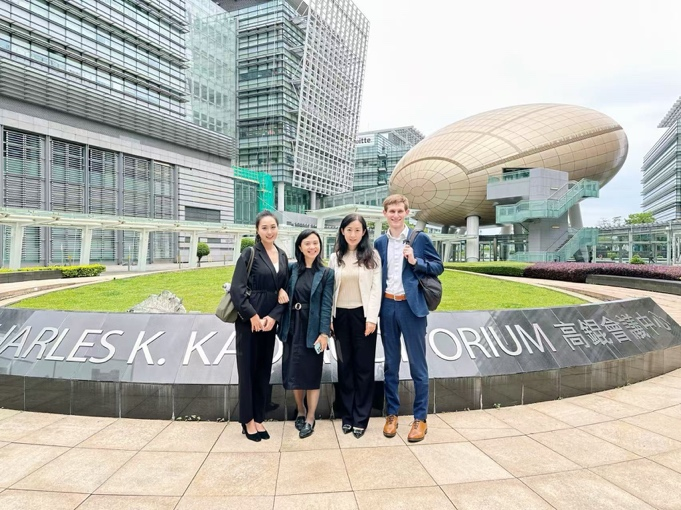
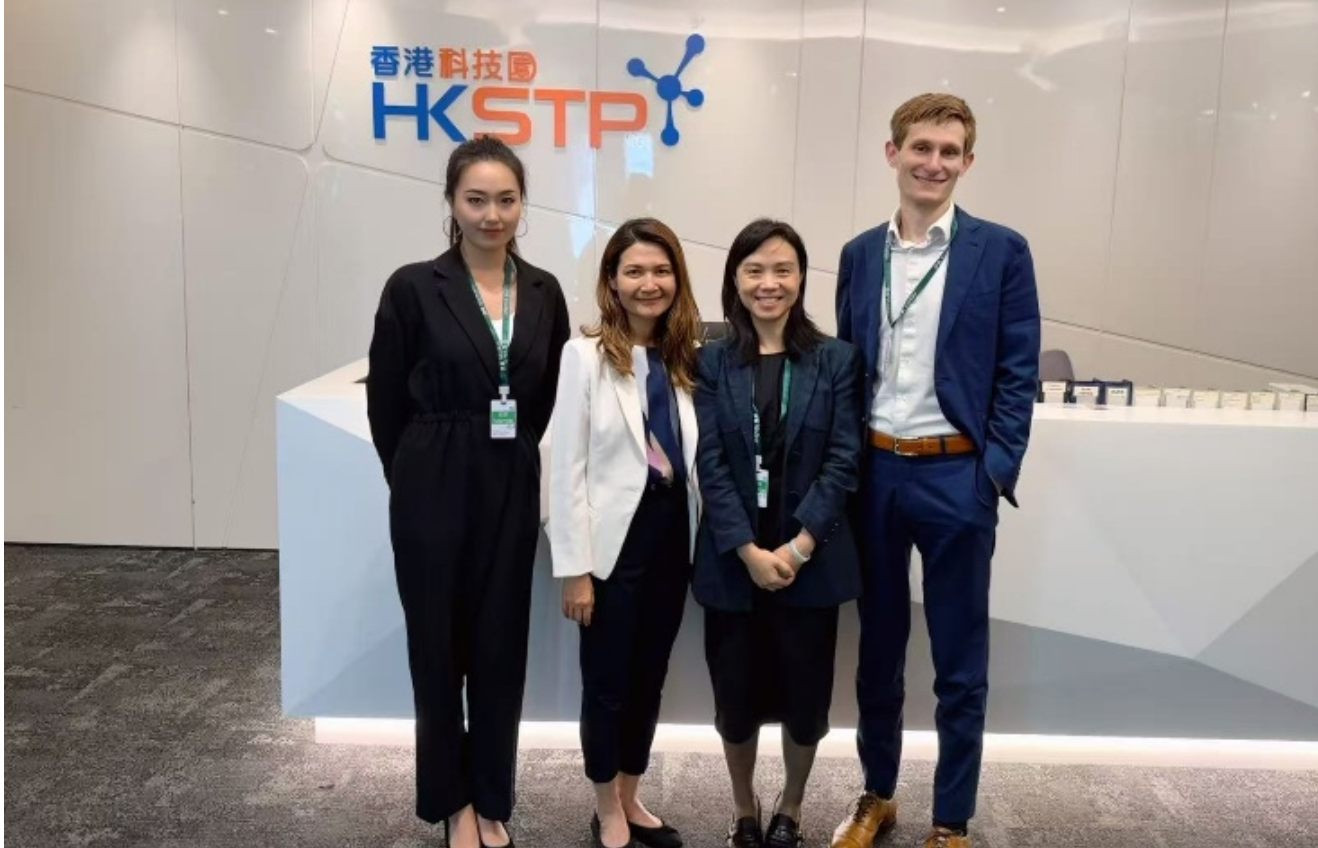
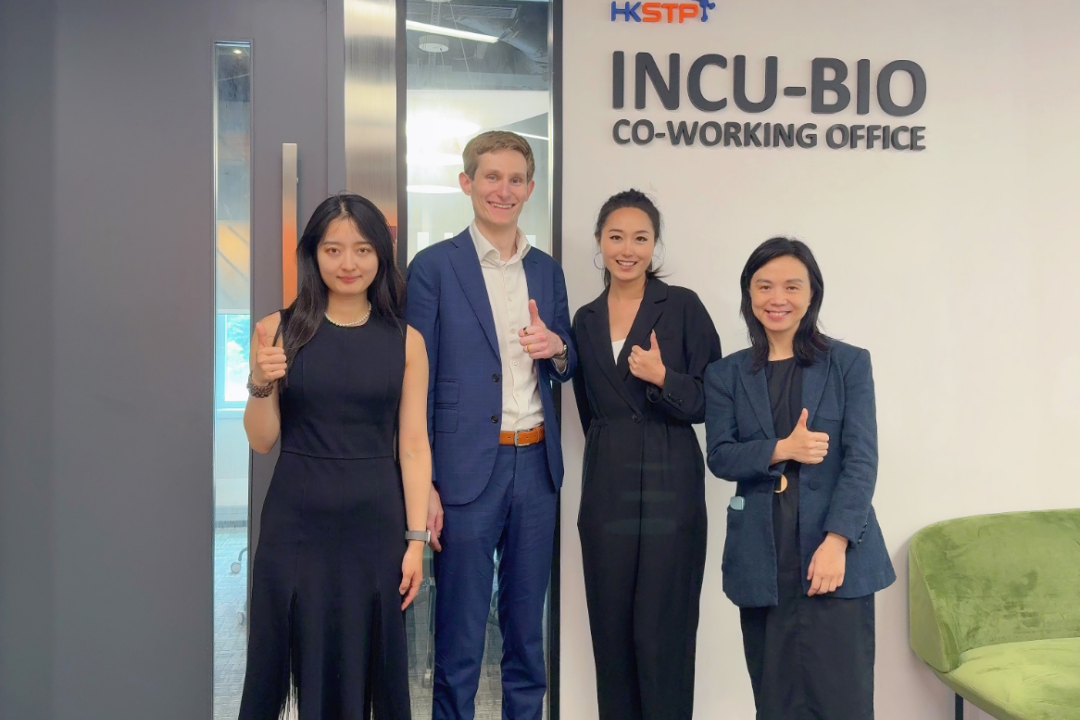
HKSTP, Hong Kong
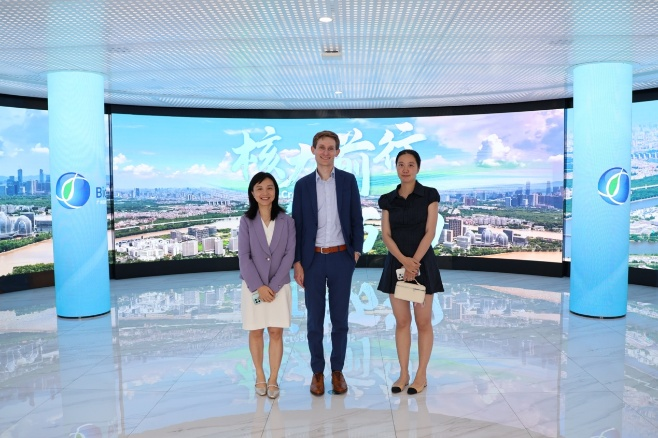
Guangzhou Bioisland
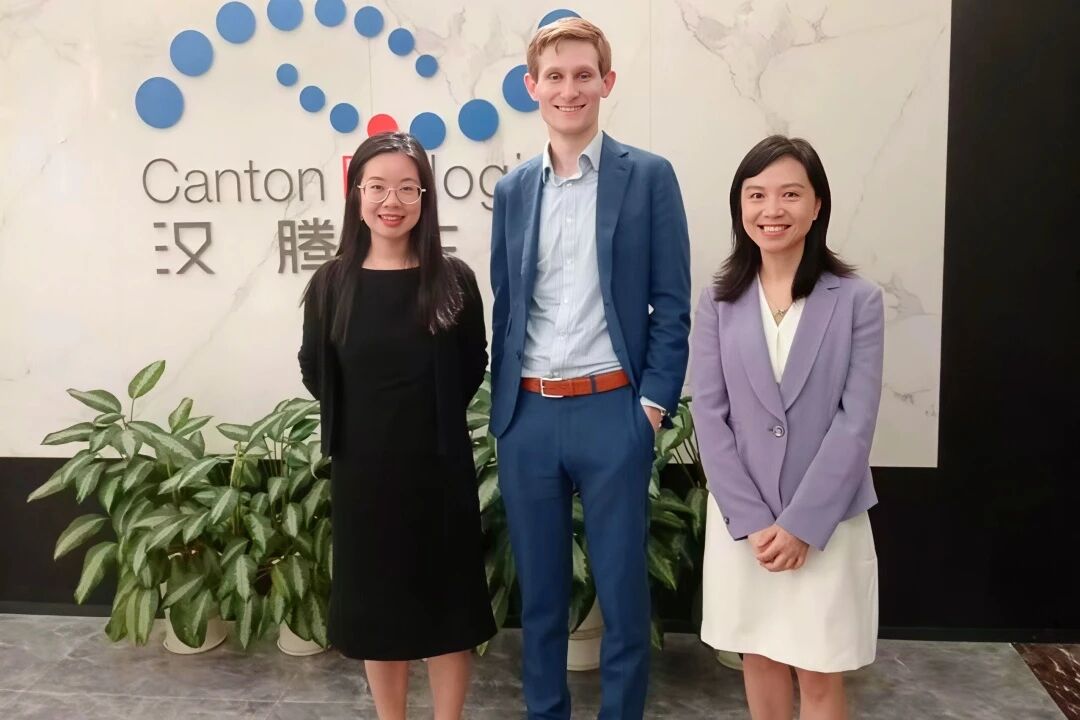
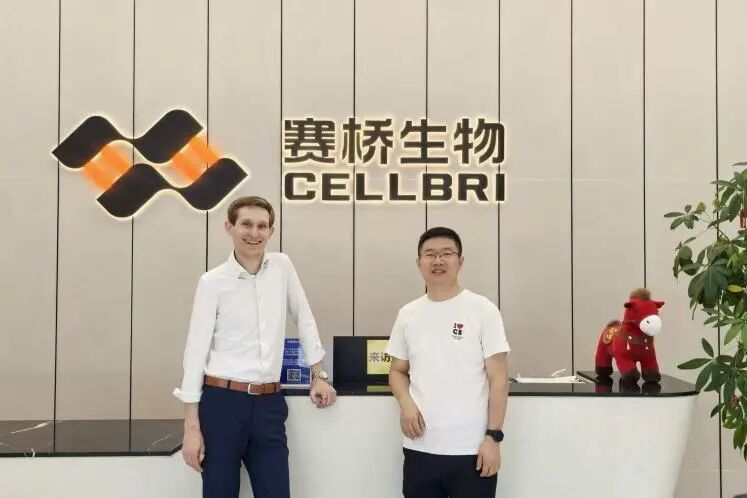
Biologics,GuangzhouCellBri,
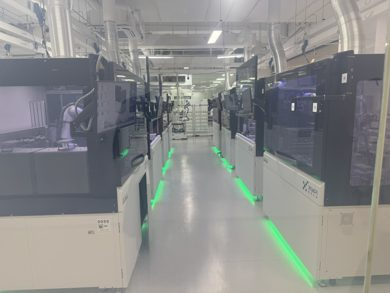
ShenzhenXtalPi
(Shenzhen)RainSure, Suzhou
(A) MORE ON THE OUT-LICENSING TREND
Phase 1: cheap-asset arbitrage. Western pharma bought Chinese assets at heavy discounts which compensated for the perceived elevated risk of the asset. e.g. in 2023, Hansoh's B7-H3 ADC sold at a ~90% discount to Daiichi-Sankyo's same-stage asset. This phase is slowing down and the "China discount" is declining, but still large (40%-50%).
Phase 2: paying for quality - starting up. Pharma is paying real money for assets they believe are best-in-class. Three signals: two-way deals (BMS-Hengrui, 5/12/26, up to $15.2B / ~$950M near-term, 13 onc/heme/immuno programs, each side taking the other's regional rights); upfront step-ups (avg $35M in '25 vs $33M FY24); and discount compression (the upfront gap narrowing from a -76% peak toward -60-70%, deal-total gap -40-50%). Volume keeps climbing through both.
The big deals cluster around Keytruda competition. Summit paid $500M upfront for ex-China ivonescimab (HARMONi-2: HR 0.50 vs Keytruda, 2L NSCLC). Merck paid $1.4B / ~$9.3B for Kelun's sac-TMT TROP2 ADC (ASCO '26: 65% PFS-risk cut vs Keytruda mono, 1L PD-L1+ NSCLC). Pfizer-Innovent (5/28/26): $10.5B / $650M upfront, 12 cancer programs. 76 China-to-MNC ADC deals signed through end-'25, 31 over $1B - franchise-level commitments, not bargain-bin pickups.
(B) THE WUXI FAMILY
The WuXi entities are central to the China biopharma story - the de facto ADC CDMO of the out-licensing wave and the most-targeted names in the BIOSECURE debate.
Structure. Three independently-listed entities founded or spun out by Dr. Ge Li (ex-Eli Lilly chemist): WuXi AppTec (Shanghai A-share + HK; original CRO + small-molecule CDMO, incl. WuXi STA and corp venture); WuXi Biologics (HK; large-molecule CDMO, spun out 2017); and WuXi XDC (HK; ADC CDMO, AppTec/Biologics JV, IPO 2023). No single holdco or consolidated balance sheet - shared founder vision and overlapping shareholders.
History. Founded 2000 (Shanghai); NYSE IPO 2007; CRL paid a $30M breakup fee when its board voted down a $1.6B acquisition, and that fee became WuXi's CVC; $3.3B take-private w/ Hillhouse 2015; re-listed Biologics ('17), AppTec ('18), XDC ('23) - each unlocking a line for separate capital allocation. Sold Advanced Therapies 2025.
Current state. Together, WuXi has $10B revenue, among the largest CRDMOs globally. AppTec: +22% in '25, supported 6-8 of 10 '23-'25 "molecules of the year," (interestingly AppTec recently claimed that AI discovery companies are their fastest-growing customer segment). Biologics: +17% in '25, 209 new programs, NJ expansion 4kL -> 40kL by '27 (most aggressive non-Lonza US buildout). XDC: +47% in '25, ~60% of >$1B China-MNC ADC deals, $991M backlog (+71% YoY), Singapore GMP late '26, targeting 3-4 US BLAs/year.
BIOSECURE response. Legislative arc is above; WuXi's operational answer has been to de-risk US-facing exposure - ring-fencing capacity (NJ, Ireland, Singapore) and, in the clearest move, WuXi AppTec's sale of its US/UK cell & gene therapy business (WuXi Advanced Therapies) to Altaris, completed Mar '25 - while continuing to win clients (the BMS-Hengrui and Pfizer-Innovent deals will both partly flow through WuXi) and engaging Congress directly. WuXi Biologics claims minimal impact (low single-digit hit to growth).
WHAT TO WATCH
· 5/31/26Akeso ivonescimab HARMONi-6 OS, ASCO plenary. First plenary for results from a trial with sites only in China. Note: now released to mixed reception - positive topline, but some signals the therapy may be more effective in an Asian population of younger, less-sick patients.
· SEPT - OCT '26FY27 IND-data amendment, US Senate vote. Senate concurrence + FDA cooperation required. Plan around enforcement-risk; don't underwrite either side.
· MONITORDecree 834 + MSC / EV / exosome GMP-media rule. Two adjacent consumables rules; scope / overlap still being mapped.
· MONITORHKEX 18A / 18C IPO window. ~300 company backlog. STC Cayman scrutiny = risk to watch.
· MONITOR15th Five-Year Plan implementation. Pillar-industry designation needs to translate into funding flows, hospital-system reforms, and payment-system experimentation - watch for the operationalizations through '26-'27.
· MONITORHospital + IIT (investigator-initiated trial) regulatory evolution. Reform pace + content will determine how fast Chinese clinical data becomes globally registrable; closely linked to FDA / EMA acceptance trajectory.
· MONITORGovernment-investor rules. Early signals suggest the strings on gov-fund capital (domicile lock-ins, founder personal liability) may be loosening. Material change here would re-open private financing flow.
† A SHORT STORYI started my career as a junior investment banker working on capital raises for public biotech companies. My first assignment at the time was to take over the arduous, weekly process of updating our capital raise database - reviewing all of the recent transactions, identifying the relevant biopharma deals, and scrubbing the data by digging through public filings. Weekly, we would download a list of all the prior week's transactions and start cleaning the data by deleting all of the Chinese deals from the list. At the time, it felt strange to just ignore a large portion of the market, but it made life easier as those transactions would be very difficult to verify. While there were good reasons to be skeptical of many of those transactions (outside of language barriers, most of the deals were very small financings on domestic Chinese exchanges by tiny companies), the blanket "ignore this" left me curious and skeptical of the criticisms of Chinese science.
1. Jefferies (Hong Kong + Asia Healthcare research). "FDA's Long-Running China Data Headache: Ban or Bluster" (May 4, 2026, 17pp; MNC-by-MoA mapping, FIC pipeline data, BD-vs-M&A economics); "Shopping in China's Biotech Supermarket"; "Global Marketing Feedback - Biotech Heat and AI - China" (Jul 3, 2025). McKinsey trial-speed data referenced via the May 4 report.
2. CSIS scientist-FTE dataset. Cross-jurisdiction researcher headcount and CAGR data (China +51% / +9% CAGR vs US +18% / +3% CAGR; '19-'24). Per prior BroadOak research compilation.
3. China's leading R&D position on several public metrics. High-quality science output: China overtook the US in the Nature Indexof leading natural-science journals (Nature, 2023). Critical-technology research: China leads in 57 of 64 critical technologies, up from 3 two decades ago (ASPI Critical Technology Tracker). Patents / IP: China filed ~1.8M patent applications in '24, ~49% of the global total and >3x the US (WIPO World IP Indicators 2025). Caveat: the US still leads in absolute gross R&D expenditure; the leadership claim holds on output and innovation metrics, not total spend.
4. HKSTP Introduction Deck (Hong Kong Science & Technology Parks Corporation, May 2026, 31pp).
5. Bio Medicine Master. "Top 13 Global Small Nucleic Acid Drugs by Revenue in Q1 2026" (May 13, 2026).
6. BroadOak research synthesis on China biotech (May 2026).
7. ~30 in-person meetings (Apr 29 - May 18, 2026) with investors, bankers, CDMOs, fund managers, incubators, and company executives across Shanghai, Suzhou, Shenzhen, Guangzhou, and Hong Kong.
Data as of June 3, 2026. Photographs are the author's own.
Disclosures. The views expressed are the personal views of the author and do not necessarily reflect those of BroadOak Capital Partners or its affiliates. This material is provided for general informational and educational purposes only. It is not investment, legal, tax, or other professional advice, and it is not a research report. It is not an offer to sell or a solicitation of an offer to buy any security, or to invest in any fund or strategy. It may reference companies in which BroadOak-managed funds hold or have held positions; any such reference is not a recommendation to buy, sell, or hold any security. Statements about future events are forward-looking, reflect expectations as of the date noted, and are subject to change; actual outcomes may differ materially. Information is drawn from public and third-party sources believed to be reliable, but its accuracy and completeness are not guaranteed.
Editorial: Is it not a delight to welcome friends from afar?
"Is it not a delight to welcome friends from afar?"
The author of this piece, Daniel, is a young professional from BroadOak Capital Partners in Boston. Several months ago, through a mutual acquaintance, he reached out to me while I was pursuing my studies at the Hong Kong University of Science and Technology, expressing his wish to tour the Hong Kong Science Park and biopharmaceutical enterprises of Hong Kong and Guangzhou under my guidance. At that juncture, China's biotech sector had just navigated its pivotal evolution from "Fast Follow" to First-in-Class drug discovery. Following a prolonged capital winter, the industry has been steadily regaining its momentum, with business development transactions now commanding global attention. Chinese NMPA regulatory frameworks are accelerating their harmonization with international norms, R&D capabilities are advancing with remarkable consistency, and the financing landscape is showing tangible signs of recovery—even as Chinese‑American relations have regrettably descended to their chilliest point in decades.
As I prepared to receive this American visitor from across the ocean, the words of Confucius came naturally to mind: "Is it not a delight to have friends coming from afar?"and likewise, "When three walk together, one of them is surely my teacher." Carrying this ethos in my heart, I joined forces with colleagues from HKUST, the Hong Kong Science and Technology Parks, and several AIDD biopharmaceutical firms to extend to Daniel a most cordial welcome. During his visit to Guangzhou International Bio Island, he gained a vivid appreciation of the city's ambitious strategic blueprint, known as the "Three Cities and One Island" initiative. As our time together drew to a close, this young post‑90s visitor remarked with genuine admiration that China's biopharmaceutical landscape had left an indelible impression upon him—and he voiced an eager longing to return at the earliest opportunity.
Regrettably, the constraints of my schedule prevented me from accompanying him further to Suzhou and Shanghai. Nevertheless, he proceeded independently to complete thorough site visits to Shanghai Zhangjiang and Suzhou BioBAY, and subsequently produced a meticulously detailed investigative report.
Daniel proved himself to be a man of remarkable diligence and productivity, and his analysis was both incisive and discerning. In his report, he thoughtfully cataloged China's advances in pipeline expansion, out‑licensing transactions, and clinical trial efficiency, while simultaneously capturing with keen perception the shifting dynamics of government industrial policies, the evolving capital environment, and the intricate regulatory interplay between China and the United States. He also offered his fellow American investors a sincere counsel: that China presents compelling opportunities for collaboration and investment across out‑licensing deals, CRO partnerships, and cutting‑edge therapeutic domains such as ADCs and bispecific antibodies.
China's innovation ecosystem, for all its vitality, remains young and not without fragility. We stand in genuine need of partners from the United States—a nation possessed of preeminent expertise in regulation, investment, R&D, and CRO services.
Encouragingly, from the visit of RA Capital last February to the recent arrival in Shanghai of former FDA Acting Commissioner and CDER Director Dr. Janet Woodcock, together with delegation teams from RTW and other friendly American institutions, the signal resounds with clarity: drug development and patient welfare transcend national boundaries and must never be held captive to geopolitical strife. At stake is the health and well‑being of countless patients and families on both shores of the Pacific.
As I bade Daniel farewell at Guangzhou East Railway Station before his return to Hong Kong, he turned to me with a question that caught me off guard:
"Why are you so kind?"
I paused for a moment, then answered:
"Because I did this for my country, for the pharmaceutical industry of China. I hope you will return again, and that you will bring collaboration to this land."
He replied without hesitation: "Of course. This journey I made to China—I made it also for my country. For America."
Standing there on the platform, watching his silhouette recede into the distance, I was overcome by a quiet conviction: that some bonds of friendship and mutual respect are indeed worth crossing half the earth to sustain.
(Editor-In-Chief of PharmaDJ, Donglei,Mao)