An interview with Dr. Victor J. Dzau, Past President of the U.S. National Academy of Medicine, Chancellor Emeritus of Duke University, by PharmaDJ
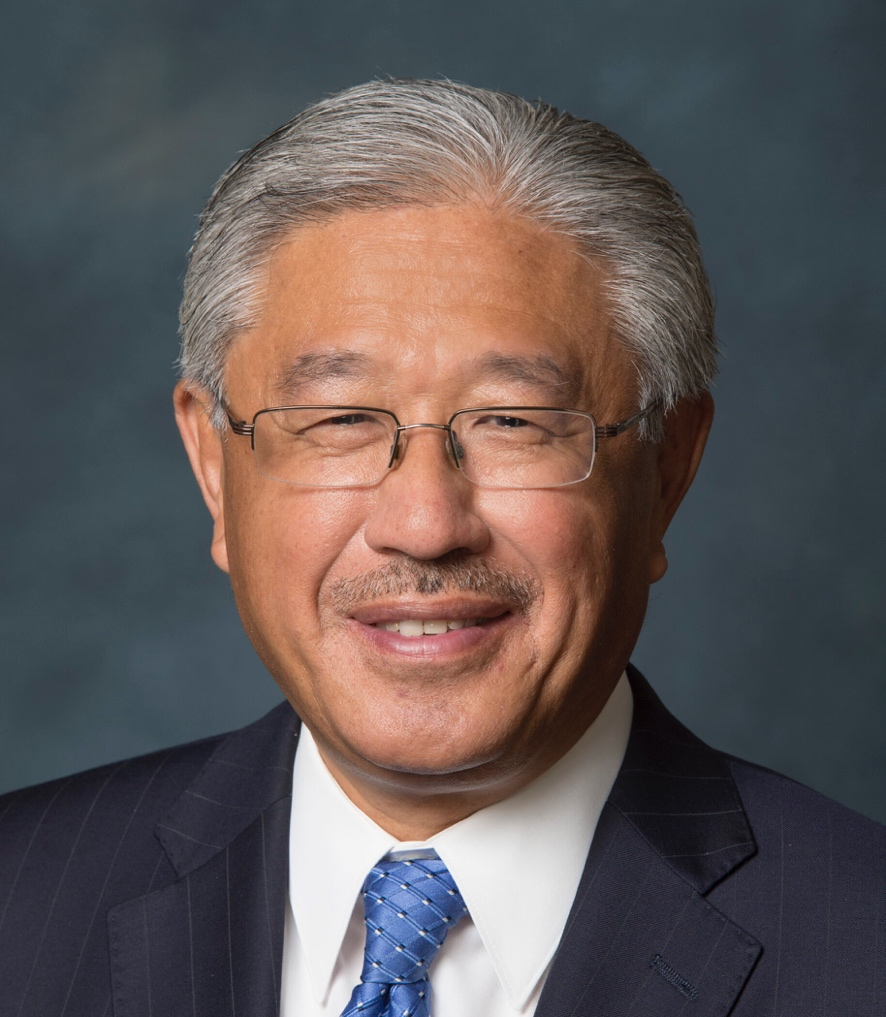
Dr. Victor Dzau
I met Dr. Victor Dzau at BIOHK2026. He was born in Shanghai, raised in Hong Kong, and left for McGill University in Canada at eighteen. He went on to serve as Chair of Medicine at Stanford and at Harvard's Brigham and Women's Hospital, as Chancellor for Health Affairs at Duke University and CEO of Duke Health, and as President of the U.S. National Academy of Medicine. He was the first immigrant to lead any of the three Academies that make up the U.S. National Academies. His research laid the foundation for ACE inhibitors. He pioneered gene therapy for vascular disease. He holds twenty-four honorary doctorates. He was named an Honorary Citizen of Singapore in 2019 and received Japan's Order of the Rising Sun in 2025.
Yet when I sat down with him, I found a remarkably humble and warm man. He speaks like an elder, telling the story of half a century as though it were nothing more than a small contribution to patients, to communities, to nations. That has been his north star. It is why he has always cared about equity and coherence in policy making, why he focuses on translating science into clinical care, and why he insists that scientists must tell the truth and not be swayed by politicians. He is delighted and proud to see the strength of China and Hong Kong in the life sciences. And he believes America, with its flexibility, its spirit of exploration, its deep understanding and support of innovation and research, its pursuit of truth, its democracy, its openness and inclusiveness, and its good institutions, will continue to lead global innovation in the life sciences.
PharmaDJ: Dr. Dzau, thank you very much for giving me this opportunity. You are so famous, and you have received so many achievements in your career. What is the most meaningful milestone in your career path, as a scientist, as the head of a university, and even as an innovator, especially when you are making policy, when you are shaping policies?
Dr. Dzau: I do not see achievement from a milestone point of view. I see it as a continuous effort to make a difference, to make an impact. There is no single acknowledgment, no single word or achievement, that I can say is the one I want. My entire life, I have been very lucky, having been given opportunities in research, education, and patient care. I feel I need to give back, to society and to human beings. That is why I find it rewarding. I continue to have the opportunity to do something good for the public, and for the most vulnerable people, like patients. When I spoke this morning about global health, it is about everyone everywhere, rich or poor, older or young, whatever color, whatever race, whatever gender. Everybody should have the same opportunity. That is equity. What I do a lot is to ask, number one, how do I create innovation that can help others? And number two, how do I make sure everybody gets access to it?
PharmaDJ: You just mentioned how everything is your top priority, especially at the National Academy of Medicine. What is the hardest part when you are making health care policy? How do you make it fair to everyone, no matter whether they are poor or rich, or whether it involves money and politics, or culture, or anything else, especially during COVID-19, such a huge disaster in human history?
Dr. Dzau: First of all, there are principles and values. You can create policy around them. But as you can imagine, there are so many different forces that determine this issue. That makes it very difficult. So you do the best you can to bring the right people together to agree on what would be the best possible environment. Take 2019, and let us take a vaccine as an example. The vaccine was developed in 300-some days. That is unheard of. Governments were quite smart and said, we are going to give you the risk for you to manufacture, and we are going to give you procurement. The problem is which countries can pay a lot more than poor countries.
That is where the value of the return on investment is for many companies. But government has also come in with regulation. They argue that I need to protect my citizens first. I have to buy the vaccine for my citizens. You cannot distribute it anywhere. The problem is the distribution to everywhere. India, the Serum Institute of India, can make hundreds of millions of doses at low price and certainly cover COVID. And then COVAX had a deal to buy this at low price to give it to more countries. But the government said, no. Nothing leaves our country. It affects everyone. These are the problems. What we always have to do is to be sure that, with the voice of everybody, the policy makers, to the extent you can, you make policy that allows everyone access.
But there is also a lot of geopolitics and other circumstances that make it difficult. The innovation, science, and technology are facing new difficulties, such as geopolitical hurdles. So we have to collaborate, especially developed and developing countries, when we face the same enemy as a disease. Diseases have no borders. Whether it is climate or pandemic or anything of the same kind, we have to collaborate. If we do not make sure that we are equitable, and you do not protect everyone, then poor countries with less protection will have the infection, and they will continue to spread to richer countries as well. Everyone sees this as everybody's problem together. You share all those things. You prioritize what you want to do first. For example, in the case of vaccine, high risk, you can get it to everybody. But what about giving it to high-risk individuals, health care workers? How about making sure that every country has them? Those are the issues.
Now, I think that globally there is a lot of interest in multilateral agreement and solidarity and doing the right thing. More recently, this has changed quite a bit into more nationalism, and that makes these things very, very difficult. We have to hang in there. We have to believe in it. Just take measles. If you do not vaccinate children in poor areas, they are going to get measles. They therefore spread over to rich areas or countries or whatever. So I think you need to be sure that it is protecting everyone by having equity.
PharmaDJ: When we talk about COVID-19, although many Chinese people would prefer not to mention it, I truly believe that there are still many diseases like COVID-19 that can surge severely and suddenly, and that humanity still has great unmet medical needs. So what is your definition of health? And since we may face another pandemic like COVID-19, what kind of lessons do you think we can learn from this disaster? Are humans ready to prepare for the next pandemic like this?
Dr. Dzau: You ask the right question. What kind of lessons have we learned? I think we have to look at what lessons we have learned, and then ask how we can prevent the next one. And if it happens, how do we respond to it? There is a lot of effort in global health. I am working on this myself. I am involved with the G20 High Level Panel on pandemic financing. Making sure there is enough money is very important. I co-chair something called the 100 Day Mission, which asks: within 100 days, how can we ensure you get vaccines, diagnostics, and therapeutics?
So this group of scientists and policy makers is trying to move things forward, with better investment and better preparation. I am also involved with regional vaccine manufacturing. I co-chair that as well. There you can say manufacturing should not be only in the rich countries. It should be in regions, so that you can have access and not be dependent.
With this kind of effort, you have to keep trying to make it work. The good news is that a lot of people really believe in this issue of equity. The challenge is that not everybody believes in it, and governments have different policies.
PharmaDJ: As a scientist and professor from the university and academic area, do you think it is difficult to work with the government? Just as you mentioned, the government should protect ourselves. What is the position and role that you think scientists can play to elaborate their true ideas to the policy makers?
Dr. Dzau: There is a lot of distrust in science. Scientists have to be much better communicators, and they must use a single, unified voice to be sure people know the value of science, especially when it comes to specific areas. They should agree on what is the best way to pursue science. They should also be ready to say, I do not know the answer.
It is unclear when you get more information, so that you are not dogmatic. During the pandemic, there was a lot of problem with that kind of approach. Scientists have to engage as a body, to have a collective voice to say what is good for science, but also what is good for society. Scientists have to work with other bodies, like civil society, patients, et cetera, to also unify the voice. Not just there alone. They want to be relevant to what the public needs, what society needs.
PharmaDJ: I think it can convey the voice from the community, science, and patients, so as to assure the government makes the right and precise decision. Thank you. Just now we talked a lot about policy and government. I would like to switch to another topic, like innovation. Because you mentioned that there is a lot of innovation just lying in the lab, but how to transfer it to clinical use? How to work with the industry, from the university and the whole community?
Dr. Dzau: I think that we look at the innovation ecosystem as different components, and therefore it is fragmented. You have the research laboratories, then you license the technology to companies. They commercialize it. They are not working together. And the biggest problem is that if I had a good innovation, I really want to find ways in which everybody has access to it. It is tough because companies want to look at their return on investment. They are not quite ready to think totally that way. Although I said most companies do want to have more access, that is why you need to align research, government, policy, players, and industry altogether.
The number one question we say is, what is the most unmet need? What do we need to do? I talked this morning about prevention. Second would be, therefore we are going to use our effort to look at prevention then. Because when you have products that can really be a good invention, you have to think about how can I be sure that those products, given to commercialize, that they have a commitment to keep the right price for access?
Third is the government here. And also for us insurance companies to say, we have this. We want to be able to pay for it. And I think important is a long range. Look, for example, if you had a prevention modality that you can use one time, you can prevent this forever, you must use it. Imagine the use of it broadly. Then you can actually almost eliminate the disease, not control it. The problem is payment is fragmented. People say one-time hepatitis B treatment, for a large part, is too much money. We do not have the budget. But if they put the money up front, they save money years later. This is a problem. Sometimes the politics, insurance, they all look in the short term, and this is long term. They do not see the benefits. I think what I am doing is try to change the language, try to point that out, try to write about this, and try to get people to understand what the issues are and be innovative in solutions.
I think it is important to emphasize the mindset of true innovation. It takes a long time. Patience. Innovation cannot be cut short.
PharmaDJ: We just talked about innovation. There are a lot of pharmaceutical companies, or even small start-up biotech companies. They also hire scientists, and they say we can also do oriented innovation. What is the difference between the innovation or science from academic areas such as a university? What is the strength of being a scientist to do innovation?
Dr. Dzau: I think that the ideal setting for scientists and university communities is to be able to chase whatever idea they have. And sometimes you make a surprising discovery. Because you had an idea, like CRISPR-Cas9, like coming from all the Nobel Prize winners. That is the university phase that teaches you to think, to pursue ideas, to generate knowledge. But also, as I said earlier, it teaches you to be ethical, and to have scientific integrity for the public. Industries are much more focused because they have shareholders, they need to create products that work, that return investment. Scientists in industry, even though they do not have the right grants anymore, you still have to work on a project that is high quality for the industry.
And they always judge on how well it is moving and whether the project gets killed because it is not going anywhere as a project. And whereas in university, as long as you get funding, the project maybe is not that good, but they do not suddenly — you realize it takes this time to get there to prove it. I think that is a big difference. I think increasingly, industry and the community should come together to form public-private partnerships whereby they can agree on important issues. They can help academia to focus a little bit more on the important issues they want at the same time. And if they get signs to move forward and support it, and together create a much better outcome, exactly because the pharmaceutical industry is such a long and systematic procedure. It needs a lot of collaboration from the laboratory, academia, and from the industry.
PharmaDJ: My last question. I am so curious about your personal life. As a pioneer in academia, as a scientist, innovator, and policy maker, when you look back on your career path, what suggestions would you give to young scientists and newcomers in industry? And what is your next plan for your life? Because I see you are so dynamic and energetic, and it seems you have many dreams to pursue.
Dr. Dzau: Young people think about the career they want to be in and what steps they need to take. I tell them to almost engineer it step by step. Number one, choose an area you love to work in, where you get great satisfaction, and have a compass to know why you want to do it and where you want to do it.
As for me, it is that I can make a difference. I can help patients, I can help society, and you must have that. You must have passion and enjoyment in what you do. Then what happens is you never know what opportunities there are. Think about the people who start as a scientist or a doctor, and then end up being a major leader. For me, I have always looked at what job do I have, what do I want to be now, and how to do a better job. And some will say, no, Victor, maybe you ought to think about leading this initiative of this department. And then I can decide whether I want to do it or not. You have a choice, but once you do it, you walk into it with great commitment. You succeed. The next door opens, and the next door opens. To me, it is the constant value.
The question is, what you do and do a good job, and then doors will open. You do not have to say, I take an exam here, but I get here, I get the next exam. In a career, you go beyond that. A good salary. For me, I have been so lucky. We came from China, Hong Kong. I went to Canada at age 18, and I went to the United States. I would say, like every other immigrant, I felt very uncomfortable at the beginning. I did not know the culture, and the language was so different, even though I spoke some English. It is very difficult to feel confident and successful.
But there are a lot of good people who say, he is okay, guys, but let us give him a chance, let us give him an opportunity. And then you take the opportunity, and then you give back. In what I do, a lot is giving back, and what I can do is give back.
PharmaDJ: That is a really good suggestion, contribute with yourself, and then you can give something back to the community. What is your motivation? Where does passion come from?
Dr. Dzau: When I was very young, we left China for Hong Kong during the civil war. It was a time of great poverty. Now China should be so proud. I remember the suffering and the poverty around us, and I wanted to do something useful. So I thought I wanted to be a doctor. But as I said, along the way, when you get your chance, you look at how you can use your knowledge, your expertise, and your passion to do even more. And that is really how it happened. Things opened more doors.
Later, more senior people said, "Okay, Victor, we need your advice. What about changing policy?" So I got involved in policy as well. There are so many options for young people. Money should not be the first thing. Money will come. I feel very good about what I have done. And so the final solutions support.
PharmaDJ: It is a mission and the solution for the mission. Thank you so much for your time. I am so inspired and touched by this interview, because I am also very proud of our country. Just as you mentioned, there are many challenges facing a country like China, but look at us, making huge progress.
Dr. Dzau: I am so proud, and I am so glad to be involved. But I think America is also a very great country. It has only 250 years, and it has a lot of innovation in commerce and many good systems, and transparency. I do not know if I were in any other country, I would be able to achieve these outcomes in my life.
Epilogue
The interview ended, and Dr. Dzau left for his next meeting. At eighty, his schedule remains full.
His ties to Hong Kong and China run deep. He holds honorary doctorates from the University of Hong Kong and the Chinese University of Hong Kong, and a fellowship at CUHK now bears his name. He is an honorary professor at Tsinghua University and chairs the Tsinghua Medicine International Advisory Council. In 2019, he was elected a foreign member of the Chinese Academy of Engineering.
As we parted, he looked out at the Hong Kong skyline and said, "China should be so proud of what it has achieved." Then he added, "America will continue to take the lead."