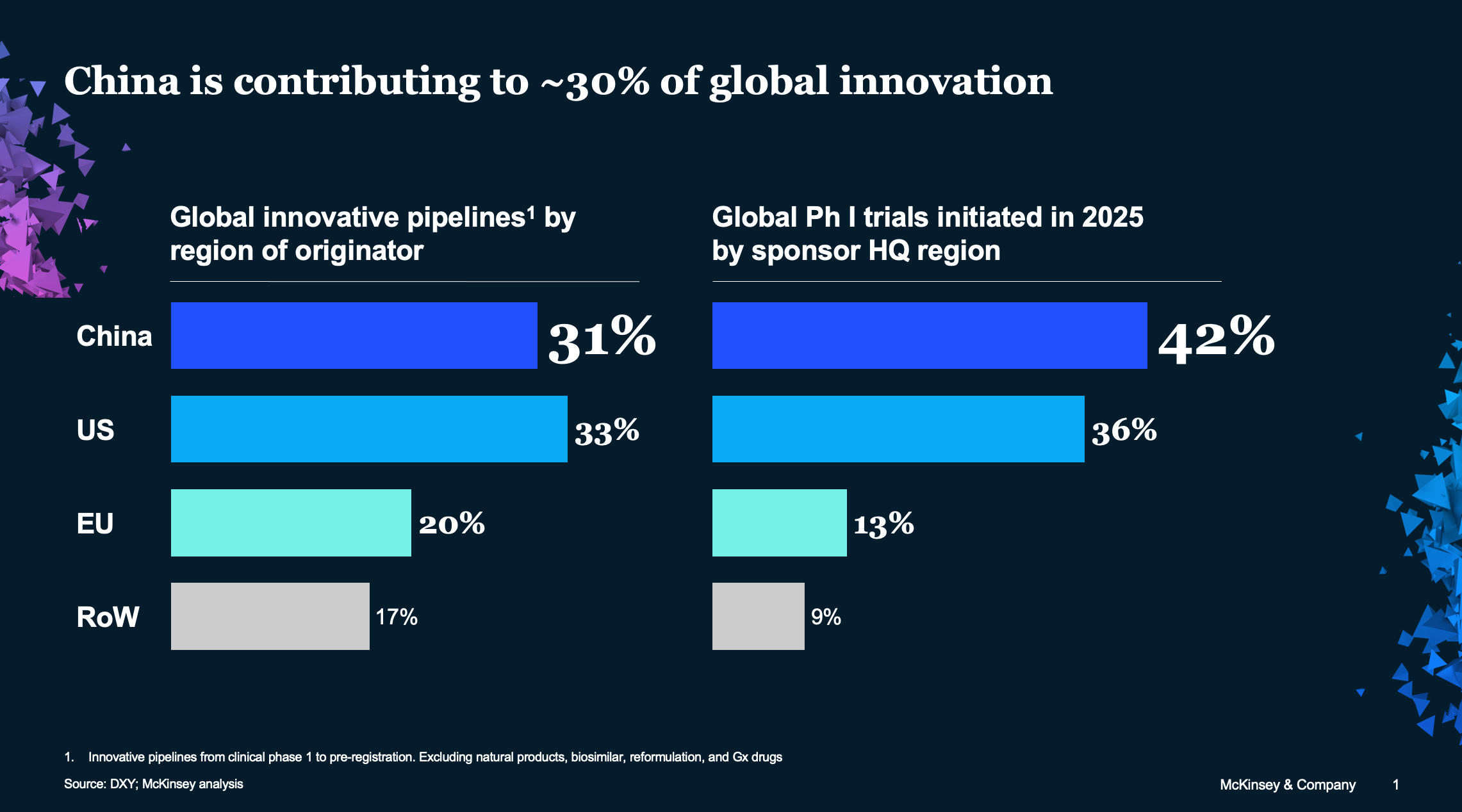
SHANGHAI — China now accounts for more than 30% of the global innovative drug pipeline and over 40% of Phase I and Phase II trials initiated worldwide, underscoring the country's growing influence in global drug development. But according to McKinsey, the bigger story is how China has built an R&D ecosystem that combines development speed, lower costs and an increasingly sophisticated innovation base — one that multinational drugmakers can no longer afford to overlook.
"Engaging China is no longer optional. Are you treating China as a source of assets — or a source of competitive advantage?" Fangning Zhang, a partner at McKinsey & Company who leads R&D and biotech work for Greater China, presented the figures at ChinaTrials18 in Shanghai on Oct. 29, arguing that China's biopharma industry has moved beyond its reputation as a fast follower.
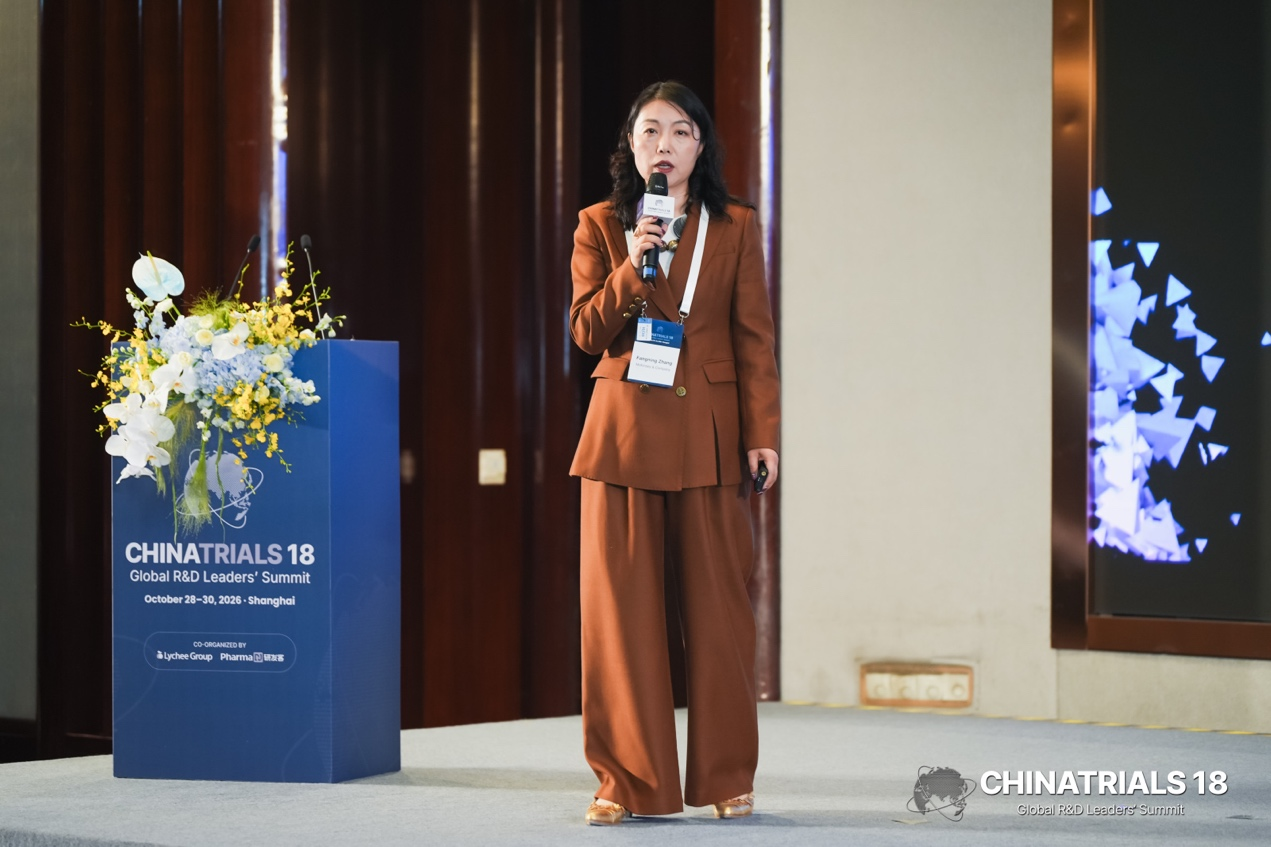
Fangning Zhang, a partner at McKinsey & Company
China-originated assets now account for approximately 31% of the global innovative drug pipeline, putting the country ahead of Europe, at 20%, and within striking distance of the US, at 33%, according to McKinsey's analysis.
"China is now a material force in global drug development — on speed, cost, efficiency, productivity and execution," Zhang told the audience.
China's faster development at a fraction of the cost
The figures help quantify an advantage that Chinese drug developers have long touted. From target nomination to IND submission, companies in China can move two to three times faster than global benchmarks, while spending just one-third to one-half as much. In clinical development, patient enrollment can be two to five times faster, with per-patient costs at least 50% lower than in the US or Europe.
Zhang attributed the advantage to three factors: a supportive policy environment shaped by a decade of regulatory reform and a growing pool of scientific talent; an established development infrastructure spanning contract research organizations, contract manufacturers and clinical trial sites; and a working culture that prioritizes execution and parallel development.
Chinese entrepreneurs and scientists are also challenging conventional approaches to drug development, she said.
"They ask which two or three experiments are really on the critical path — and run them in parallel."
That approach, combined with the country's large patient population and extensive clinical infrastructure, has helped companies accelerate development timelines while keeping costs down.
China is becoming a major source of Big Pharma licensing deals
The growing competitiveness of China's biotech sector is increasingly reflected in global dealmaking.
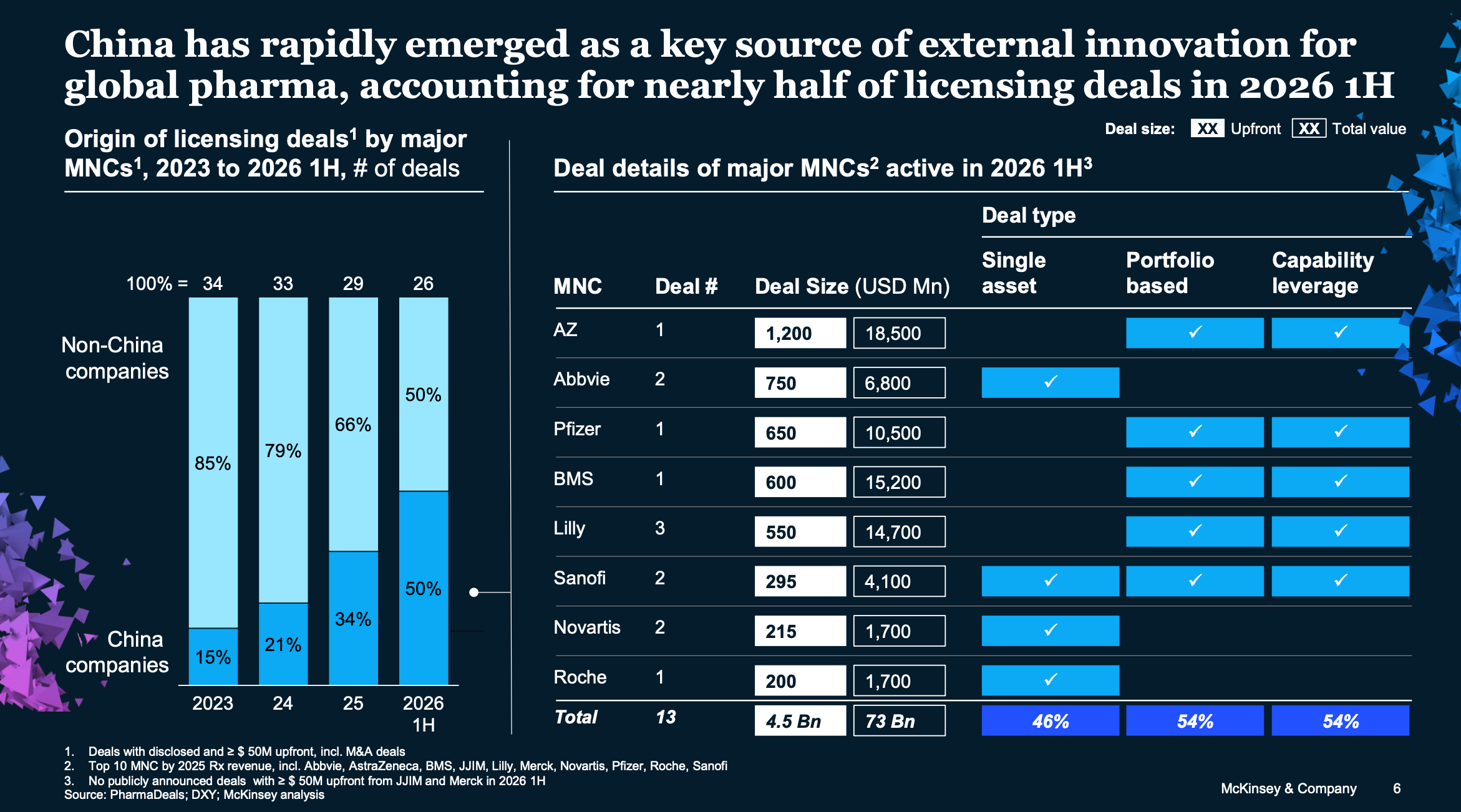
Among the 10 largest multinational pharmaceutical companies, the proportion of licensing deals sourced from China rose from 15% in 2023 to approximately 50% in the first half of 2026, according to McKinsey's analysis. The figures cover deals with disclosed upfront payments of at least $50 million.
The shift is not simply about deal volume. Partnership structures are also evolving, moving beyond individual asset licenses toward broader collaborations involving portfolios and development capabilities.
"It's not only the number of deals that is growing," Zhang said. "The deal size in terms of upfront payments is also increasing, and the kinds of deals are extending beyond single-asset partnerships."
For multinational drugmakers, the trend points to a changing role for China in global R&D strategies. The country is increasingly becoming a source of innovative assets and development capabilities, rather than simply a market for multinational companies to enter.
From fast follower to breakthrough innovation
China's growing pipeline, however, brings its own challenges. Competition is intensifying in crowded therapeutic and technology areas, where Chinese companies already account for 30% to 50% of global pipelines in selected modalities. As more companies pursue similar targets and mechanisms, differentiation will become increasingly important. Geopolitical tensions could also complicate access to capital and limit the ability of Chinese innovators to capture value globally.
Zhang nevertheless sees several areas where China's R&D capabilities could advance further. These include accelerating human-data generation and learning cycles, moving from fast-following development toward breakthrough innovation, building AI- and automation-enabled drug discovery platforms, and translating large-scale clinical data into deeper biological insights.
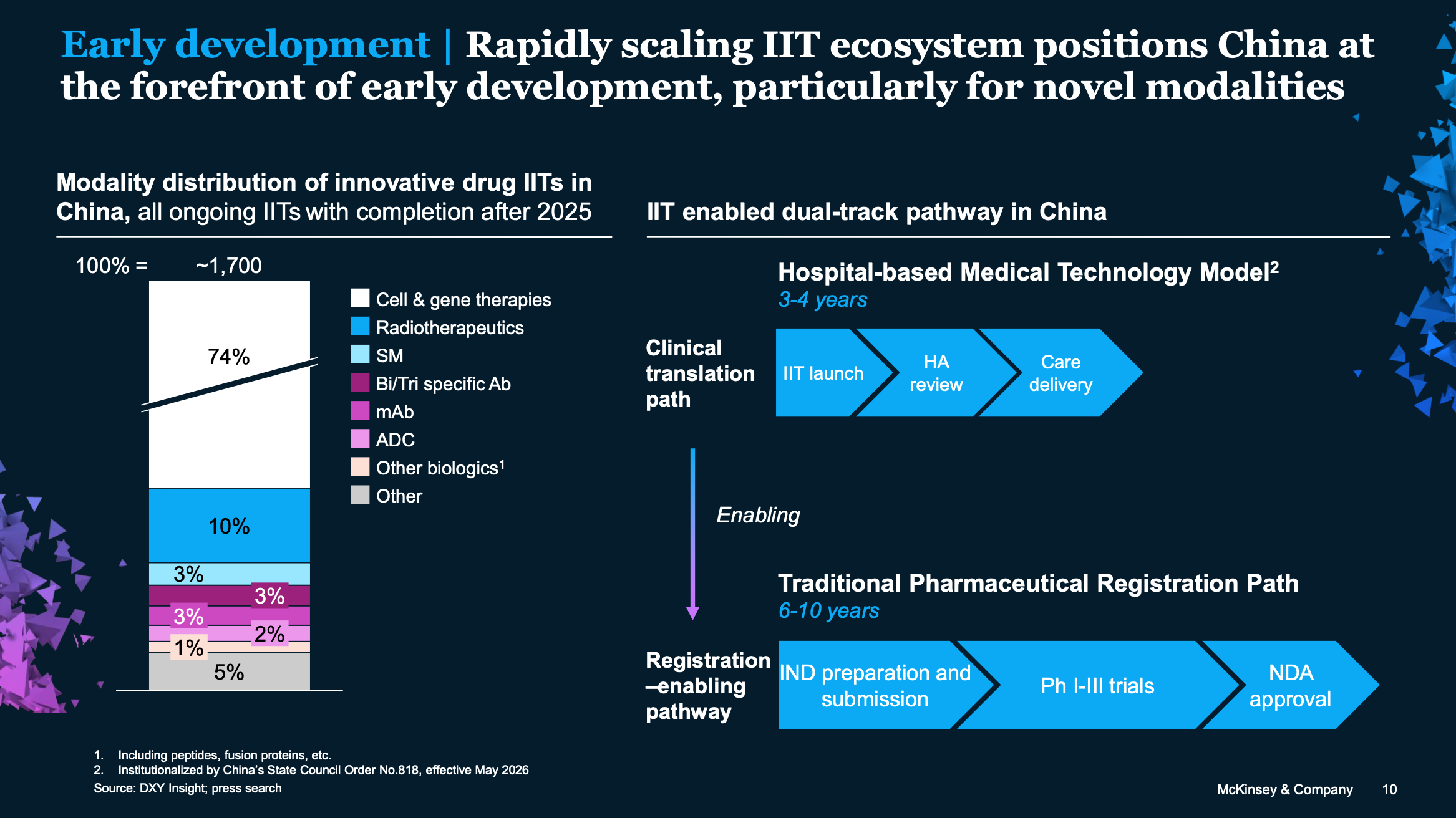
One area of potential advantage is China's expanding investigator-initiated trial (IIT) ecosystem. With approximately 1,700 ongoing IITs involving innovative drugs, the country has an increasingly substantial clinical research base that could help companies generate early human evidence and reduce development risks before moving into larger clinical programs.
Chinese molecules and researchers are also gaining greater visibility at international scientific meetings. Zhang pointed to the growing presence of Chinese oral and late-breaking abstracts at conferences such as the American Society of Clinical Oncology (ASCO) as evidence of the industry's evolving scientific capabilities.
AI-driven drug discovery is another area where China has established a substantial presence. The country now has more than 110 artificial intelligence-driven drug discovery (AIDD) companies. Chinese companies also generated more than $11 billion in multinational pharmaceutical deal value in 2025, while three ranked among the world's top 10 AIDD companies, according to the McKinsey presentation.
"China's advantage is shifting beyond speed and cost toward a scalable human-data engine that could fundamentally reshape translational medicine," she said. "But this is only the beginning."