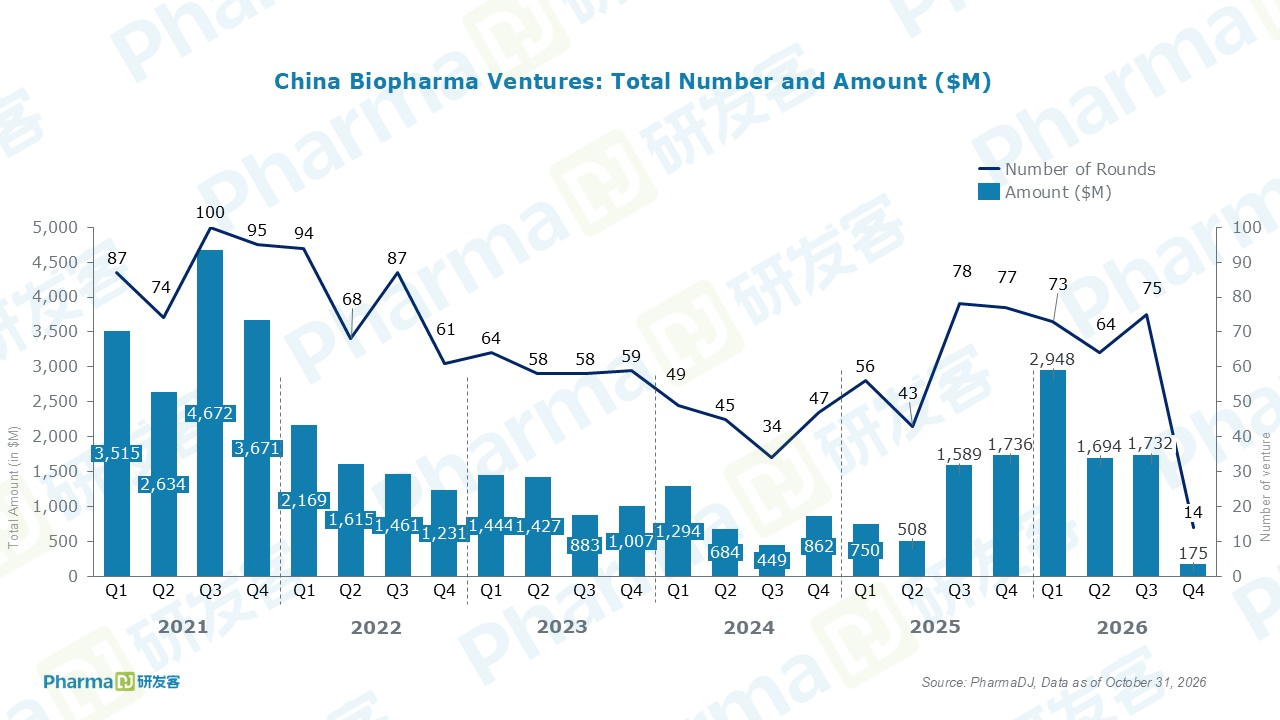
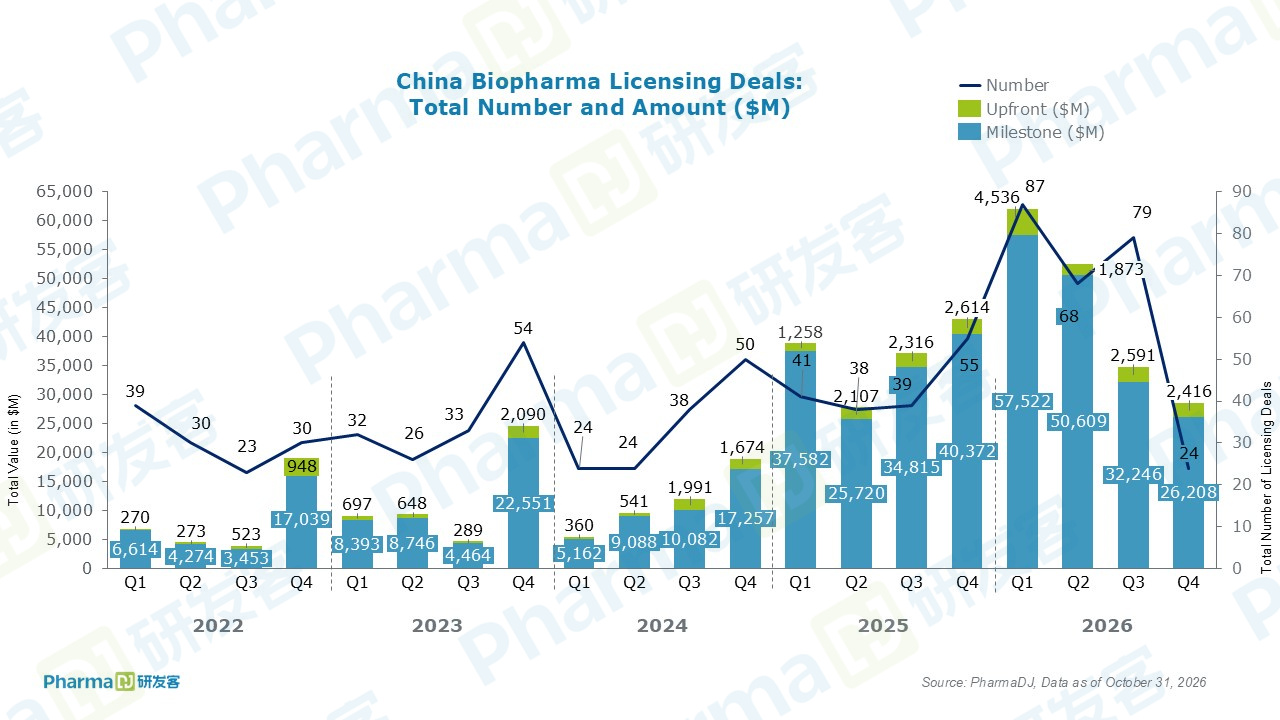
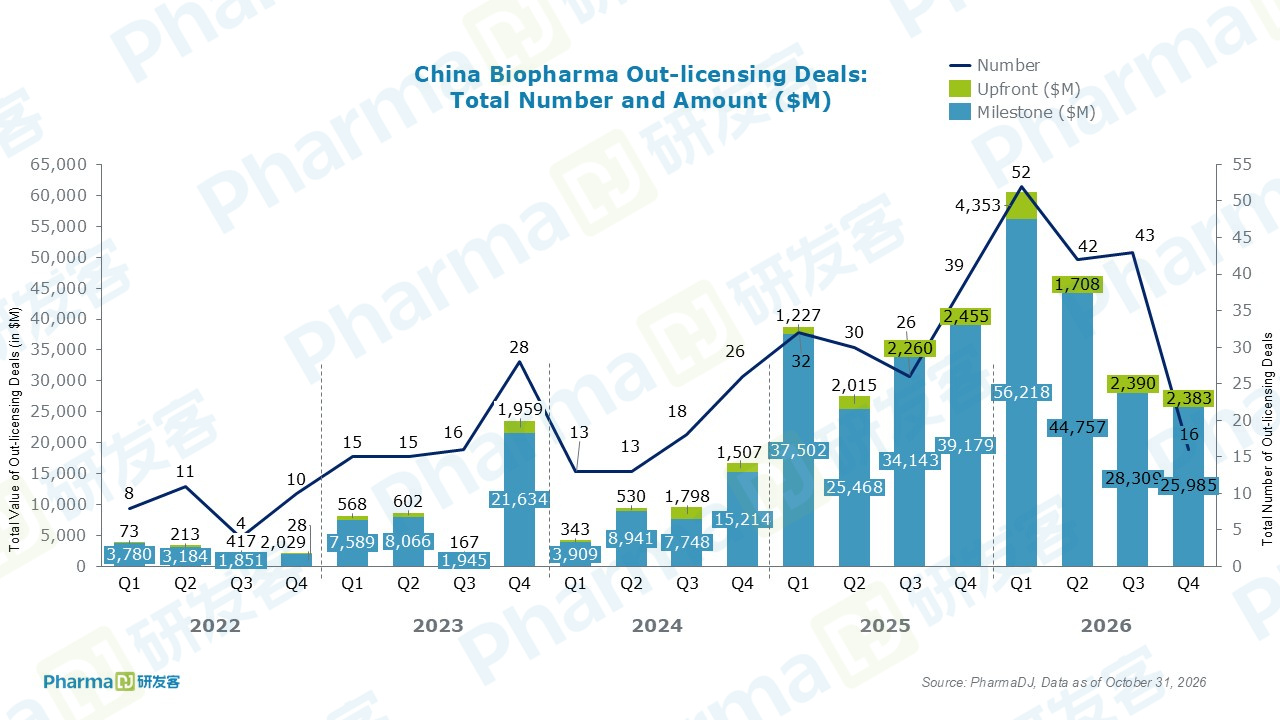
In October, private financings fell 78% to about $175 million across 14 deals, even as 16 outbound licensing pacts delivered $2.38 billion in upfront cash — nearly matching the third quarter's combined upfront total — and roughly $28.4 billion in total potential value.
China's biotech fundraising hit a low point in October: just 14 China-based biotechs closed private rounds, raising approximately $175 million between them, a 78% plunge from the $805 million tallied in September.
The largest check went to Allygen Biologics, which raised more than 300 million yuan (about $45 million) in a Series A led by Sherpa Investment. The Beijing company will use the proceeds to push ALG01, the first candidate from its STAR-BiADC platform, into phase 1 and to expand a pipeline built on bispecific ADCs, antibody-oligonucleotide conjugates (AOCs) and antibody-drug-oligonucleotide conjugates (ADOCs). Its Smart TME Activated Release (STAR) technology is designed to switch on payload release only in the tumor microenvironment, an attempt to widen the narrow therapeutic window of conventional ADCs.
Early-stage companies dominated the month: more than 60% of the 14 rounds were Series A or earlier. AI-enabled drug discovery continued to absorb what capital was available. Groovy Medicine closed a Pre-A round worth several hundred million yuan, pairing high-dimensional biology with AI-driven target discovery. DeliNova Therapeutics raised roughly 100 million yuan in a Pre-A round to advance generative-AI-designed in vivo CAR-T candidates, while LigIT, an AI-native peptide drug developer, banked a seed round of nearly 50 million yuan.
Beyond AI, October's roster of funded companies included Treg cell therapy specialist Saierxin Bio, AAV gene therapy player Dingxin Gene, RNA-targeting small-molecule upstart Libo Biotech and 3D-printed drug pioneer Triastek. Triastek also signed a collaboration and license agreement with Johnson & Johnson — through Janssen Pharmaceutica NV — to develop novel oral medicines using its melt extrusion deposition plus semi-solid extrusion (MED&SSE) 3D-printing process and 3DμS®-OM platform. J&J's venture arm, JJDC, took an equity stake in the company.
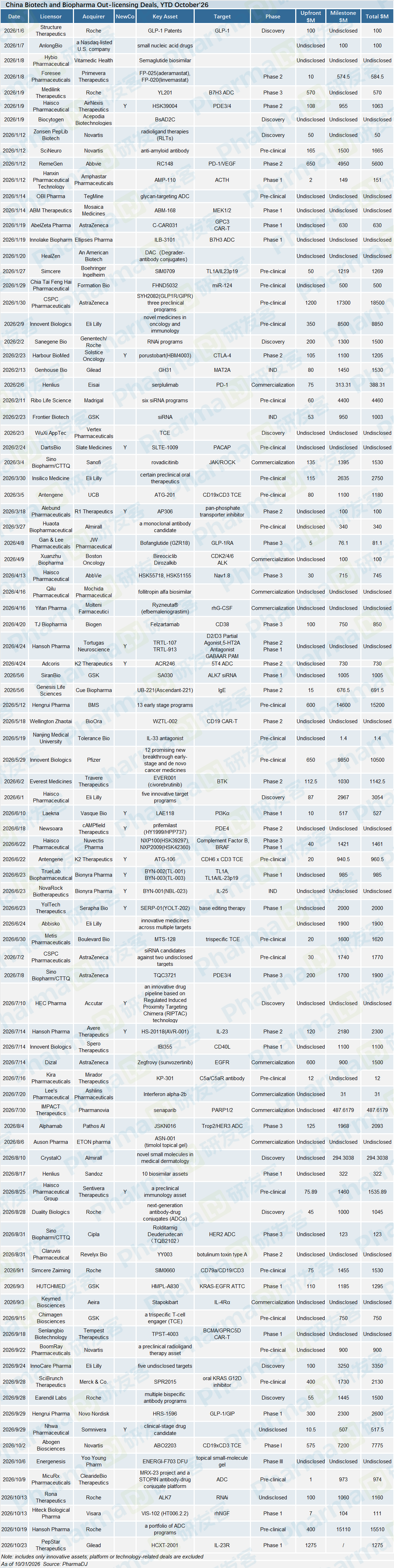
October delivered a dealmaking bonanza: 16 China outbound deals racked up $2.38 billion in upfront payments — nearly the combined upfront haul of all three months of the third quarter — and about $28.4 billion in total potential value.
The month's biggest single check came from Gilead Sciences, which agreed to hand over $1.275 billion in cash upfront to acquire PepStar Therapeutics' oral IL-23 receptor inhibitor program, including lead asset HCXT-2001. The extended-half-life oral macrocyclic peptide, now in phase 1, takes aim at a clinically validated pathway in inflammatory bowel disease (IBD) and psoriasis.
Roche was the month's most active dealmaker, striking three separate China pacts in quick succession. Its largest was a return to Hansoh Pharma: $400 million upfront, another $110 million on the first anniversary and more than $15 billion in biobucks tied to development, regulatory and commercial milestones, plus tiered royalties, for ex-Greater China rights to a broad portfolio of ADCs.
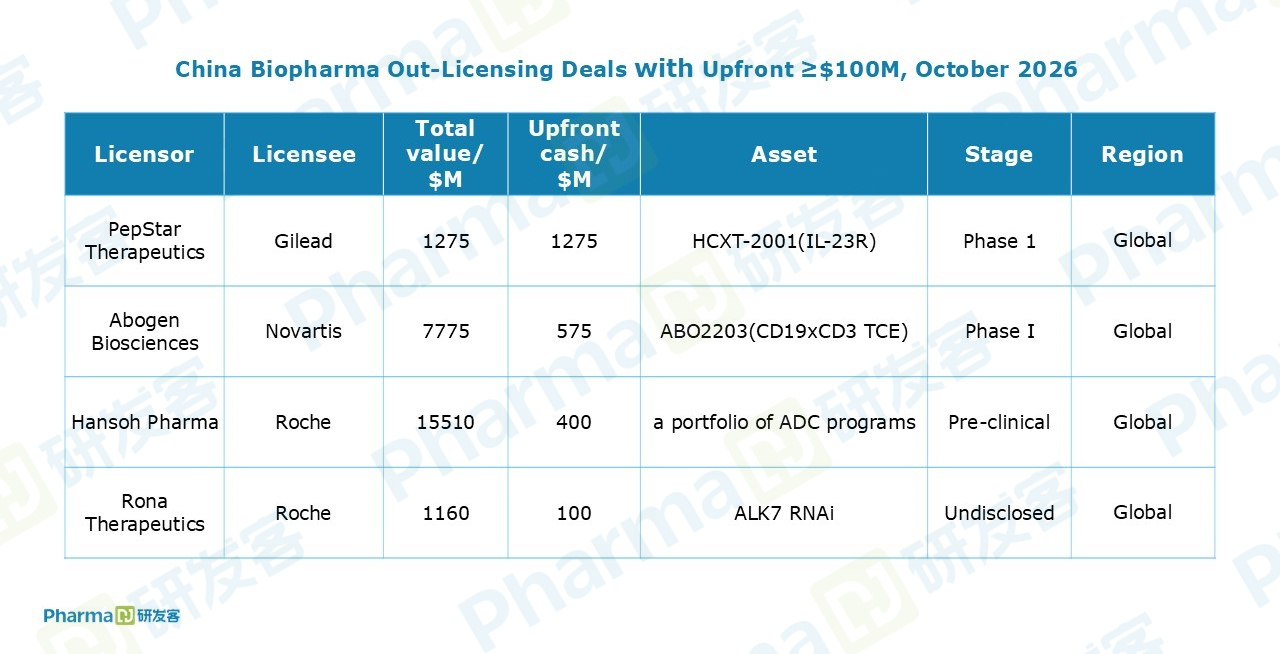
Roche also inked a deal worth up to $1.16 billion with Rona Therapeutics, committing up to $100 million in upfront and near-term payments for exclusive worldwide rights to an ALK7-targeting RNAi candidate for obesity and metabolic disease. The agreement adds up to $1.06 billion in longer-term milestones and tiered royalties, and gives Roche an entry into the emerging ALK7 race with a program built on Rona's extrahepatic delivery platform.
A third Roche tie-up, with Defand Therapeutics, covered a discovery partnership to build molecular glue therapies against multiple oncology and immunology targets. Terms were undisclosed.
Eli Lilly, for its part, signed a collaboration with METiS TechBio worth up to $1.1 billion to discover tissue-specific lipid nanoparticle (LNP) delivery systems. Novartis paid $575 million upfront to Abogen Biosciences for global rights to ABO2203, an mRNA-encoded CD19xCD3 T-cell engager in phase 1 testing, along with exclusive options on additional next-generation RNA programs.